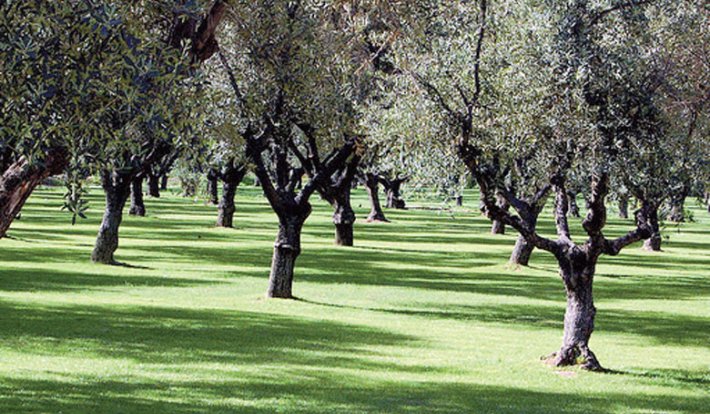
The curtain fell, last Monday, on the second Olive Festival of Taza. This edition was characterised by the organisation of several meetings to debate the development of the olive sector in the region.
"The olive sector: superior quality and organised marketing" was the theme of the second Olive Festival of Taza, which took place from 21 to 23 November 2015 at the city's fair with the participation of exhibitors from several regions of the country. Organised by the Provincial Directorate of Agriculture of Taza (DPA), this Festival was marked by the setting up of 70 stands exhibiting agricultural products (olive oil, almonds, honey, saffron, medicinal and aromatic plants, etc.), agricultural machinery and equipment, as well as by debate meetings on olive cultivation, the valorisation of olive production, and the improvement of sheep and goat farming. Agronomic engineers and agricultural technicians enriched the debates on the importance of the olive sector in Morocco and in the Taza, Taounate, Al Hoceima, and Guercif zone. They insisted on the interest of organising olive growers into cooperatives, the acquisition of agricultural machinery, the conversion of cereal crops into fruit arboriculture, the improvement of quality, the valorisation of production, and its marketing at the national, or even international, level.
The Festival was also enhanced by a cooking recipe competition including olives and their oil, with the ambition of improving this culinary competition in the future to encourage the consumption of olive production. According to the director of the DPA of Taza, Abdelhafid Guermai, a new Provincial Directorate of Agriculture will be created in Guercif, a province attached to the Oriental region as part of advanced regionalisation, while the Taza province has been integrated into the Fès-Meknès region. He assured that the DPA will spare no effort to provide its help and experience to the future agricultural services of Guercif.
Furthermore, presentations were given on the red meat sector and on the role of the National Association of Sheep and Goat Breeders, which brings together 14,000 breeders spread across 44 groups throughout the country, supported by 180 agricultural executives and operating a herd of 2 million head.
In parallel, within the framework of the International Fund for Agricultural Development programme, cooperation agreements were concluded between the Provincial Directorate of Agriculture of Taza,
the National Association of Sheep and Cattle Breeders, the economic interest groups for honey in Oued Amlil and Tahla, and an agricultural association in Gueldamane.