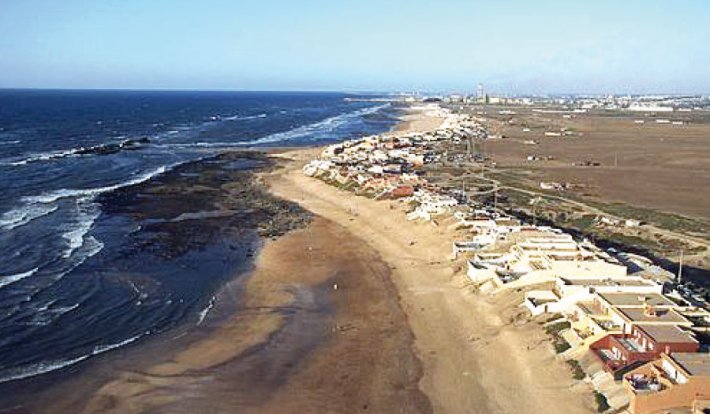
The elected officials of Mohammedia debated the city's new development plan during the ordinary session of the Mohammedia municipal council in October. In his speech, the representative of the Urban Agency stressed that this new development plan had required a lot of time, surveys, and consultation before being finalised. "It was designed," he added, "to meet numerous objectives to provide Mohammedia with structural equipment capable of boosting its urban development." He added that particular interest was devoted to problems related to the environment, social issues, mobility, traffic, transport, commerce, and infrastructure. The new plan supported investment, new technologies, the protection of sensitive areas, as well as connections within the city. It also provides for the M0/01 road project which connects the Oued El Maleh to the Oued Nfifikh over 10 km, a road parallel to the motorway with a green zone. The same applies to basic services for the development of the wetland and the upgrading of commerce.
The requalification and structuring of certain zones are also included in this new plan, as well as social housing projects, two interchanges to facilitate accessibility, urbanisation by containing extensions, public transport, and investment in tourism. Nevertheless, the proposed new development plan was strongly contested. In this context, Rabbouh Abella, a member of the city council's urban planning, land use, and environment commission, expressed a number of reservations about this plan, which he stressed did not take into consideration projects completed, in the process of being completed, authorised, as well as a number of facilities provided for in the old development plan and the Communal Development Programme (PCD). The port zone was also relegated to the background, according to some elected officials: "the plan provided for costly projects. Some vital projects were neglected, notably a large shopping centre, staff housing for municipal employees, the cemetery, shanty towns, tourism, access to beaches, those connecting the lower city to El Alia, the problem of overpopulation, the transfer of industrial activities from the lower city to the industrial zone, as well as the absence of an approved poultry slaughterhouse, an urban travel plan, a hub of attraction, and the absence of a bus station." For his part, Attouani Mohamed, elected to the Mohammedia municipal council, specified that "the design office in charge of the design of the new Mohammedia development plan did not consult the potential, elected officials, or economic operators of the city." He added that the said plan did not take into consideration the real ills and needs of the city such as pollution, natural and industrial risks, the problem of the coastline, the silting up of the central beach, and the desilting of Monica beach. According to the elected officials, the problem of the railway line that isolates the lower city and El Alia has not been resolved. This line should in principle be transferred in parallel with the project of the future TGV line traced in the development plan. Likewise, no extension of the urban perimeter is planned. The opposition also expressed reservations about this new plan "which does not meet the real needs of the inhabitants and which was designed without focusing on the thorny problems of the city concerning health, pollution, mobility, green spaces, culture, etc." It should be noted that all members of the city council voted with reservations for this new plan.
190 objections recorded
The new Mohammedia development plan has caused a lot of ink to flow. Contested by a large part of the inhabitants, it did not take into consideration, according to some elected officials, the problem of land. Between the period from 27 August to 26 September 2012, the urban planning commission received 190 objections as well as proposals from the inhabitants on this new plan. These objections and proposals will be studied case by case before finalising the new plan.
-* The new plan provides for a derogation for the construction of R+4 buildings on part of the Ryad and Moukawama boulevards.
-* Two interchanges have been planned at the Sebta and Palestine boulevards.
-* A road is also planned over 100 km between the Oueds El Maleh and Nfifikh.