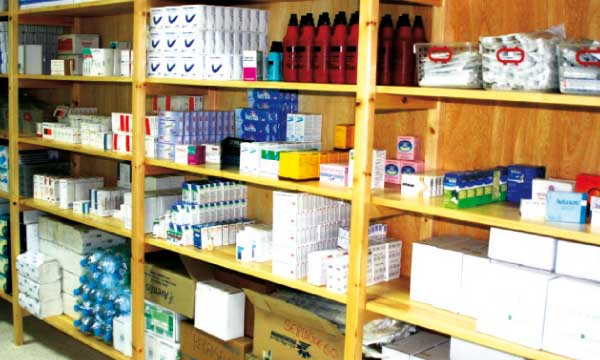
"Pharmacies are turning into real grocery stores in Salé." The statement is from Fatima, manager and pharmacy assistant in one of the neighbourhoods of Salé. Here, the workday starts at 9 a.m. and lasts until 8 p.m. Customers who come to buy medicines and pay in cash are very rare. Most of the inhabitants of this neighbourhood take medicines on credit. Destitute, they often do not have the means to pay the price of the medicines. Khadija, one of the regular customers of the pharmacy, came this morning to look for a box of milk for her infant barely four months old. Every week, this woman buys four boxes of milk. "Khadija pays us by the week. She does not have the means to settle her purchases every time. Her husband, who works in masonry, is also paid by the week," confides Fatima.
According to the manager of this pharmacy, the number of customers who buy medicines on credit exceeds that of those who pay at the time of purchase. "On average, the amount of medicines sold on credit is around 2,000 DH per day, for a daily revenue of 1,000 DH," adds Fatima.
Indeed, it has been six years since this pharmacy adopted this credit sales system. Better yet, a computerised system has been installed specifically to be able to manage the various credit operations. "This method allows us to track the accounts of the various customers and remind them of the payment date agreed upon in advance," affirms Aderrahmane, pharmacy assistant. Indeed, the payment date for the sums due varies from one customer to another. Some customers pay by the month, others by the quarter. "Many customers are retirees. They are only paid every three months. Consequently, we try to make their lives easier, because generally they do not have the means to pay for the medicines," explains Fatima. Nevertheless, the manager claims to give the medicines in exchange for a cheque for an amount corresponding to the total invoice. "Customers sometimes refuse to pay us. In this case, I go to see them at their homes to convince them to settle their debts on time, but if they still refuse, we find ourselves obliged to cash the cheque. But this rarely happens," announces Fatima.
According to this manager, people are afraid of reaching this stage, because they often have a bank account with insufficient funds.
"We try to find compromises with these customers by trying to postpone the payment date. We are precisely aware of the difficulties these people encounter in repaying their debts in the absence of a stable income," adds Ahmed, another pharmacy assistant. But the wait sometimes risks not being fruitful. Because some customers may die before settling their invoices. "It happens quite often that a customer, at a very advanced age, dies before settling these debts which are generally quite large. In that case, we have no other choice but to wipe the slate clean. The pharmacy risks suffering huge losses in this type of situation," exclaims Fatima. Losses that can threaten the very survival of the pharmacy…
Pharmacy customers are numerous in resorting to self-medication. This situation is explained, according to the pharmacy assistants, by the low purchasing power of citizens which does not allow them to consult a doctor. Zahra, 49, has been taking the same medicine without medical follow-up
for five years to treat her hypertension. "I buy my medicines on credit. I do not have the means
to pay for a consultation with a specialist doctor and I content myself with the pharmacist's advice," she says.