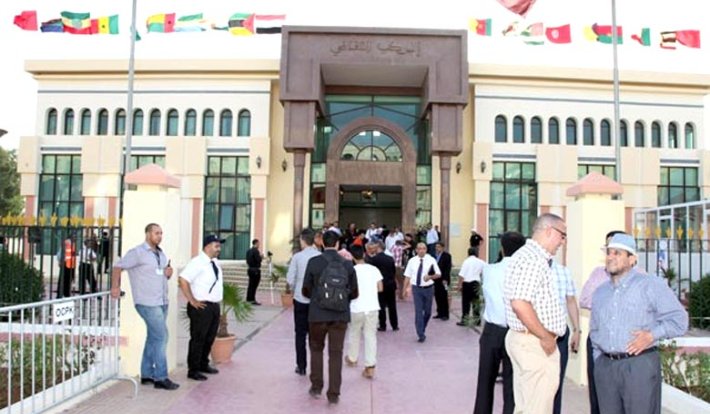
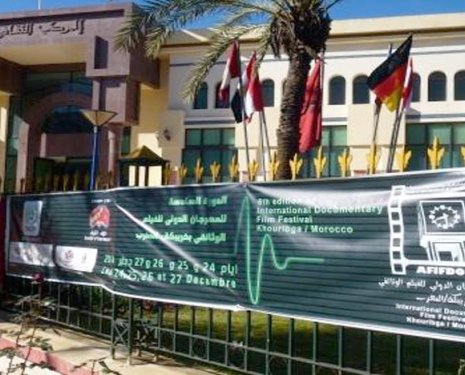
The city of Khouribga is embracing African cinema with the kick-off, on Saturday evening at the city's Cultural Centre, of the 18th edition of the Khouribga African Film Festival (FCAK), marked by the screening of the film "Le Mandat" by the Senegalese filmmaker Ousmane Sembène.
Placed under the High Patronage of H.M. King Mohammed VI, the 18th version of the FCAK does not deviate from the rule and spirit of this unmissable event for African filmmakers, aiming to be a platform to further strengthen the ties between men and women of the national 7th art and their peers from the continent.
True to its motto, this cinematic and cultural event par excellence, initiated by the Khouribga African Film Festival Foundation from 12 to 19 September, gives pride of place to the latest productions and creations of African cinema, which are now making their mark on the international scene, both at festivals and in cinemas.
Speaking during the opening ceremony, the president of the Foundation, Noureddine Sail, stressed that this edition will be marked by "a new impetus" and "a new vision" with continuity and resistance as watchwords.
According to him, cinema is a mode of expression that African countries must develop, lamenting that they "have not yet managed to exist in terms of cinematography".
Noureddine Sail noted on this occasion that Morocco is establishing itself as a model on the African scale, affirming that H.M. the King has managed to anchor Morocco in Africa more than the Kingdom has ever been.
Taking the floor, the Senegalese ambassador to Rabat, Amadou Sow, whose country is the guest of honour for this edition, welcomed this tribute which, he insisted, consolidates the excellence of the relations that bind the two brotherly countries.
Bilateral relations continue to develop and strengthen at all levels under the enlightened leadership of H.M. King Mohammed VI and the Senegalese President, Amadou Sow stressed.
The opening ceremony, punctuated by performances given by a Senegalese folk troupe, was marked by the presentation of the Festival trophy to the general delegate of the Panafrican Film and Television Festival of Ouagadougou (Fespaco), Michel Ouedraogo.
On this occasion, the 14 African films competing to win the "Ousmane Sembène Prize" were presented during this evening, which was attended by several distinguished national and international guests, film critics, as well as representatives of national and foreign print and audiovisual media.
In addition to Morocco, these feature films represent 12 countries, namely Senegal, Cameroon, Côte d'Ivoire, Tunisia, Algeria, Guinea-Conakry, Burkina Faso, Ethiopia, Mali, Niger, Mauritania and Egypt.
These include the Moroccan films "L'écharpe Rouge" by Mohammed Lyounsi and "L'orchestre des Aveugles" by Mohamed Mouftakir, "El Ziara (Lune Noire)" by Nawfel Saheb-Ettaba (Tunisia), "Claire/L'enfant de l'amour" by Mary-Noél Niba (Cameroon), "J'ai 50 ans" by Djamel Azizi (Algeria) and "Morbayassa-Le Serment de Koumba" by Cheikh Fantamady Camara (Guinea-Conakry).
The films "L'œil du Cyclone" by director Sékou Traoré (Burkina Faso), "Timbuktu" by Abderrahmane Sissako (Mauritania), "Prix de l'Amour" by Hermon Hailay (Ethiopia), "Cairo's Time" by Amir Ramssis (Egypt), "Les Etoiles" by Dyana Gaye (Senegal), "Render To Ceaser" by Desmond Ovbiagele (Niger), "Rapt A Bamako" by Cheick Oumar Sissoko (Mali) and "Braquage à l'Africaine" by Owell Brown (Côte d'Ivoire) are also among the films in competition.
The jury, tasked with deciding between the films in competition, was also presented. Chaired by the French producer, screenwriter and director Jacques Dorfmann, the jury is composed of seven members from Morocco, the United States, Canada, South Africa and Egypt.
Furthermore, this year's edition provides a programme as rich as it is varied, featuring the screening of films in official competition for the "Ousmane Sembène Prize", the "Mohamed Bastaoui Prize" for best male performance, in tribute to the late Moroccan actor, as well as the parallel "Cinephilia-Don Quichotte" prize.
Female cinematic genius is not left out, as the festival offers an opportunity to highlight the distinguished presence of African women in the 7th art. For this reason, this edition will see the participation of three female directors representing Cameroon, Senegal and Ethiopia.
The programme also includes a conference on the theme "What is the interest of African film festivals?" which will be moderated by a host of representatives of renowned African film festivals, including the "Carthage Film Festival", Fespaco (Burkina Faso) and Vues d'Afrique (Canada).
Tributes will also be paid, during this 18th edition of the FCAK, to a number of Moroccan and foreign filmmakers.