
FrançaisEnglishالعربيةDeutschEspañolNederlandsItaliano中文

Your cart is empty

Adventure awaits!

About Mohammedia

Mohammedia (Arabic: المحمدية, transcription: Al-Mohammadiya), formerly called Fédala, is a town in Morocco located...

News in Mohammedia

Follow the latest news, projects, and official announcements from your commune.

Sport 25 May 2015 6 min read

The inexorable decline of sport
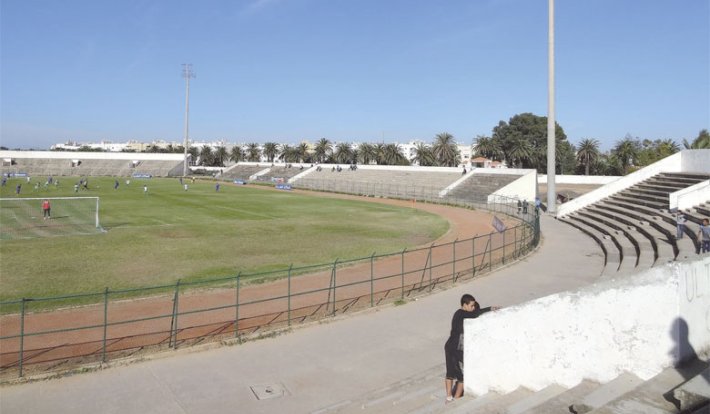
The inexorable decline of sport

Fewer licences, fewer clubs and fewer disciplines, sport in Mohammedia is losing momentum. On the sporting level, the assessment is catastrophic. The city no longer has any club in the elite, whether in football, volleyball, basketball or handball. Sailing, which was a flagship discipline, is also in decline. An alarming observation for a city that has always produced great champions. What are the causes of this retreat which is not about to stop anytime soon? "Le Matin" investigated this descent into hell.

"If there were an easy answer, everyone would have given it". This response from Taher Raad, former goalkeeper of Chabab Mohammedia, sums up the complexity of the question. What, how? The city, which once produced great champions and dominated several sporting disciplines at the national level, has completely disappeared from the national sporting landscape. In football, the two big clubs of the city, Chabab and Itihad, have been relegated to the third division. The volleyball team, several times champion of Morocco, has left the division of excellence, sailing, once the flagship discipline of the city of flowers, is on the verge of disappearing. Other disciplines like basketball or handball are dying, and so on. To explain this retreat, several sporting actors of the city of flowers put forward the financial argument.

It's true, but that doesn't explain everything. "The lack of financial means must not exonerate the various actors of the city (city council, provincial council, managers, private sector) from their responsibility", Taher Raad confides to us. For him, the most relevant explanation remains the lack of sporting infrastructure. The former Chabab goalkeeper deplores the fact that the demographic and urban development of the city was not accompanied by the development of sporting infrastructure. "The urban development of the city caused the disappearance of playgrounds, whereas the opposite should have happened", he indicated. An opinion shared by Khairal, delegate of the Ministry of Youth and Sports, who holds the city's urban policy responsible and also points the finger at the various urban development plans that did not take into account the establishment of sporting facilities in parallel with the development of the city. "The Ministry of Youth and Sports has always asked to provide for sporting infrastructure in the various development plans, but our recommendations have never been taken into account by the various decision-makers. Today, the city of flowers has become a city besieged by concrete. It is unacceptable that the city has only one single football stadium, which is moreover in a state of advanced dilapidation (no lighting, no reception structure, poor quality pitch, stands in poor condition...)", he assured us. And to continue that sport is a tool that helps with education and also to save young people from the streets. When a young person is well supervised in a club, they have a better chance of succeeding in their life.

Behind this decline, there is also a management problem, analyses Adil Belhajjam, former president of Chabab Mohammedia, for his part. "Sport in Mohammedia, and particularly football, pays the heavy burden of calamitous management marked by instability at the level of the governing boards. This policy meant that there was never a medium and long-term vision. The club was managed day by day", he stressed. Belhajjam also pointed the finger at the disappearance of inter-neighbourhood tournaments which allowed young talents to be detected.

For his part, Mohamed Ouadaâdaâ, former sailing champion, attributes the current situation to the lack of training. The former champion cites the example of his discipline. "Previously, there were two sailing clubs in Mohammedia. The Nautical Club and the Yacht Club of Morocco. The training of young people was provided by the Nautical Club, but since its disappearance, there is no longer any structure to ensure it. The nautical base is not appropriate for the training of young people. It is intended for competition", he confided to us.

Same observation also for the volleyball section. Abdellilah Manjour, former president of Chabab volleyball, who deplores the lack of continuity in training, due to the absence of financial means. "I suffered when I took over the club, once the Samir company had withdrawn.

I knocked on every door for three years (city council, prefecture...), but without any result.

For three years, I managed on my own to move the team forward, but in vain.

At the end of the third year, I received 3,000 DH from the authorities, while the club has 300 licensees, i.e. 10 DH per licence. I managed to get the club promoted from the third to the second division. But I ended up withdrawing, for lack of means, by entrusting the presidency to Mr. Benouna who was an executive at the Samir company. Thanks to him, who brought in funds from Samir, the team continued to run for several years and managed to win three Moroccan championship titles. Unfortunately, that time is over.

The club is currently in perdition", he specified to us. Manjour further stressed that at the time 50% of volleyball licensees in Morocco came from Mohammedia. That was years ago. Now, the situation has changed a lot. Mohammedia, which was a provider of talents, is now non-existent on the national sporting landscape. The great leaders and sports enthusiasts have preferred over time to turn their backs on sport due to the arrival of upstarts who have made sport a means to acquire notoriety, or even more, summarises Mohamed Oudaâdaâ for "le Matin", with a heavy heart.

How do you explain the decline of sport in the city of Mohammedia?

Mohamed M’fadel: The urban commune played its role. When we arrived at the head of the city council, we discovered that the subsidies granted to the sporting world were not significant. We then increased them. We played our role. We offered the means to the clubs, but we cannot interfere in their affairs.

Yet you must know where your money goes?

It is true that we should have demanded a right of oversight to ensure whether the subsidies we granted to the clubs were used wisely or not. But we trusted the clubs that provide us with accounts certified by an auditor. We are obliged to help and we do it. We could effectively grant our help according to performance, but we don't do it.

Are you satisfied with the current situation of sport in the city of Mohammedia?

Of course I am not satisfied with this situation. The two big clubs of the city, Chabab and Itihad, are relegated to the amateur championship. But I think that apart from football, we have disciplines that work well, like karate, boxing, judo, athletics... The big problem we have is that of football.

Eight years after the launch of the works, the project of the covered hall of Mohammedia, located on Zenata Boulevard at the end of the El Bachir stadium, is still at the foundation stage. It will perhaps take eight more years to complete this project. Yet, the first budget envelope for the project amounts to 16 million DH. A fortune that finally only served to build the foundations. Compared with other cities of the same size, Mohammedia is lagging behind in terms of sporting infrastructure. Yet, the urban commune of Fedala is one of the richest in Morocco.

Listen
Size:

