Has the city of Mohammedia adopted an innovative strategy by favouring sustainable humanised growth? The least we can say is that actions have been taken to establish an environmental culture and perpetuate the tradition of a city renowned for its greenery, its beaches, its palm trees and its flowers, in order to place its sustainable development and its environmental component as a priority.
A city with a high industrial concentration, Mohammedia strives to mitigate the effects of pollution by multiplying the creation of green spaces. In this wake, an operation for the redevelopment and maintenance of these spaces has been programmed by the urban commune, through the mobilisation of a budget of nearly 1.44 million dirhams for the rehabilitation of Al-Qods Park (Hassania) and that of Place Sidi Moussa. The work will concern the paving of the ground with self-locking pavers and "Bejmat" (a type of terracotta zellige), the installation and equipment of the watering system, the planting of trees and shrubs, the pruning of existing trees and palm trees, grassing, etc.
In the same register, development work inherent to public lighting (parks, gardens and squares), notably the gardens of Place Mali, Errachidia III, Wafa, the Tannery and Place Sidi Moussa, all for a budget of nearly 900,000 DH.
"These efforts cannot be sufficient. The most important thing remains the involvement of industrialists, associations and citizens in the revaluation of the city's plant and environmental heritage, an unavoidable factor of sustainable development," emphasises this associative actor.
In this sense, the development of certain green spaces is a laudable initiative, nevertheless, for more efficiency, it must extend to other green spaces in the city.
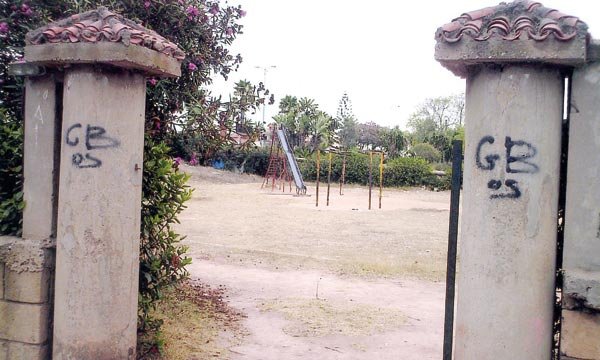
"How can one remain insensitive and indifferent to the current state of the famous Mesbahiat Park, today abandoned?" asks this teacher. And to add: "The upgrading of Mohammedia's green spaces must be part of an orientation line aimed at establishing balanced growth for the city to restore its image as a city of flowers and greenery. Have we forgotten that our health depends on our environment? It is thus imperative to rehabilitate the city's old green spaces and develop a culture of environmental preservation to meet ecological challenges". Mesbahiat Park extended over 12 hectares and all of its equipment is unrecoverable, at least what remains of it. As for La Colline Park, it continues to degrade in total indifference.
To this is obviously added the deficit in green spaces in certain popular and peripheral neighbourhoods, as well as in new housing estates.
Worse still, the growth of urban and industrial zones accentuates polluting discharges with all that this entails as a risk to health. It is thus imperative to increase the surface area of green spaces to mitigate ecological problems, the threats weighing on the natural environment and the impact of industrial activities. The concerned services must look into this aspect and lead a thoughtful development policy. For their part, citizens must be aware of the importance of green spaces and break with certain behaviours harmful to the environment.
The wetland in declineThe natural ecological park that was to be located at the wetland level has never seen the light of day. A space of transition between land and water, this exceptional natural heritage, registered in 2005 on the Ramsar list, remains among the most threatened environments due to numerous factors. As a reminder, the Ramsar Convention, officially called the Convention on Wetlands of International Importance, especially as Waterfowl Habitat, is an international treaty adopted on 2 February 1971 for the conservation and sustainable use of wetlands, which aims to halt their degradation or disappearance, by recognising their ecological functions as well as their economic, cultural, scientific and recreational value. The Mohammedia wetland, which extended over 500 hectares, today covers only 200 hectares. For the many vital functions it performs, it must benefit from particular attention. It is thus appropriate to develop a sustainable management plan that takes into account the principle of reconciliation between the development and protection of the natural resources of this site.