
FrançaisEnglishالعربيةDeutschEspañolNederlandsItaliano中文

Your cart is empty

Adventure awaits!

About Salé

Salé (in Arabic: سلا) is a town in Morocco. It is located on the country's Atlantic coast, on the right bank of the mouth of...

News in Salé

Follow the latest news, projects, and official announcements from your ville.

News 26 Nov 2012 6 min read

Designed to accommodate 120,000 inhabitants, the city pays the price for its ambitions

Citizens complain about the lack of basic social services, transport, and security.
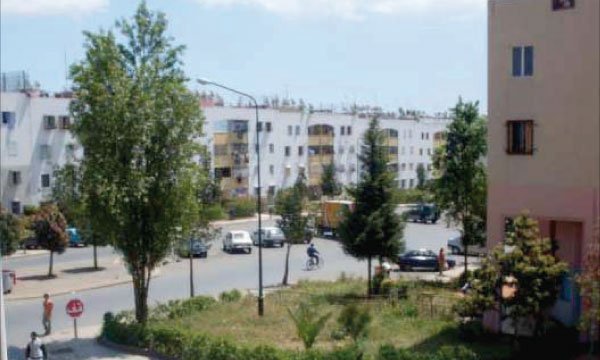
Designed to accommodate 120,000 inhabitants, the city pays the price for its ambitions

On 11 July 1995, the late HM King Hassan II had given the go-ahead for the construction of a new city, located east of Salé. This is Sala Al Jadida. This grandiose project, which until then was only a large construction site, was promised to accommodate 120,000 inhabitants who cherished the dream of accessing decent housing at a low price. Seventeen years later, the city has won the bet by accommodating more than double the expected inhabitants. But this rapid and increased demographic growth has not been without consequences for this important urban planning project. The city, which wanted to be a model, has not succeeded in offering its inhabitants a pleasant living environment that meets their expectations, and for some years now, citizens have been paying the high price for a short-term vision that did not foresee a long-term strengthening of basic social services.

Result: the city suffers from an enormous lack of infrastructure, starting with schools and universities, which can be counted on the fingers of one hand. Consequence: students are forced to travel long distances to reach schools in neighbouring districts. Or, at best, take the bus and endure the daily ordeal of public transport. A situation aggravated by the lack of security that reigns in the city, in the total absence of police officers (the whole city has only one police station). "I have lived in this city for more than a year and I have never met a single policeman during my outings in the city. Even less so traffic officers, who are conspicuous by their absence from the main arteries. Motorists take advantage of the situation to run red lights as they please. This is what explains, moreover, the number of accidents recorded, which is becoming increasingly significant," exclaims Ibrahim, a young married employee who recently moved to Sala Al Jadida. Faced with this state of affairs, parents therefore take their troubles patiently and accompany their daughters every day to the doors of schools for fear of seeing them assaulted. This lack of security also contributes to an unprecedented rise in crime and a significant development in the sale of soft and hard drugs. "People get assaulted in broad daylight. Snatch theft has become commonplace. I am therefore forced to accompany my wife to her work in the morning and pick her up in the evening, even if it tires me and takes a lot of my time," announces Ibrahim in a desperate tone. Furthermore, in Sala Al Jadida there are few mosques; the existing ones total two. Thus, the city's inhabitants who wish to perform the Friday prayer are forced to do so either under a scorching sun in summer or in the rain in winter. Sometimes, the flow of worshippers blocks the arteries located near the mosques and creates disorder in traffic. "Once, I was forced to abandon my car and take the bus because I woke up late on a Friday. My car was blocked by vehicles parked in the middle of the street by worshippers," announces Salim, another inhabitant of the city. Parallel to these shortcomings, the city is sorely lacking in means of transport. Indeed, apart from the public transport buses that connect Sala Jadida to Rabat and Bouknadel, the city is served by no other means of transport. Yet, this urban pole continues to develop, and we are witnessing, more and more, the creation of new districts located sometimes 7 km from the city centre, such as the "Aayayda" district. "We never see small taxis in the city because the owners claim that they do not earn enough money from trips made inside the city, which leaves the field open to clandestine transporters. The authorities must think of a solution. The inhabitants have trouble getting home, especially women," continues Salim. Another problem, and not the least, is the lack of health centres. The city was designed to house some 120,000 inhabitants, and its population must have increased considerably almost 20 years after its creation. The existing medical infrastructure has not been able to keep up with the city's evolution. Consequently, they are often overwhelmed. Added to this is the lack of fruit, vegetable, and meat markets. With the exception of a market located at the entrance to Sala Jadida, the inhabitants of this city must go to Kariat Ouled Moussa or Hay Essalam to do their shopping, otherwise they are forced to frequent improvised markets created here and there by merchants. Fortunately, a large supermarket was recently installed in the city for this purpose. The city also lacks places of entertainment. No cinema, no amusement parks for children, no proper garden. The city lacks any leisure space apart from a poor youth centre created at the entrance to the city, which is, moreover, very little frequented by the inhabitants. Informed of the various difficulties faced by the citizens, the mayor of Salé, Nourredine Lazrak, indicated that the situation should not be overly dramatised. The existing mosques in the city are quite sufficient for the inhabitants, especially since another place of worship is in the construction phase. "I am not going to build a mosque in front of every house to satisfy all the inhabitants," he announces. Neighbourhood markets are also in the construction phase; moreover, it will only be a few weeks before one of these spaces is inaugurated. In addition, the city will soon be equipped with a socio-sports centre, a neighbourhood pitch, and an indoor hall... The question that arises today is whether the completion of these few infrastructures would be enough to absorb the anger of the citizens, which is increasingly palpable...


Sala Al Jadida, a project victim of its ambitions

Admittedly, the Sala Al Jadida project, which falls within the framework of the national programme for the construction of 200,000 housing units, has not solved the problem of substandard housing, but it has contributed enormously to making the acquisition of housing less difficult for low-income households. In terms of urban planning, it must be recognised that the city of Sala Al Jadida was well thought out and built with a future perspective. Very wide streets and avenues, good quality ground surfacing, a very important road network. Everything suggested that the city would be an urban planning model, but it seems that the studies that were conducted to allow inhabitants to have access to basic social services (schools, markets, dispensaries...) were not well thought out and did not foresee such significant demographic development of the city, and if no measure is taken to rehabilitate these services, Sala Jadida will be a victim of anarchy and underdevelopment.

Benchmarks

-* Absence of markets

-* With the exception of a market located at the entrance to Sala Al Jadida, the inhabitants of this city must go to Kariat Ouled Moussa or Hay Essalam to do their shopping.

-* Lack of infrastructure

-* The city suffers from an enormous lack of infrastructure, starting with schools and universities.

Listen
Size:

