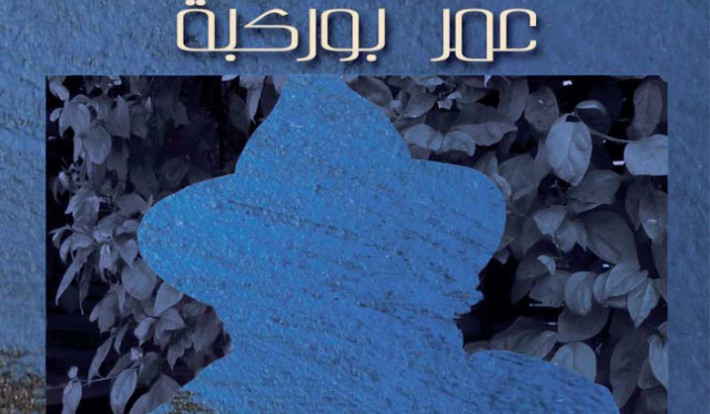
The Bab Rouah gallery offers to view, until 31 October, a retrospective of the works of painter Omar Bouragba created between 2007 and 2015. A beautiful harvest that denotes great pictorial creativity.
Painter Omar Bouragba precisely chose this period from 2007 to 2015 to reveal all his works that have never been seen in Rabat. "I have already shown my paintings from the years 2007 to 2011 in other cities, but not in the capital. So, I thought it would be a good opportunity to do this retrospective gathering the creations of all these years," emphasises artist Omar Bouragba. Furthermore, this exhibition allows for the presentation of the evolution of the artist's work, and then to discover works from years more productive than others.
In his reading of this retrospective, Jean-François Clément (University of Nancy) focused on the permanence and diversity of the work of painter Omar Bouragba. "He does not only use graphic expression, since he is also a poet, just as he can impose long periods of silence on himself, some years being, consequently, richer in creation than others. We are therefore not in the case of painters who express themselves permanently, without any respite and exclusively, through the image. Painting only exists here as a counterweight and is by no means a unique object of passion. Nothing to do either with painters who have nothing to say and who use painting for other purposes than for personal expression. Omar Bouragba does indeed have something to say, both through the forms shown and the colours used," he explains.
However, those who know Bouragba's career know that he, at his beginnings, worked on calligraphy, using letters as a sensual movement in space. His love for the letter is of Sufi inspiration and takes on a symbolic dimension. His painting is today that of an abstract painter keen on geometry, with sensual movements where Omar Bouragba refers to spirituality, mysticism, and the invisible. This would explain the philosophical approaches that were at the basis of his aesthetic choices. And this in order, according to him, to "arouse an inner contact in the viewer, a strong impact on their soul, a vibration of their entire being".
By looking very closely at Bouragba's works, Jean-François Clément detects, in some, the idea of a whirlwind that sinks towards something unrepresentable. "One must be cautious and accept to go and see closer. The whirlwind can continue to exist while being very little visible, because sketched by simple pencil strokes or by brushstrokes that have become almost invisible.
There are thus other structural patterns, like what was once called the shape of the 'fried egg', present in Jilali Gharbaoui at a moment in his life. There too, it is advisable to see closer, because one can find oneself at the bottom of a vortex facing a relatively flat space in which more complex forms play, lines or rounded forms, but also the light that these forms can reflect," he specifies in the presentation of the Omar Bouragba exhibition.
This Marrakchi by origin began painting in 1959. His stay in Rabat allowed him to get to know the artistic milieu of the 1960s and to bond with Mekki Murcia who organised his first exhibition at La Mamounia in Rabat in 1965. But his meetings with Jilali Gharbaoui in 1965 and Ahmed Yacoubi in 1968 were decisive in his orientations as a painter. Except that Marrakech called him back in 1971 to return and work in a serene spirit full of spirituality. A long journey crowned by exhibitions in Morocco and abroad, knowing that several of his works are in collections in Morocco, France, Italy, Hungary, the United States, Saudi Arabia, Senegal, Kuwait, and Tunisia.