
FrançaisEnglishالعربيةDeutschEspañolNederlandsItaliano中文

Your cart is empty

Adventure awaits!

About Laâyoune

Laâyoune (in Arabic: العيون [Al ʿAīūn], El Aaiún or El-Ayoun, literally "the eyes" or "the springs") is a Moroccan...

News in Laâyoune

Follow the latest news, projects, and official announcements from your ville.

News 10 May 2013 8 min read

Interview with Hamid Lechhab, Austrian researcher of Moroccan origin, in human sciences
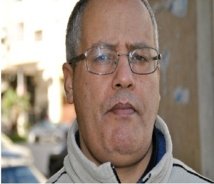
Interview with Hamid Lechhab, Austrian researcher of Moroccan origin, in human sciences

Dr. Hamid Lechhab analyses in this interview the latest events in Laâyoune and focuses on a set of points which, in his opinion, are the real factors responsible for what is currently happening in the Sahara region. Beyond the Moroccan-Algerian conflict,

he warns the Moroccan State and its diplomacy against the ramifications related to this problem and calls on it to call things by their names and not to misdiagnose. Algeria, like Morocco, is the target of a desire to change the Maghreb and the Sahel according to a scheme developed behind the scenes by American military strategists, supported by other Western powers. Interview.

Libé: What is your view on the latest developments in the Sahara dossier?

Hamid Lechhab: I followed these events with great anxiety, as well as their explanations put forward by the official Moroccan side. To tell the truth, I was not convinced at all, because these explanations seem somewhat simplistic and do not take into account the real factors. I believe that this problem must be placed in its true context, which is directly part of the strategies of what is called "fourth-generation warfare", which is basically just a new colonial era.

What are, in your opinion, the mechanisms directly linked to these events?

Observing these events, one can see that the conditions of "fourth-generation warfare" are present in this pseudo-problem. The strategies put forward are complex, diverse, intertwined, and difficult to elucidate. Efforts are being made to weaken the targeted States by all possible and imaginable means. The strategies advocated take several forms: establishing contacts with adversaries and enemies, encouraging religious and terrorist militias. Just as mafia and prostitution circles are co-opted, real or false enemies such as Islam, immigrants, and the vestiges of communism are stigmatised. The most developed technology is used, new actors in international politics are encouraged, whether they are organisations, politico-economic blocs, or civil organisations. There is a desire to put an end to the national spirit among the citizens of the targeted State, to such an extent that only football matches, for example, embody this feeling of belonging, without forgetting to encourage loyalty to transcontinental organisations rather than to the homeland. Priority is given to human rights organisations and to religious or racist groups. Media propaganda is intensified to sow chaos in the targeted country in the name of individual freedom. This strategy of implosion is led, among others, by sending Western groups on the spot to continue and strengthen the work of secret services: Christian missionaries, "human rights soldiers", parliamentarians who support anarchy aimed at destabilising the target State.

These are therefore some strategies of this new colonial current, and the list is long. I am not exaggerating if I say that all these strategies are present in the latest events in the Sahara.

But how do they manage to manipulate people so easily?

Basically, it's simple. If we take into account an important component of these strategies, we will mention what is called "network warfare", which paves the way for direct intervention by Westerners, wherever they want. The work of these networks consists of spreading chaos, rumours, changing the individual's identity and substituting another ego for it, disturbing the political and cultural atmosphere, and sowing doubt through audiovisual means by alienating the citizen through films and programmes that contribute to altering taste and depriving the listener and viewer of the sense of criticism and reflection: cooking shows that move further and further away from the socio-cultural reality of the country, cheap films, the dumbing down of youth with stupid competitions to make them stars and let them dream of a chimerical world.

It is argued that the real problem of the Saharan provinces is that of human rights. What is your position on this?

I see here the true face of America in particular and the West in general. This double standard is no longer tolerable. A few months ago, America praised the development of human rights in Morocco, and by a magic trick, it suddenly denounces the violation of these rights in the Sahara. Thus, it has already divided Morocco into two parts.

Basically, I see a more devious and dangerous tactic. It is a way of gauging the resistance strength of the power in place in Morocco and, in the process, triggering "Plan B", which consists of exploiting "human rights soldiers" in Morocco to write dubious reports on what is happening in Laâyoune, for example. If we believe the version of the Moroccan authorities, we can see that the desire to sow trouble in Morocco is real, as a prelude to a radical change, the consequences of which are unpredictable.

But what interests do the "Friends" have in all this?

It should be remembered that in 2007, the United States set up its military base, which aims to implement a global strategy throughout North-West Africa (Africom). The miraculous appearance at that time of "the Al-Qaeda organisation in the west of the Muslim world", despite the meticulous work of the American secret services, does not go unnoticed. The great catastrophe is that neither the "religious" and secular groups, nor the intellectuals, let alone the powers in place, have realised that Westerners need to create a real or imaginary enemy to legitimise their interventions.

The entire Sahel and North African region is openly targeted, without a doubt by foreign forces. This is not an end in itself, but just a means to strengthen positions in a "real economic war" between the West and other economic powers like China, which is strengthening its presence in Africa every day.

In our opinion, the "dwarf principality" does not realise that it is only an instrument of "4th generation warfare", and once its role is finished, it will itself be a target, as we have seen with other Arab regimes in Tunisia, Egypt, and Libya. Arab-Muslim regimes are falling like dominoes. We are once again experiencing the plight of the Andalusian Emirates, and we have not yet learned the lesson.

What should be done, in your opinion, to thwart these new strategies?

Intellectual resistance is currently essential, because it is basically an intelligent "war". Morocco has many intellectuals in almost all fields. We must reflect on a medium- and long-term project to understand and analyse the results of this new war. It is imperative to realise that the ultimate goal is to show the weakness of the Moroccan regime from within and sow doubt among its competencies. The Moroccan power and intellectuals must become aware of the "ideologisation" of the notion of human rights and democracy and their abusive exploitation to achieve the goals set by the new strategy. There is no doubt about the nobility of human rights as a universal and intellectual heritage of Western Enlightenment thinkers. But we clearly see how colonisation abuses these rights to bring to their knees regimes it no longer needs. The application of the law in a strict manner must be taken seriously by the power, and in particular towards rioters and troublemakers. I do not understand the behaviour of the protesters who ransack public and private property in the name of human rights, knowing that these same rights insist on their protection. I have the impression that freedom of expression has been understood as anarchy, because young people are exploited to the extreme as bait to spread fear and show the power's inability to manage its socio-politico-economic crises. It is really a pity that human rights are only understood from this perspective when they also imply "duties".

Can the immigration axis serve in this surge of awareness?

The Moroccan immigration policy must change radically, and we know that the West sees this issue as a real danger. A good number of Moroccans are socially and politically involved in the host countries and can therefore play a role in informal diplomacy, according to a well-crafted plan.

Are Moroccans, in your opinion, targeted by the major strategies?

The Moroccan must become aware that he is directly targeted by "4th generation warfare" and that several strategies used in this direction have become perceptible in Morocco. We must remain vigilant and not be tempted by rumours that are circulated in cultural, social, and political circles.

The State's responsibility towards its youth is undeniable. It must ensure that those in charge restore citizens' confidence through concrete actions and not just speeches. Youth need the guarantee of a minimum of decent living. In this context, it would be wise to proceed with a redistribution of wealth and to guarantee equal opportunities in the job market, so that youth are not excluded and marginalised, do not join the ranks of extremists, and do not sink into delinquency.

Do you have any proposals to make in this direction?

I cannot occupy the position of politicians and experts in the field, but priority must be given to the economic and social aspect. I believe that solidarity begins with the equitable sharing of work. To do this, we can reduce the time of those who work to create new jobs in order to absorb unemployment. Part-time work for vacant positions would be another solidarity solution, without obscuring political and cultural problems.

Listen
Size:

