
FrançaisEnglishالعربيةDeutschEspañolNederlandsItaliano中文

Your cart is empty

Adventure awaits!

About Temsamane

Temsamane is a Moroccan rural commune in the subdivision of Driouch, in the Oriental region.
It has an urban centre, Kerouna,...

News in Temsamane

Follow the latest news, projects, and official announcements from your commune.

History and memory 21 Jul 2015 3 min read

94th anniversary of the Battle of Anoual
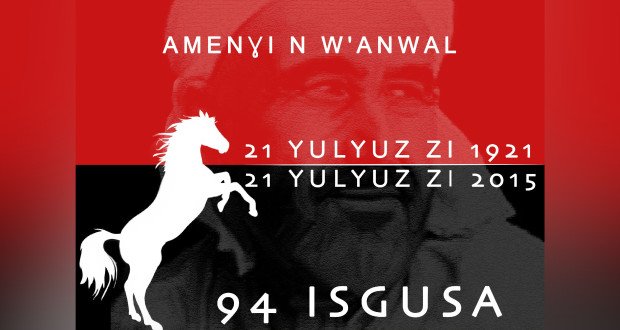
94th anniversary of the Battle of Anoual

The Moroccan people celebrate this Tuesday the 94th anniversary of the Battle of Anoual, a resounding episode in the history of Morocco's struggle to free itself from the colonial yoke.

Thanks to determination and faith, the Moroccan combatants, commanded by the fine strategist and charismatic leader of the resistance Abdelkrim Al Khattabi, were able, despite their small numbers, to overcome the powerful and modern Spanish army on 21 July 1921. From the beginning of the 20th century, and precisely during the period 1907-1912, the Sharif Mohamed Ameziane was at the origin of a fierce resistance against the Spanish troops, marked by decisive battles in which he won several victories, until he died on the battlefield on 15 May 1912.

Thus, Mohamed Ben Abdelkrim El Khattabi took over by holding high the torch of the Rif resistance. Indeed, this fine strategist was able, thanks to his charisma and his strong personality, to unite the efforts of the combatants by proceeding to the restructuring of the resistance movement on the political and military level to encompass the entire Northern region.

The liberation movement orchestrated by this gifted leader was marked by rigour in organisation and military planning, in addition to the capacity for mobilisation, as evidenced by the Battle of Anoual, which constituted a brilliant stroke that had repercussions beyond the borders of Morocco.

On the one hand, the battle completely upset the military situation insofar as heavy weaponry and the number of soldiers were no longer the determining factors for winning the war, but rather mobility, faith and a perfect knowledge of the terrain that made the difference. On the other hand, the battle acted as a catalyst for the awareness of all colonised peoples of the need to free themselves from the yoke of colonialism, since the myth of the invincibility of colonial powers had been broken.

The "Anoual" battle is identified with this site located between Melilla and Al-Hoceima, where General Sylvestre, commander-in-chief of some 60,000 men of the Spanish army stationed in this region, decided to concentrate the majority of his troops. The high-ranking Spanish officer, who counted on the impressive number of his soldiers and his modern weaponry, had not the slightest doubt that he would crush and tear the resistance to pieces.

However, the fate of the battle was sealed in favour of the resistance, thanks to the determination, bravery and faith of the resistance fighters and the skill and great sense of organisation of their leader, Abdelkrim El Khattabi.

General Sylvestre found himself obliged to order the chaotic withdrawal of his troops, thus marking the end of the myth of the modern army with overwhelming superiority.

The Spanish army had lost nearly 16,000 soldiers and left in the hands of the Moroccan combatants an enormous war booty: 150 cannons, 400 machine guns and 25,000 rifles. Seven hundred Spanish soldiers had been taken prisoner.

Listen
Size:

