The holy month of Ramadan takes on particular importance in Tangier, known for its deep attachment to traditions, its fervent spirituality, and an atmosphere imbued with meditation, solidarity, and conviviality.
Several days before the start of the holy month, households got into the mood and prepared to welcome the first day of fasting in pure tradition.
Instead of leaving it to the last minute, housewives started preparations for this month early, starting with the purchase of ingredients to prepare Ramadan cakes, including the famous chebakia, "sellou", sweets, or even "harira" soup.
In the alleys of the medina, the scents of dishes and sweets emanate from the houses where women are busy preparing traditional recipes, some of which are particularly laborious and require preparation in several stages.
The mythical "Souk Barra" square, where the people of Tangier used to do their shopping from merchants, whose stalls are dominated by the colours of spices with strong scents and dried fruits, well before the appearance of large supermarkets, which also experience a significant influx and a warm and magical atmosphere.
On the spiritual side, the last ten days of the month of Sha'ban see a strong influx into the mosques where ceremonies of collective reading of the Holy Quran take place. The faithful and followers of the different zaouias honour this period with the rituals of dhikr and panegyrics.
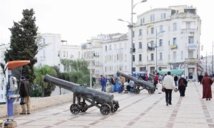
In a statement to the MAP, the president of the Al Boughaz Association, and author of several works on Tangier, Rachid Taferssiti, stressed that the holy month of Ramadan has always been synonymous with spirituality, solidarity, mutual aid, and conviviality for the people of Tangier, who reserve a very warm welcome to the appearance of the lunar crescent of Ramadan, with ululations, a special melody given by flautists who criss-cross the arteries of the neighbourhoods, and the firing of cannon shots as a sign marking the arrival of the holy month.
In the old neighbourhoods of the city of the Strait such as Marshan, Kasbah, or Dar Baroud, the doors of the houses remain open since visits between neighbours are uninterrupted, he said, noting that Ramadan is also an occasion to convey the values of sharing, solidarity, and family gathering in an atmosphere imbued with spirituality and conviviality.
Ramadan is an occasion for the people of Tangier to visit their loved ones and meet up with friends, but also an opportunity to share and exchange tasty dishes, which families have the pleasure of having others taste.
"Tangier is also known for the coexistence between religions. I remember my mother who prepared small baskets of cakes to give to our Jewish and Christian neighbours," he said with sparkling eyes.
It is around a table garnished with delicious dishes that the members of the family gather to break the fast. The dishes hardly differ from what is customary in most Moroccan cities: the essential harira, sweets, and pastries richly coated with honey, varied juices, and dried fruits, he continued.
Ramadan in Tangier is also a strong influx of the faithful towards the mosques, particularly for the "El Ichaa" prayer and the "Tarawih". Some parents make a point of accompanying their children dressed in traditional clothing.
Furthermore, the month of Ramadan coincides this year with the summer period, which gives long days to fill with all kinds of activities: swimming for some, fishing or reading for others.
Thus, passers-by are rare during the day and people prefer to go out at night to appreciate the freshness and sweetness that permeate the atmosphere of Tangier or even visit the shops with Eid Al Fitr and new clothes for the children already in perspective.
News 20 Jun 2015 4 min read
Ramadan in Tangier, a deep attachment to traditions