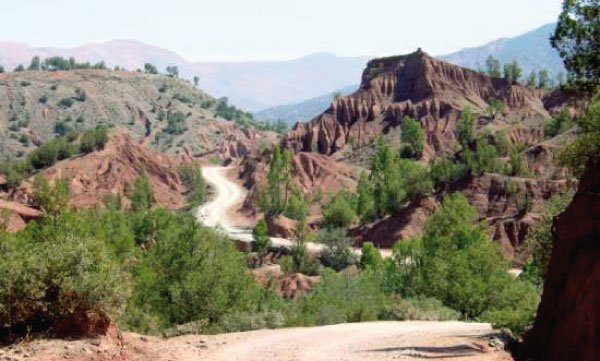
The Artsouk association is mobilising around Moroccan heritage, education, and sustainable development. Thanks to the efforts of Moroccans living abroad, local partners, and in-situ resources, the association has decided to rehabilitate a natural site recognised for its tourism potential: the village of Ouirgane, located 70 km from Marrakech. This development aid project is structured around three components: the rehabilitation of the village, the redevelopment of the trail, and the revaluation of heritage.
The village of Ouirgane, 70 km from Marrakech, is the preferred crossing point for traversing the High Atlas. Ideally located between Asni and the Almohad mosque of Tinmal, the village of 1,300 inhabitants is composed of an essentially agro-pastoral population. Tourists who visit have long known the must-see places that are "Le Sanglier qui fume" and "La Roseraie". Many excursion trails in the Toubkal National Park start or pass through Ouirgane. This trail is regularly used by schoolchildren who have to get to their school. But it is too winding to facilitate pedestrian travel, not to mention that it is currently in such a state of disrepair that it represents a real danger for users. Many accidents have been reported. Schoolchildren have had to change their route and now walk along the main road. For the association, it was therefore urgent to secure the route for schoolchildren and residents through the rehabilitation of the village's internal footpath. "The resources used will be essentially local: labour, construction materials, implementation using traditional and innovative techniques," emphasises one of the association's managers. The launch of this project will be marked by a stopover in May to present the schoolchildren and their headmaster with a large collection of books to stock the school library.
Raising awareness among residents about their own heritage in order to ensure its transmission and sustainability is the objective pursued. Along the trail remain collective facilities that bear witness to the artisanal and agricultural activities of the region. They make up its cultural and architectural heritage. To this day, they are in a state of abandonment. However, they constitute a visible trace of local culture and traditions, witnesses to the organisation of the inhabitants and the solidarity that binds them. "Artsouk is committed to accompanying various local artisan corporations in order to contribute to the rehabilitation of the 'collective' facilities located along the trail," indicates one of the association's managers, who points out that this action will help strengthen the site's tourist appeal. The Artsouk association is not at its first solidarity initiative. After the village of Drioukat in 2009, the success of the Ouirgane project will provide the association with new expertise with a view to carrying out similar actions. Several villages are already under study, including Wameslaght (Taroudant region) and Anssners (Tiznit region).
The Artsouk association is nearly 10 years old
Created in July 2003, the non-profit Artsouk association works via its website to promote Moroccan heritage, culture, arts, and crafts. Thanks to the skills of its active members, the association provides multidisciplinary know-how in the implementation of development projects focused on improving the living conditions of local populations, heritage enhancement, and the development of local income-generating activities. In 2009, the Artsouk Morocco office moved to Marrakech, responding to the need for proximity to local producers and partners and thus allowing for the expansion of the scope of intervention.
-* For the Artsouk team, "it is important to put in place a local economy that generates income. The inhabitants must be the actors of their own development. It is a question of relaunching and supporting the socio-economic development of the village through the structuring of collective initiatives, supporting producers towards improving their working conditions, and developing derivative products from local produce. Artsouk is also working on setting up a standardisation process and a label for local olive oil production. This component is supported by the International Cooperation Agency for Local Development in the Mediterranean. The enhancement of olive farming will allow for job creation and the strengthening of income-generating activities."