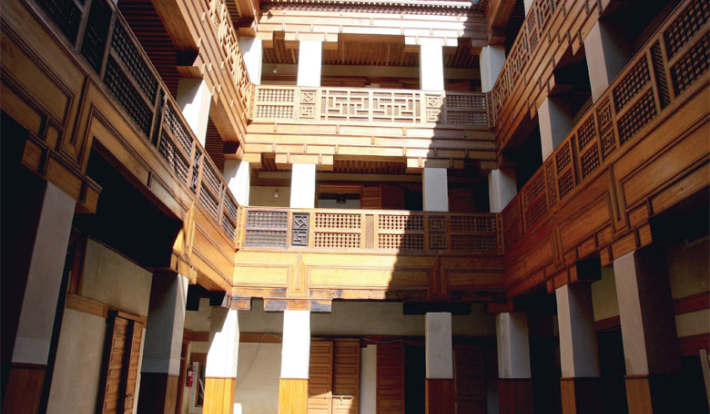
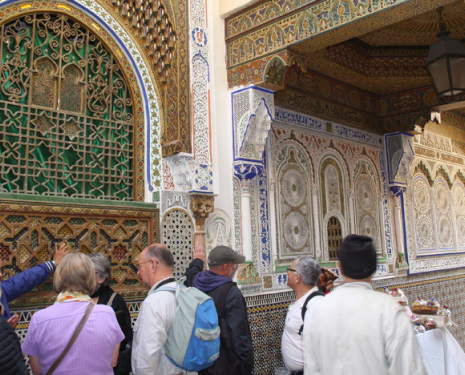
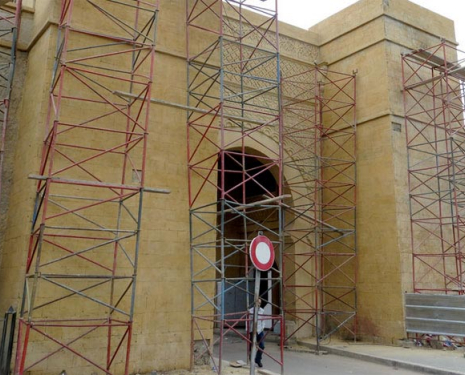
After months of painstaking work, the Medina of Fes has taken on a new look, with its alleyways and historical monuments restored and rehabilitated as part of a vision combining heritage preservation with modern management requirements.
This operation is part of the restoration programme for the Medina of Fes, launched by H.M. King Mohammed VI in March 2013 and executed by the Agency for the Development and Rehabilitation of the city (ADER) of Fes as the delegated project manager. This programme also includes the upgrading and renovation of the alleyways of Bab Boujloud, Tallaa Seghira, and Saffah, passing through Attarine, Diouane, Chemmaine, Sbitriyine, Bab Sansla, Khrachfiyine, Annakhaline, Al Haddadine, and Bab Allamti. Thus, along this circuit, which is heavily frequented by visitors and tourists, more than 254 traditional awnings have been installed at shops, more than 80 iron doors have been replaced with cedar wood doors, and some 155 doors have been renovated to highlight the nobility of the wood and materials used.
Also, some alleyways have been covered with Mamounis to create shaded areas, allowing visitors to protect themselves during periods of extreme heat. These rehabilitation works on the Medina's alleyways should improve working conditions for traders, stimulate their activity, and, above all, enhance the surroundings and environment of the rehabilitated monuments of great historical value, which serve as their setting. For their part, the tanners have resumed their activities over the past few months in the tanneries of Ain Azliten, Sidi Moussa, and, for some time now, Chouara. Similarly, several artisans and traders have been able to recover their shops, which were rehabilitated as part of the restoration and rehabilitation programme for the historical monuments of the Medina of Fes, located notably in the Souks of Sebbaghine and Kettanine. With an investment of more than 615 million dirhams, the 2013-2018 restoration programme concerns a total of 27 historical monuments and sites in the Medina of Fes, nearly 4,000 buildings at risk of collapse—including 1,729 in the first degree—as well as tanneries, bridges, and Medersas built by the Merinid dynasty between the 13th and 14th centuries.
According to ADER, 26 monuments have been restored since last January. These include the Sbaiyine Medersa, founded in the 14th century by Sultan Abou Al-Hassan Al Marini; the Seffarine Medersa, erected in 675H/1276 AD by Sultan Abou Youssef Yaâcoub; and the Sahrij Medersa, built in the 14th century by the Merinid Sultan Abou Al-Hassan. Among these buildings are also the Mesbahia Medersa, erected north of the Qaraouiyne Mosque by the Merinid Sultan Abou Al-Hassan in 1347, and the Mohammadia Medersa, founded at the end of the 13th century and renovated by Sultan Mohammed V in the 20th century; the historical bridges of Khrachfiyine, built in the 10th century by the Zenata Emir Dounas over the Oued Al-Jaouahir; and Terrafine, the work of the Zenata Emir Dounas in the 11th century. The programme of restored buildings also includes the Bab Makina walls, built in the 14th and 19th centuries; Jnan Drader (12th century); the Borjs Kawkab (14th century); and Sidi Bounafae and Boutouil, built by the Saadians during the 16th century.
Also restored were the Foundouk Achich, whose foundation dates back to the Saadian era in the 16th century; Kettanine (19th century, during the era of Sultan My Hassan I); and Sagha (18th century), as well as the tanneries of Ain Azliten and Sidi Moussa, whose origins date back to the Idrisid era in the 9th century, and Chouara, established at least by the Saadian period in the 16th century. This programme also includes the rehabilitation of the Souk of dyers (Sebbaghine), whose origins, according to historians, date back to the Zenata era in the 10th century. It was rebuilt by the Merinid Sultan Abou Said Othmane in 1325 following its flooding. Borj Neffara/Dar Al Mouakki, built during the reign of the Merinid Sultan Abou Inan to monitor the astronomical map of the sky for reasons related to time calculation; the residences Dar Dmana and Dar Lazrak, founded in the 14th and 15th centuries respectively; the former Bank Al-Maghrib Agency (20th century); the Quaraouiyne library; the Sidi Hrazem Mausoleum (12th century); and Hammam Ben Abad (14th century) are also among the restored historical monuments. As for the restoration of Kissariat Alkifah, which dates back to the Idrisid era and was renovated at the beginning of the 20th century, it has been rescheduled for 2016 following a recent agreement with the traders.