FrançaisEnglishالعربيةDeutschEspañolNederlandsItaliano中文

Your cart is empty

Adventure awaits!

About Aourir

Aourir is a Moroccan rural commune with an urban centre of the same name, located in the south of the country, in the...

News in Aourir

Follow the latest news, projects, and official announcements from your commune.

Festival 30 Aug 2014 4 min read

The Imourane Festival comes to the rural commune of Aourir

The Imourane Festival comes to the rural commune of Aourir

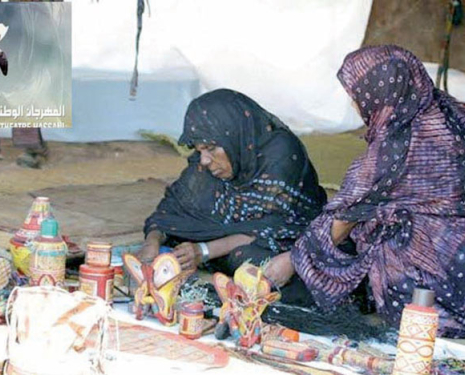
The rural commune of Aourir is hosting the 6th edition of the Imourane Festival from 28 to 31 August under the banner "Imourane: memory and development" with a rich and varied programme of social, cultural, and economic activities where the surf of the sea, fragments of history, and snippets of legends converge. Initiated by the Imourane Festival Association for Heritage and Culture in partnership with the rural commune of Aourir, the Royal Institute of Amazigh Culture (IRCAM), and associative actors, this event is part of, according to its initiators, the extension of the Moussem known as Almoggar of Imourane that the Ida Outanane tribes celebrated for centuries and which traditionally crowned the cycle of moussems in the Souss at the end of the harvest and gathering seasons. On the menu for this edition are camel races on the beach, traditional boat competitions, a cross-country race, a swimming competition, and beach soccer and volleyball tournaments, as well as daily fantasia shows and exhibitions of local products made by local associations. According to Khalid Skouti, of the Imourane Festival Association for Heritage and Culture, this moussem was once supported by the inhabitants of Tamraght who collected donations and aid from neighbouring villages. An animal was then sacrificed at the opening of the moussem at the mausoleum of Sidi Aït Iazza Ouhaddi where a religious vigil was also organised. But the celebrations also had their secular side, since the moussem was an occasion for reconciliation between the tribes and offered a space for exchanges and meetings with young people from different Douars and who, often, sealed marriages at the end of this event, notes the interviewee. According to Omar Hamouche, member of the Tamraght communal council and secretary general of the same Association, this rock, which extends into the sea for a length of 50 to 55 metres and a width of about 14 metres and which was at the time separated from the mainland, still bears vestiges of the "Ben Mirao" castle, witnesses to the Portuguese presence. He also asserts that this rock served as a Portuguese fort equipped with cannons and firearms to repel the local population who had not been slow to support the jihad campaign led by the Saadians, under the leadership of Mohamed Cheikh, with a view to liberating the coasts and recovering the fertile fields adjacent to the current Imourane and which were known in particular for the quality of their carrots. On this point precisely, Ahmed Saber, former dean of the Faculty of Letters of Agadir, points out that the celebration of the Imourane Moussem historically refers to the beginning of the 16th century which marks the beginning of the Portuguese occupation of the Agadir fort, called at the time "Agadir Laârba", in reference to a weekly Souk that was held there every Wednesday. For him, the holding of this moussem actually marked the celebration by the local tribes of their victory over the Portuguese occupation at the end of a series of battles that took place between 1505 and 1506, maintaining that this victory would have then been associated in the popular imagination with a particular consideration for the rock of Imourane with all that it continues to carry in terms of mysteries and legends, the most tenacious of which is the irresistible attraction that a hole in the rock exerts on young girls of marriageable age. And for good reason, "the Devil's Rock" as some nickname it, experiences throughout the three days of the Imourane Festival an uninterrupted influx of visitors of all ages and from different regions, some of whom are moved by curiosity about the place, others come to sell goods, while others are attracted by the beauty of the landscapes. In the lot, other visitors, young girls in this case, cluster around the "magic" hole to expose themselves to the spray of seven successive waves, in the hope of getting rid of supposed bad luck, an unavoidable prelude to getting married.

Listen
Size: