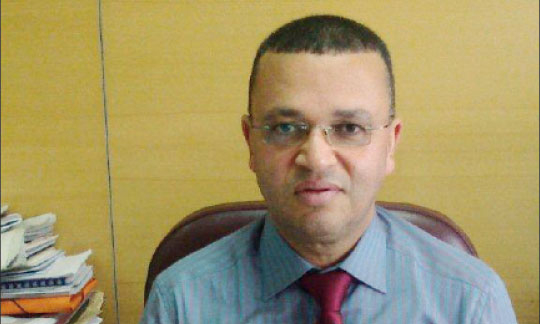
Indeed, Rabat is the only city with a special status. That said, the delegated waste management file is managed by two bodies, namely the City Council and the wilaya. This regulation does not exist in any other city in the Kingdom. In other regions, the municipality performs this mission alone. In Rabat, the wilaya has budgetary and financial powers. This status therefore gives the wilaya exclusively the power to impose penalties on delegated companies in the event of non-compliance with the specifications signed with the city council.
The council is responsible, for its part, for establishing reports of infractions through its controllers (commissioned agents) and sending them to the wilaya. It must be stressed that the wilaya has recently seized its coercive role by applying penalties to the recalcitrant, which has contributed to relatively straightening out the situation.
Several factors are at the origin of the degradation of the quality of waste management. Like the non-application of penalties on time, there are other causes, notably the shortcomings noted in the specifications and the contracts signed with the three companies.
No clause in the current contract indeed requires the three service providers to renew their equipment or replace defective equipment with new ones.
We are currently looking into this situation. The City Council is preparing new specifications that will be submitted to the Council's evaluation for the next sessions in July. We also plan to launch a new call for tenders at the beginning of September to choose the company that will replace the Veolia company.
Is the contract therefore officially broken with Veolia?Yes. The contract with Veolia will be officially terminated before the end of the year following a request made by the concessionaire itself. It must be recognised that this company has not managed to honour its commitments, which has made Rabat suffer the consequences of a very hazardous multinationalism. Indeed, the company chose to leave while being aware of the consequences of breaking such a contract on the quality of public service.
How do you intend to manage the waste management service during the period preceding and following Veolia's departure?We are currently conducting quite difficult negotiations with this company in order to identify optimal management for this transitional period. This management is moreover ensured at this moment by the City Council's teams, who are currently ensuring the control, monitoring, and guidance of Veolia's personnel and the management of the equipment while awaiting the final departure of this company. I would like to inform, in this sense, the population residing in the Hassan district of the deployment of new containers in order to guarantee better cleanliness of this district before the waste collection.
What have you planned to improve the services of the other delegated companies?What you need to know is that the council has put in place a new recovery plan in order to remedy a situation that is becoming increasingly worrying.
This recovery plan provides for the development of new terms of reference according to which it will be a question of identifying the appropriate collection method for each district, the specification of the equipment to be used, the appropriate containerisation method for each urban sector, and even the expected results. These new terms will therefore be integrated into the new contractual framework that the council plans to negotiate with the delegated companies. Indeed, the Council will renegotiate each contract with the three delegated companies with a view to finding new solutions for upgrading their service. Thus, the contracts will be subject to modification through the introduction of new amendments that will set more precisely the standards of containerisation, the frequency of collection, as well as sweeping.
History of delegated management
The city of Rabat has experienced demographic growth and urban development in recent decades that has required the upgrading of the environment and the living environment.
Thus, the solid waste sector has been strongly influenced not only by the change in lifestyle but also by the increase in the production of household and similar waste.
Faced with these changes, the municipal services in charge of the management of this sector remained powerless and could not follow this evolution due to the absence of an organisational framework for this sector. This resulted in a degradation of the environment and the living environment of the citizens.
This situation prompted the City Council to conclude agreements with three delegated companies in 2002, which have since been in charge of household waste collection.
-* The contract with Veolia will be officially terminated before the end of the year, following a request made by the concessionaire itself.
-* The council has put in place a new recovery plan that provides for the development of new terms of reference.