
FrançaisEnglishالعربيةDeutschEspañolNederlandsItaliano中文

Your cart is empty

Adventure awaits!

About Essaouira

Essaouira (/ˌɛsəˈwɪərə/ ESS-ə-WEER-ə; Arabic: الصويرة, romanized: aṣ-Ṣawīra), known until the 1960s as...

News in Essaouira

Follow the latest news, projects, and official announcements from your ville.

News 15 Apr 2012 3 min read

The MEN delegation in Essaouira communicates about its achievements and constraints

50 thousand primary school pupils and 8,410 middle school pupils benefit from the Tissir programme for direct financial support to needy rural families in the Essaouira province. A fairly significant figure, especially in primary school, which has 64,775 pupils for the 2011/2012 school year. These are significant indicators given by Ahmed Ghannami, delegate of the Ministry of Education in Essaouira during a meeting with the press.
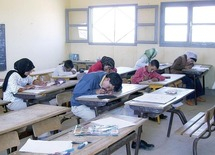
The MEN delegation in Essaouira communicates about its achievements and constraints
58,410 pupils benefit from the Tissir programme

The start of the school year, always marked in Essaouira, a transit zone, by the constraints of human resource mobility, has allowed for the expansion of educational provision at the level of new enrolments and structures created or renovated. This great dynamic, specifies Ahmed Ghannami, has been accompanied by a chain of social services: "One Million Schoolbags" operation, distribution of bicycles, student houses, school canteens, and boarding schools.

The problems linked to the human resources factor were mentioned given their vital and conflictual aspect. For the MEN delegate, the nature of the province as a transit zone for teachers poses a serious problem in terms of the stability of human resources. At each start of the school year, he specified, the MEN delegation as well as its union partners at the level of the provincial commission find themselves confronted with a serious deficit in terms of staff, especially in primary school. However, the measures taken by the MEN to complete all transfer movements by mid-June could lead to the start of the 2012/2013 school year with more visibility and stability in terms of human resources.

Regarding the dialogue with the five most representative unions, the MEN delegate says he is optimistic about the current dynamic which has allowed, through a particular experience, the development of a charter to institute a provincial commission, with the prospect of choosing clear and objective criteria for the temporary assignment of teachers during the school year, especially in primary school. The objective being, according to Ghannami, to find a common and consensual platform to ensure educational services to the required standards for pupils on the one hand, and to be attentive to the concerns of the unions on the other hand.

The question of communication with the social and institutional environment of the public school was strongly mentioned. The MEN delegate insisted on the importance of opening the education sector to its surroundings so that it is better defended, protected, and appropriated by citizens. Otherwise, he added, the school is considered as a black box to be explored with sometimes the most hostile expressions.

The press organs mentioned several points linked to the imbalance marking the distribution of human resources between the Chiadma and Haha zones. This zone is experiencing a flagrant deficit in teachers, basic services, equipment, and the degradation of certain establishments, abuses committed by certain directors against teachers, and cases of ghost teachers and presidents of rural communes since the 2009 municipal elections, who dare to show up at the delegation's service to protest against the absences, yet justified, of their colleagues!

On the other hand, Ghannami took the opportunity to draw attention to the worrying figure of absences for medical reasons. Taking into account maternity leave and incurable diseases, the MEN delegate said he was worried about the many suspicious sick leaves. To conclude, the new MEN delegate displays the ambition to redress the schooling rate in certain rural communes that are not always in the era of generalisation.

Listen
Size:

