
FrançaisEnglishالعربيةDeutschEspañolNederlandsItaliano中文

Your cart is empty

Adventure awaits!

About Essaouira

Essaouira (/ˌɛsəˈwɪərə/ ESS-ə-WEER-ə; Arabic: الصويرة, romanized: aṣ-Ṣawīra), known until the 1960s as...

News in Essaouira

Follow the latest news, projects, and official announcements from your ville.

News 23 Dec 2011 5 min read

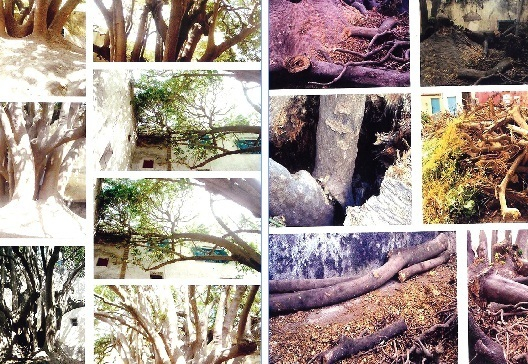
Ecological crime in Essaouira: A centuries-old tree massacred
Ecological crime in Essaouira: A centuries-old tree massacred

A new ecological disaster. Essaouira has just lost one of its beautiful and attractive tourist and ecological monuments. It is a tree dating back two centuries according to consistent testimonies, located in the heart of the artisanal complex, whose phenomenal branches have just been cut under circumstances around which versions and positions diverge, sparking feelings of bitterness and indignation among citizens. Civil society, represented by the Moroccan Association for the Protection of Animals and Plants, has just filed a lawsuit against the managers of the artisanal complex and the delegate of the Ministry of Handicrafts in Essaouira.

The said association, aware of its objectives and the missions assigned to it, and of the historical and ecological value of this ancestral tree, qualifies its deforestation as a crime against the environment and an illegal act committed by those responsible for maintaining and protecting this heritage. The complaint filed with the King's Prosecutor at the Court of First Instance condemns this aggression and demands the opening of an investigation to define responsibilities and take measures against those who attacked this heritage.

The complaint is based on the findings made by the judicial officer who went to the headquarters of the artisanal complex on 14 December 2011 at the request of the plaintiff association. To this effect, the report clearly states that the large and small branches of the tree, the subject of the complaint, were cut, with the exception of one branch still connected to the trunk, while noting that the cut branches are still on site.

"Not a single Souiri, not a single visitor, does not have a photo under the giant branches perched on the phenomenal trunk sitting majestically in the heart of the courtyard, considered a must-see passage for lovers of the city of the trade winds. It is a loss in more ways than one. We all feel wounded; it is a part of our collective memory that is disappearing," an outraged association member confided to us, not without pointing the finger at the managers of the artisanal complex and the Handicrafts delegation.

Contacted by Libé, the delegate of the Ministry of Handicrafts insisted on clarifying that the tree was not cut, but destabilised by the redevelopment work on the liquid sanitation network of the old Medina. The tree, she added, could not withstand the tremors caused by the work undertaken very close to the artisanal complex. "As a result," she continues, "we were surprised by the successive fall of its branches onto the premises of the artisanal complex." For her, the centennial tree suffers from a certain pathology that requires treatment to save it and thus make its branches grow back.

Indeed, we went to the complex and met some artisans who confirmed the accidental fall of the first branch.

"I was working in my workshop when I felt a tremor accompanied by a huge noise on the roof. I noticed afterwards that it was a gigantic branch that had detached from the trunk. It was accidental. I believe it was the work undertaken previously near the complex that destabilised the tree," an artisan on site confided to us.

Even admitting the accidental fall of the first branch, what was done to preserve the rest? How long did the other branches take before cracking? Did they really fall, or were they cut as the judicial officer's report specifies and as some photos clearly show? Did they pose a danger to the safety of the artisanal complex buildings? Were the competent services, such as Water and Forests, called upon to provide technical support in such cases in order to preserve this particular monument? What are the real causes of this alleged pathology? Is it really an intentional act as some rumours suggest?

These are questions that arise in a tense climate likely to provoke protests from the various components of a city indignant at this loss, which adds to the list of mediocrities in terms of its governance in general, and the protection of the environment in particular. The age of the tree in question exceeds two centuries. Its appearance was quite special, as its gigantic trunk had the shape of an iceberg, the largest part of which was hidden below the surface, while its phenomenal branches coexisted harmoniously, embraced the space, and reached towards the large square of the artisanal complex.

Essaouira, which possesses ecological heritage, therefore continues to accumulate ecological crimes that we have condemned on many occasions: the advance of the dunes, the fixing of which had required long-term work from 1912 until the beginning of the 80s; the disaster that ravaged several kilometres of forest in a RAMSAR-listed wetland and numerous species of flora and fauna, following the discharge of wastewater from the treatment plant due to the failure to carry out the installation work of the outfall connecting the station to the sea, among others.

The controversy is in full swing, a solidarity campaign has been launched by various association actors, while the justice system has taken up the file.

Listen
Size:

