The work of the 18th extraordinary meeting of the ICCAT (International Commission for the Conservation of Atlantic Tunas) continued yesterday behind closed doors in Agadir, with a first dive into the heart of the matter: the future of bluefin tuna quotas for the next two years 2013/2015.
"The risk for ICCAT member states is to say to themselves, since it is working well now, we can start increasing quotas," warned Dr. Sergi Tudela, head of the Fisheries Programme at WWF Mediterranean, from the outset in an interview granted to MAP, on the sidelines of the ICCAT meeting (12 to 19 November).
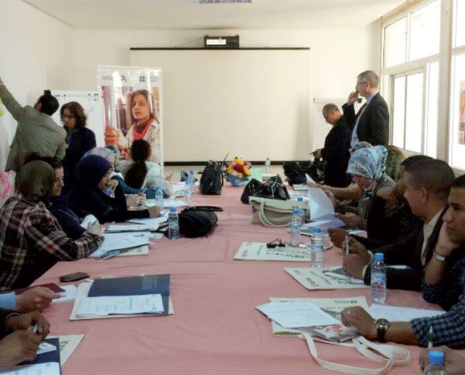
The ICCAT, an official international fisheries management body bringing together 48 member states, is holding its 18th extraordinary meeting from 12 to 19 of the current month in Agadir in the presence of more than 500 participants, who will have to decide on the future of bluefin tuna quotas, currently set at 12,900 tonnes per year.
The ICCAT scientific committee, which met in early October in Madrid, had indicated that stocks were in the process of recovery, while expressing broad reservations as to the extent of this increase.
This observation, although nuanced, contrasts sharply with that of 1998, when the same council sounded an alarm, stating that overfishing threatened the survival of this large predatory fish whose North-East Atlantic populations reproduce in the spring in the Mediterranean.
In 2010, the European Union went so far as to request, without success, the inclusion of this species on the red list of the Convention on International Trade in Endangered Species (CITES), a prelude to the prohibition of its commercialisation.
Since then, the situation has changed drastically. From more than 50 thousand tonnes per year in the 90s, the entry into force of the quota system brought catches down to 28.5 thousand tonnes in 2008, then to 22 thousand tonnes in 2009, then to 13.5 thousand tonnes the following year, before falling to 12.9 thousand tonnes between 2011 and 2012.
On this point precisely, the reaction of the WWF official was blunt: "Scientists are very clear: the basic data for the assessment are very poor and there are many uncertainties," he hammered, specifying that his organisation's idea is to "carry out a new stock assessment in three years with improved training, but also a new methodology that would also allow scientists to be more certain of the data in the field".
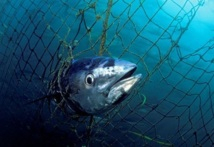
Faced with a species that has been heavily overexploited for decades and is a victim of overfishing and illegal fishing, particularly in the main spawning grounds of bluefin tuna in the Mediterranean, the ICCAT could not remain indifferent, especially with the presence of too many boats at sea and a lack of control over catches.
On illegal, unreported and unregulated (IUU) fishing precisely, Mr. Tudela assured that "it is true that all catches have decreased, including illegal fishing, but we are also worried about that. Because it is useless to have quotas and other measures that are within the scientific range if, at the same time, we have illegal fishing".
In a recent document made public, the WWF reveals, citing a study it commissioned, that between 2000 and 2010 "the equivalent of 18,704 tonnes of bluefin tuna reportedly transited via Panama without having been declared to the ICCAT".
In the same vein, the PEW Environment Group, another international ecological organisation, is firing shots at the persistence of illegal fishing in bluefin tuna fisheries, as evidenced by a 2012 study, which estimates that "the total allowable quotas were exceeded by 62% between 2005 and 2011 and by 77% between 2008 and 2011".
In a press release, the same NGO recommends "taking into account scientific recommendations and not increasing quotas as long as the problem of illegal fishing is not addressed and the best available research is not integrated into the stock assessment".
It also advocates "rapidly adopting an electronic version of the currently paper-based catch documentation system" in order to reduce illegal trade, "creating a formal group of experts that will use trade and bluefin tuna catch documentation data" and investigating the sources of illegal fishing.
In a speech read on his behalf at the opening of the ICCAT proceedings on Monday, the Minister of Agriculture and Maritime Fisheries, Aziz Akhennouch, had called for reflection on "new instruments for regulation and responsible management" of tuna resources, based on sound scientific advice, a collective commitment to collect and transmit quality information and data, and the optimisation of catch traceability downstream and upstream.
He assured that these mechanisms must also provide for the implementation of management measures integrating approaches allowing for a better understanding of environmental issues, control and integrated monitoring measures, the strengthening of regional cooperation and support for developing contracting parties.
In Morocco, the fishing of tuna species and related species reached a production of 8,584 tonnes during the year 2011, against 10,722 tonnes in 2010, a decrease of about 20% in terms of volume.
News 15 Nov 2012 5 min read
Bluefin tuna quotas: NGOs raise their voices at the Agadir meeting