From 9 to 12 May, poets and singers from the land of a thousand colours performed on the various stages of the festival, highlighting their creative genius.
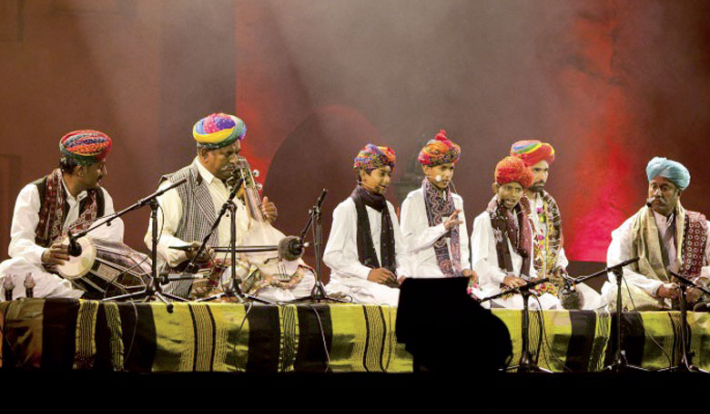
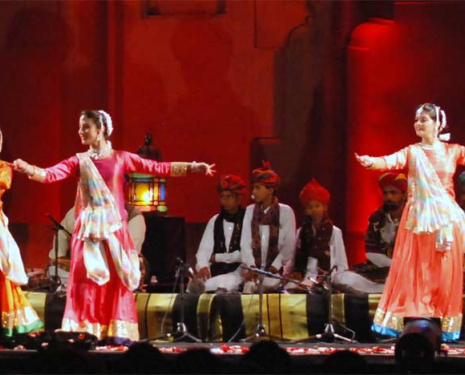
Guest of honour at the twenty-second edition of the Fes Festival of World Sacred Music, India seduced festival-goers with its multi-talented artists. Since Monday, Indian poets, singers, and musicians have followed one another on the various stages of the festival to the delight of fans of their music. The most striking shows are, without a doubt, the duo Parvathy Baul and Mehdi Nassouli, as well as the children of Rajasthan, "Chota Divana". Parvathy Baul was initiated from adolescence into the expression of the Indian mystics of Bengal: the Bauls. Today, she tells stories, sings, dances, and plays traditional instruments of the wandering mystics and transports her audience into a wave of Sufism and meditation, spinning with her arm outstretched towards the sky, as if caught in a spiral of the free wind of the spirit. On the night of 10 May, Parvathy was accompanied by the Hajhouj specialist, Mehdi Nassouli. At the prefecture stage, the two pairs seduced the audience by mixing Baul singing and Gnawi, in an enchanting fusion. Knowing each other since 2013, this is the first time they have performed together on stage in a unique show created for this twenty-second edition of the festival. "This is the second time I have participated in the Fes Festival. I came here for the first time in 2010.
It was a dream to participate in the festival, because only the best musicians perform in Fes and I wanted to be part of it," indicates Parvathy, who said she was very happy that the festival is paying tribute to her country this year. "India being an Asian country, it is characterised by a lot of wisdom and has an enormous amount to share, particularly regarding its achievements in terms of culture and human rights." In an interview granted to "Le Matin", the woman who says she sings for the Divine returned to the various similarities between Morocco and India. "I love Morocco and I love Fes. It is true that I have not visited many places in Morocco, but when I visited Fes for the first time, I really wanted to come back.
It is a place where I do not feel out of place. Moreover, I find that there are many similarities between Morocco and India and this concerns not only the food, but also some cultural and social aspects. I saw the Berber women who danced during the opening show, and this kind of ritual is very close to what we have in India. Also, the fact that Islam is one of the religions of our country influences a large number of rituals and musical styles among us, which increases the similarities between us." Parvathy also said she was delighted and surprised by the interest that Moroccans have in Indian art. "I remember that in 2010, I was walking in front of the hotel and people were saying: “Oh you are Indian; Sharokhan, Amitabh Bachchan…” (laughs) and the other day while coming from the airport, the security agent said to me “kaise hain” (how are you), I said how do you speak Hindi? He replied thanks to the films," she recounts. Furthermore, the children were not left out during the 2016 edition of the Fes Festival of World Sacred Music. Students from different schools had an appointment with the group "Chota Divana". Prodigy children who have become masters of their tradition and came to share the songs that symbolise their community with the children of Fes. An initiative that wants to preserve their centuries-old heritage.
Indeed, for the musicians, the possibility of having their young representatives travel is, apart from an essential economic contribution, an opportunity to have their exceptional artistic quality recognised. To help them in their quest, a unique film was made by Aurélie Chauleur entitled "Les Petits Princes du Rajasthan". The film was presented over three days to some 600 students. At the end of their meetings with the groups of students from Fes, the Chota Divana group will sing during a concert with the children of the Fes choir today, in a show mixing Indian singing and Moroccan music.
"I lived in India for four years and that is where I started working with traditional Indian musicians in the villages. But it is by collaborating with Alain Weber that we decided to set up this film project. Films are mediation tools. Thus, we aim to connect these musicians with the public and develop a human attachment with them, beyond the music. After all, these are children, aged 8 to 12, who only started attending school since the month of July thanks to one of their patrons who created an establishment that takes into account the fact that they are musicians. Also, these children do not yet have a perspective on their future and are not very aware of the harsh reality. They were born musicians and they think that they can easily live thanks to their art, but with the environment changing, they will certainly be confronted with difficulties, given that their patrons will eventually leave the villages and the children will thus lose their only means of living. The idea of the film is therefore to encourage these prodigies of the Manghaniyar and Langa castes, but also to allow them to perform on stage and therefore to create a financial income for them."