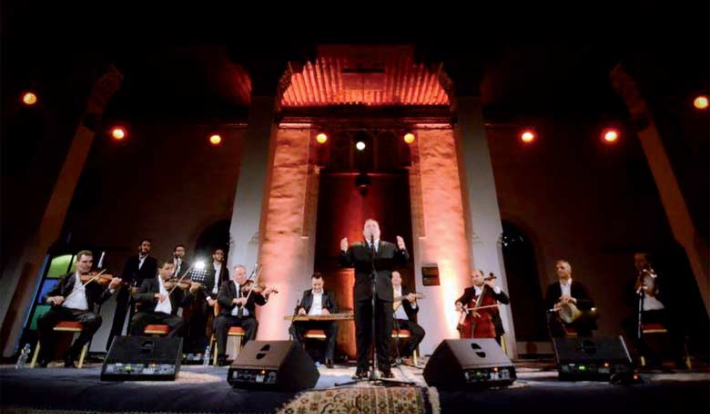
The 22nd edition of the Fez Festival of World Sacred Music will be organised from 6 to 14 May with a special tribute to "founding women", who have always left their mark on the History of the Kingdom.
This edition, organised under the High Patronage of H.M. King Mohammed VI, will be an opportunity to pay tribute to these builder women through an original creation and artists from several countries, notably the Moroccans Samira Said and Hindi Zahra, the Iranian Sahar Mohammadi, the Iraqi Farida Muhammad Ali, the Malian Oumou Sangare, or even the Reunionese Christine Salem and the Brazilian Virginia Rodrigues.
Explaining the choice of this theme, Abderrafih Zouiten, president of the Esprit de Fes Foundation, organiser of the Festival, stressed that the contemporary history of Morocco has been marked by the continuity of the determining role of women in the life of the country with a major event: the Family Code instituted by the royal speech of 10 October 2003, which puts Morocco at the forefront of Arab and Muslim countries. In a presentation note, he added that women in Morocco have always played a primordial role in the progress of the Kingdom, recalling the symbolic role of Kenza El Awrabiya, the wife of Moulay Idriss, at the origin of a unification and a fusion between the Amazigh and Arab-Muslim base which constituted the foundation of the Moroccan identity. Besides the wife of Moulay Ismail, Khnata Bent Bakkar, who occupied the position of minister and personal secretary to this sultan, Moroccan women were, during the period of the struggle for independence, resistance fighters and fought for the independence of Morocco just like men, explained Zouiten.
For Alain Weber, artistic director of the Festival, the programme proposed for this edition is intended to be a reflection of the different facets of the female world at the heart of music and the arts, insofar as each of the guests echoes the notion of knowledge symbolised by Fatima El Fihriya, otherwise named Oum El Banine, at the origin of the construction of the mosque and the Al-Qaraouiyine University of Fez.
Coming from the Arab world, distant Asia, Brazil, Africa, the Indian continent, Europe, and of course Morocco, "these women form the grains of a rosary which, to take up the meaning of the rosary (selsela) in Sufism, represents transmission, today a pledge of renewal and a pole of resistance against a disembodied globalisation". This edition promises to be rich in creations as evidenced by the opening show, a sky full of stars, which is intended to be an exceptional tribute to the mythical women of the Orient and Morocco whose stories will be told by Scheherazade. To begin with, each of these women will be embodied by a rare artist through audiovisual projections that will offer, with the help of a large orchestra, a journey through time and the imagination.
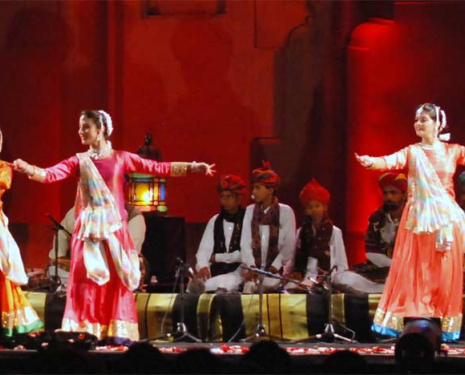
Three other creations, "Durbar", "The King of Ghosts", and "Istanbul (...) Fez", will be initiated, establishing Fez as a land where heritage and future are intimately linked. Each edition will henceforth highlight a particular country. This year, India, from which many tales of the "Thousand and One Nights" are moreover original, will present its creative genius. The splendour of the courts of the palaces of the maharajahs and nawabs of yesteryear will have allowed the emergence and continuation of a unique tradition and knowledge that will be exhibited during a musical joust, "Durbar", presented on the majestic stage of Bab Makina.
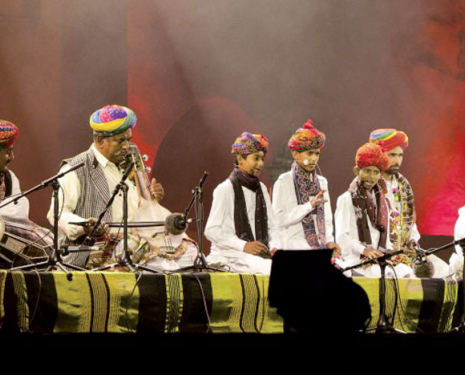
The festival will also be an opportunity for young prodigies of the Manghaniyar and Langa castes, poets and singers of the Rajasthan desert gathered in the "Chota Divana" ensemble, to present vocal art of rare beauty to the children of the schools of Fez. Another 2016 novelty, the festival will deploy its aura to the heart of the Medina and its influence will extend beyond its traditional places. Thus, the magnificent Jnan Sbil garden, recently renovated, will host the 4:30 PM concerts as well as the Fez forum, creating a new axis connecting the Medina, Bab Al Makina, and the Boujloud Square. Giant puppets from Africa crisscrossing the alleys of Fez, an initiatory musical journey to discover the fountains of the Medina and the library of the Qaraouiyine University, based on an idea by the architect Aziza Chaoui and the artist Susie Ibarra, and the Taragalte Caravan of the Moroccan South, installed at Jnan Sbil, will resonate through their nomadic approach with the urban and architectural beauty of the city. Like the other stars of Moroccan song, which the Festival of Sacred Music has welcomed in the past, the Moroccan star Mahmoud Al Idrissi will also be present in Fez alongside the regional choir of Fez, H-Kayne, Batoul Marouani, Mourad Bouriki, Lamia Zaidi, Najat Atabou, the Khalid Ali orchestra, Reda Taliani, Abdellah Yacoubi, and Aminux.