
FrançaisEnglishالعربيةDeutschEspañolNederlandsItaliano中文

Your cart is empty

Adventure awaits!

About Hay Mohammadi

Hay Mohammadi is a Moroccan arrondissement in the Aïn Sebaâ-Hay Mohammedi prefecture-arrondissement, in the Casablanca...

News in Hay Mohammadi

Follow the latest news, projects, and official announcements from your arrondissement.

News 26 Dec 2014 5 min read

Education: a social enterprise at the service of youth
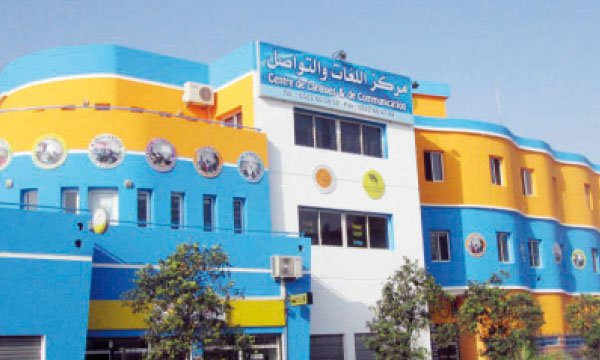
Education: a social enterprise at the service of youth

In Hay Mohammadi, more precisely on the Grande Ceinture boulevard, stands a language and communication centre like no other. Its particularity lies in its mode of operation. Managed by the Initiative Urbaine association, this centre operates as a social enterprise. This space for linguistic learning and academic support is financed by student contributions. "The centre has existed since 2006. The transition to management mode as a social enterprise was carried out within the framework of the “EduCare” project," explains Abdeljalil Bekkar, president of Initiative Urbaine. This concept, relatively new in Morocco, started in March 2014, in partnership with the "la Caixa" (Spain) and "Cariplo" (Italy) Foundations. This project is supported by the associations "Casals del Infants" and "Soleterre", NGOs for international cooperation.

According to Abdeljalil Bekkar, Initiative Urbaine, which already works with "Casals del Infants" for the integration of youth, discovered the "Educare" social enterprise concept a year and a half ago. The association based in Hay Mohammadi was also contacted by "Soleterre" to professionalise its language and academic support centre installed in Hay Adil. This educational space was suffering from financial problems. Thanks to the intervention of the associations supporting the "Educare" project in Morocco, Initiative Urbaine called on a professional consultant to conduct an internal diagnosis. Thus, it was able to discover the strengths and weaknesses of the centre. The Casablanca association also carried out an external market study. After these two stages, it presented its project in Rabat on 14 November 2014 for validation. This process allows it not only to ensure the sustainability of the language and communication centre, but also to develop its project in other disadvantaged neighbourhoods of the metropolis. For the moment, the said centre must upgrade itself in order to accompany the transition towards a social enterprise. According to the president of Initiative Urbaine, the association has established a business plan, as well as an action plan applicable in part from the current year.

"We plan to organise pedagogical training as well as the production of an educational framework. We also have the ambition to computerise the management system. While waiting to carry out all the necessary steps for this upgrade, we will start this year with the training of the teams," he explains.

This new social enterprise in Hay Mohammadi is perceived as an alternative for social intervention in the education sector. Seeing the number and satisfaction of the beneficiaries, one can deduce that this infrastructure represents more than an associative initiative. It is a chance for the young and the not-so-young who have no other alternatives. Indeed, at a time when the costs of academic support and language courses are increasing the burden on parents, this centre takes into consideration the income and responsibilities of the latter, especially in the case of large families. Thus, support courses for high school students are offered there at 300 DH for three subjects. These rates represent 1/4 of the price applied on the market. To democratise access to the centre, beneficiaries of language courses pay 400 DH per module. These low rates are in no way, according to Abdeljalil Bekkar, a pretext for offering a service of mediocre quality or inferior to that offered in other establishments. The price difference is rather justified by a lower operating budget and of course a lower or non-existent profit.

For example, language teachers receive 80 DH per class session instead of the 120 DH offered by private schools. "The difference is considered as a commitment on the part of the teachers, aware of their mission, and who do quality work," explains Initiative Urbaine. And to add that in case of surplus, the association prefers to reinvest in equipment in order to offer an appropriate teaching environment for teachers and beneficiaries. In addition to the savings made on the remuneration of teachers, the association also benefits from the free use of the premises that serve as a school. It should be noted that this space, which welcomes between 600 and 1,000 students per module, also offers literacy and office automation courses. Having eight classrooms, a multimedia room, a seminar room and offices, this centre, or rather this social enterprise, tries to sell quality services to the inhabitants of Hay Mohammadi and even those from other Casablanca neighbourhoods. However, it differs from the traditional enterprise in that it reinvests its profits to fulfil its social mission and ensure its sustainability, while guaranteeing its financial viability.

Initiative Urbaine over the years

The Initiative Urbaine association was created in 2002 by young people, women and men, originating from Hay Mohammadi, with a view to responding to various problems affecting the youth of the neighbourhood. Hay Mohammadi was then devoid of any social service and any activity dedicated to youth. Initiative Urbaine was first built around a premises, which it converted into a socio-cultural centre offering academic support, cultural activities (dance, theatre, Hip-hop, singing), outings for children, a library and a cybercafé.

In 2006, the Mohammed V Foundation allocated premises to Initiative Urbaine and the Moroccan Association for Solidarity and Social Action, united in the Network of United Associations for Social Qualification (RAUQS), in order to manage this new space: the Language and Communication Centre. This centre first operated with the volunteers of Initiative Urbaine before creating the first job positions. The Initiative Urbaine association, leader of RAUQS and manager of the socio-cultural centre, today counts 16 permanent employees, about thirty volunteers, 35 substitute teachers and more than 1,500 members.

Listen
Size:

