
FrançaisEnglishالعربيةDeutschEspañolNederlandsItaliano中文

Your cart is empty

Adventure awaits!

About Meknes

Meknes (Arabic: مكناس, romanized: maknās, pronounced [maknaːs]) is one of the four Imperial cities of Morocco, located in...

News in Meknes

Follow the latest news, projects, and official announcements from your ville.

News 11 Apr 2013 11 min read

The Bridge of Sighs of Abdelaziz Rebbah: 12 million MAD to build a temporary structure that turned into a black spot
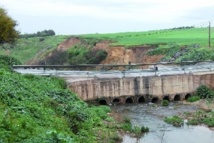
The Bridge of Sighs of Abdelaziz Rebbah: 12 million MAD to build a temporary structure that turned into a black spot

If you take the national road No. 6 connecting Fes to Meknès, you will certainly notice, at kilometre point 164+000, a small sign with "Danger" written in the middle in red. It warns drivers who are about to cross the Oued Tizguit bridge (Mahdouma for the locals). Indeed, this recently built bridge has become a black spot where the number of accidents is continuously growing, as testified by the gendarmerie services.

The State, which aims to fight against such black spots, has created one with full knowledge of the facts. The construction of this structure cost the State coffers nearly 12 million MAD, the price of four new bridges. Yet, this structure, 6 m wide and 13 m long, was initially designed as temporary while awaiting the rehabilitation of the old bridge, which was destroyed by the bad weather that Morocco experienced between 2008 and 2010 and which caused significant damage to its foundations.

A decision that will have heavy consequences, as it will cause, on the one hand, the collapse of the old bridge and, on the other hand, the implementation of a series of studies and works that will heavily impact the State budget.

Only the temporary lasts

The decision to build this temporary bridge was made after the foundations of the old bridge were excavated. The latter was a victim of violent floods due to the bad weather recorded between 2008 and 2010. This is the case for a large number of structures that periodically suffer the harmful effects of the phenomenon. Some of them were even swept away by violent floods.

Indeed, for several decades, the supervisory ministry has shown little interest in the management and safeguarding of existing structures. Worse still, the upgrading of these structures was quite late compared to the increasingly pressing requirements dictated by the growth in volume and quality of traffic at the national level. The State has always opted for the creation of new structures instead of maintaining the existing stock.

To repair the initial damage to the Tizguit river bridge, the Regional Directorate of Equipment and Transport of Meknès (DRET) launched a call for tenders for the completion of a study. An action that raises many questions, since the repair of the structure in question did not require such in-depth studies. This is all the more true since the administration has standard plans and skills to propose solutions that are technically valid and economically profitable. The contract was awarded on 15 June 2010. The amount of the study was 159,600 MAD.

The firm in charge of the study in question opted for the construction of a new structure adjacent to the existing one. It is a temporary type of bridge based on small culverts. Except that the study neglected a detail of great importance: the stability of the structure and its protection, as well as the corrosion problems of the old bridge's foundations. As for the cost of the construction work for the new structure, it was not communicated.

However, a few months later, this solution proved to be unsuitable. The narrowness of the openings transformed the new bridge into a real dam that aggravated the floods. These, in fact, quickly created very powerful waterfalls and caused new, very serious damage. This is the case with the collapse of the existing bridge and the creation of a very deep cavity at the foot of the old structure, precisely under the foundations.

Once again, the DRET of Meknès rushed to find a new solution. It opted for filling the cavity created by the floods and treating the scouring of the downstream part of the old bridge.

A second study for an amount of 438,000 MAD was launched. The opening of the bids for this contract was decided on 9 December 2010 and the deadline for the completion of the study was set at three months. A period of time considered very short by experts. "A study requires several stages and administrative procedures to be validated. First, the administration must draft the CPS (Special Administrative Clauses) relating to the studies before the design office signs it and the commitment and expenditure controller (CED) visas it.

Then, the administration must approve and notify the contract, and the design office (BET) must receive the notification and the service order to start the work, make the trips and carry out the necessary investigations. The latter is also responsible for taking topographical measurements and analysing the nature and quality of the soils before diagnosing the problem and proposing solutions.

A stage that does not mean the end of the process, since the administration must choose the appropriate solution that the BET should deepen by quantifying the material needs and drawing up the specifications before the administration validates the solution and launches the call for tenders," a specialist explained to us.

Another disturbing fact, and not the least, is the cost of the study, considered exorbitant compared to the service envisaged. Indeed, the amount of 438,000 MAD far exceeds the 159,600 MAD for the study relating to the design of the new bridge.

The new study will recommend the installation of stone blocks weighing 400 kg to 2 tonnes for filling the excavation and some ancillary support structures, as well as the protection of the downstream part of the old bridge. The volume of this excavation was estimated at 20,000 m3.

On 20 January 2011, the contract was awarded to the Ghanjaoui company for an amount of 5,279,160 MAD. As for the deadline for the work, it was set at 3 months. Note that a contract for the supervision of the work was launched. The opening of the bids took place on 22 February 2011, i.e., one month after the contract was awarded, knowing that the work cannot be started without the presence of a materials control office.

A call for tenders launched three times

However, the series of disturbing facts is not over yet. Indeed, the DERT will launch a call for tenders for the completion of additional reinforcement work. Nothing abnormal, except that the latter provide for quantities of materials greater than those provided for by the basic contract. Some materials are even incompatible with the needs of the additional work. This is all the more true since these are additional works that can, on the one hand, be settled within the framework of an amendment and should not exceed 10% of the initial contract, on the other hand.

Other disturbing details: the call for tenders called on companies falling under sector 22, namely those in charge of reinforcement and rehabilitation work for structures, whereas the work is of the earthworks type, which falls under sector 2. "By this choice, competition was reduced. The companies in sector 22, after visiting the site or following the study of the specifications, realised that this was work falling under sector 2. They therefore refrained from carrying it out. As for the companies in sector 2, they did not participate," a source close to the file told us.

Worse still, this call for tenders was launched three times. The first on 28 July 2011 and the opening of the bids was scheduled for 15 September 2011. Four companies participated. Among them, the Ghanjaoui company, which had carried out the basic contract.

The contract for the additional work will be awarded to STEP, the lowest bidder, as it proposed 4,253,430 MAD against 4,755,754 MAD from the Ghanjaoui company, which was ranked third.

However, the administration was of a different opinion. It opted for the cancellation of the call for tenders, even though the public procurement website still showed that the STEP company was the successful bidder. However, the administration did not deem it mandatory to justify this cancellation and to inform the competitors in writing as stipulated by Article 45 of Decree No. 2-06-388 of 16 Moharrem 1428, setting the conditions and forms for awarding State contracts as well as certain rules relating to their management and control. (Official Gazette No. 5518 of 19 April 2007).

Questioned by Libé, a manager at the STEP company systematically refuted this version of the facts, indicating to us that her company was not the lowest bidder. She affirmed that her company did not follow up on this matter and that she was unaware if this call for tenders had been launched twice.

Our source even considered this cancellation and its lack of motivation as normal. A strange response, when the cancellation of contracts can only occur in certain situations expressly provided for!

The second call for tenders will be published again in the newspapers on 27 September 2011 and the opening of the bids was scheduled for 25 October 2011. Three companies participated, among others, the Ghanjaoui company. But its offer was, for a second time, higher than the lowest offer from the SOLIND company. The Ghanjaoui company proposed 4,219,560 MAD against 4,176,074 MAD. And, once again, the administration saw fit to cancel the call for tenders without arguing its decision. And this, even if the public procurement website displayed: "SOLIND company successful bidder".

The contract will be relaunched on 31 December 2011. And the opening of the bids was scheduled for 31 January 2012. This time, the Ghanjaoui company will reduce its offer compared to that of the first call for tenders. It proposes an amount of 3,645,527 MAD, i.e., 25% less than the initial offer. This allowed it to position itself as the lowest bidder and win the call for tenders. This time, the administration will not cancel this contract, even though Article 40 of Decree No. 2-06-388 considers any offer more than 25% lower than the arithmetic mean of the project owner's estimate and the average of the financial offers of the bidders as an abnormal offer.

The law provides in this case that the call for tenders commission can accept it by a reasoned decision to be annexed to the commission's minutes and after having requested in writing from the competitors concerned the clarifications it deems appropriate and verified the justifications provided.

Before deciding on the rejection or acceptance of the said offer, the commission can appoint a sub-commission to examine the justifications provided.

However, whatever the position of the administration, this affair raises other remarks. First, an examination of the prices of the two contracts suggests that the amount of the first contract was overestimated.

Second, the urgent nature of the additional reinforcement work, a priori, is not justified. Between the date of publication of the first call for tenders, namely 28 July 2011, and that of the awarding of the third call for tenders, namely 31 January 2012, six months have passed, and this for a contract that should have been carried out in two months.

And finally, we note the complete absence or complicity of the call for tenders commission, which includes a representative of the Kingdom's General Treasury.

Remarks that speak volumes about transparency in the project owner's choices, equal access to public procurement and the use of competition as much as possible.

Better yet, a situation that informs us about the moralisation of the management of public procurement and the efficiency of public spending in a context where it is shouted from the rooftops that money is missing in the State coffers and that we must tighten our belts.

5,200 bridges

The stock of structures managed by the DRCR is around 5,200 road bridges. The majority of these date back to the Protectorate. There are some 3% of bridges in service that have metal decks.

For economic reasons, certain types of bridges are still kept in operation, despite the load-bearing and safety problems they present. This is the case for decks with metal profiles encased in concrete. These structures still represent about 13% of all bridges. They were built for small deck widths (2.5 to 5 m in general). There are also some bow-string bridges that offer small useful deck widths in addition to the risks of accidents and deterioration of their structures exposed to vehicle impacts. Several masonry structures are still in service, most of which date back to the beginning of the 20th century or even much earlier.

In terms of the service offered, the stock of structures is very heterogeneous. A significant portion of them offer small carriageway widths: 38% of crossings have a carriageway width of less than 4.5 m.

Although the technology of structures on a global scale took a giant step at the end of the 20th century by making innovative materials and solutions available (cable-stayed bridges, very slender beams in mixed materials, etc.), it seems that Morocco is in the process of lagging behind in this area. Most of the solutions adopted today draw from the already classic catalogue of reinforced or prestressed concrete bridges of modest span (50 m maximum).

"Presentation of the stock: structures", M. Hachimi / Directorate of Roads and Road Traffic (DRCR).

Listen
Size:

