"Praise be to God, Prayer and peace be upon the Prophet, His family and His companions, Mr. President of the Conference, Excellencies, Ladies, Gentlemen, It is a pleasure for Us to address the participants in the State Legislative Leaders Foundation Conference, United States of America. We wish Our guests a warm welcome to the Kingdom of Morocco, and to Marrakech, a symbol of openness and a space for dialogue between civilisations. We would like, on this occasion, to express to the honourable members of the Foundation Our deep thanks for having chosen Morocco to host the work of the Transatlantic Forum. This is the largest event of its kind organised by your foundation, and it is being held for the first time in its history in an African and Arab country. We also wish to salute the work carried out by this foundation as an independent, non-partisan organisation, working to guide and support high-level officials in their legislative missions within parliamentary councils, in the various states of the USA, particularly regarding the presidents of the Senates and Houses of Representatives and the leaders of the majority and the opposition in both Houses. We therefore urge the parliamentarians of the Kingdom of Morocco and all elected representatives of the Moroccan regions and provinces to strengthen cooperation relations and exchanges of experience with your honourable institutions. Excellencies, Ladies, Gentlemen,
The bonds of Moroccan-American friendship do not date from yesterday; they are the fruit of privileged and exceptional historical relations rooted in the centuries-old common history between the two countries, a history that dates back to the 18th century, when Morocco was among the first countries to recognise the independence of the young American state in 1777.
It is therefore with pride that we evoke on this occasion the importance of the signing of the Treaty of Peace and Friendship between our two countries in 1786. We also keep in mind the content of the historical correspondence between Sultan Sidi Mohammed ben Abdellah (Mohammed IV) and President George Washington. These exchanges laid the foundations for very solid and lasting relations, based on cooperation and mutual respect between the two countries, thus establishing themselves as a model of stability and durability in international relations.
Within the framework of these centuries-old relations, constantly renewed, Morocco and the United States of America have proceeded to set new milestones in the excellent relations that unite them. By establishing a strategic dialogue for this purpose in September 2012, they expressed their firm determination to work for their strengthening and development, in accordance with the common will that animates Us, as well as His Excellency, President Barack Obama. Excellencies, Ladies, Gentlemen,
We welcome the importance and relevance of your choice of the theme: "local democracy and the Moroccan model in its regional environment". While it is among the concerns of the members of your high-level delegation, this theme is also in phase with the profound reforms undertaken by the Kingdom of Morocco to consolidate democratic practice at the national and local levels.
It is in this context that Our irreversible option to strengthen the pillars of a Moroccan-Moroccan model in terms of local governance fits, having as foundations freedom, citizenship, participation, the promotion of sustainable social and economic development, and the liberation of the creative energies of the nation's vital forces. This approach is part of a modern Morocco, attached to its national unity, its territorial integrity, and the preservation of its authentic identity, united by the fusion of its Arab-Islamic, Amazigh, and Saharan-Hassani components, an identity rich in its African, Andalusian, Hebrew, and Mediterranean tributaries, as stipulated by the new Constitution of the Kingdom.
We do not consider the choice of local democracy as a simple declaration of intent. Indeed, after a long experience of decentralisation launched in the sixties of the last century, in the aftermath of independence, this option has today become a tangible constitutional reality, illustrated by the principles set out in the new Constitution, which has made advanced regionalisation the foundation of the territorial organisation of the Kingdom. Notwithstanding the specificities proper to the unitary or federal form of our two countries, the two systems have this in common, from the point of view of modern administration of the national territory, that they rely on the principle of decentralisation at the level of the various local territorial bodies. We also share the same founding principles of local democracy, which are enshrined by the new Moroccan Constitution, namely free administration, cooperation and solidarity, and the guarantee provided to ensure the participation of the populations concerned in the management of their affairs, and to promote their contribution to integrated and sustainable human development.
Advanced regionalisation is based on the consolidation of the foundations of territorial, participatory, and citizen democracy, the strengthening of the cultural, social, and historical base specific to the different regions of Morocco, and the promotion of their respective regional and local specificities. This dynamic is led within the framework of the unified Morocco of regions, with what this implies in terms of reform and modernisation of state structures and good governance based on the most judicious distribution possible of competencies between the centre and the regions, within the framework of proximity democracy. This allows each region to exploit its own potential, to assert its particularities, and to play its role as a true lever for development. It also enables it to take charge of the economic and social development process, not in a logic of subordination to the state, but according to the terms of a real partnership with it, and with the private sector and civil society. The ultimate goal is to achieve balanced development and reduce disparities between the different regions. We are determined to ensure a full and complete implementation of these principles, so that advanced regionalisation extends to all regions of the Kingdom, with, first and foremost, the provinces of the Moroccan Sahara. In this regard, We will not fail to reaffirm our attachment to the UN process for the settlement of the artificial regional conflict around the Moroccan Sahara, on the basis of our bold autonomy initiative, within the framework of the sovereignty, national unity, and territorial integrity of the Kingdom. This is the initiative whose seriousness and credibility the international community has welcomed in appreciation of its democratic essence. In addition to the consecration of human rights, this translates into the guarantee of broad management, by the populations of the region, of their local affairs.
Let us also cite the strategic scope inherent in this initiative, which tends to achieve development and Maghreb integration within the framework of a new Maghreb order and to guarantee security and stability in the Sahel and North Africa region, by protecting it against the temptations of balkanisation, extremism, and terrorism. These are all threats that now loom over all the countries of the region, and, better yet, which henceforth take the form of a tenacious reality that everyone must face. Excellencies, Ladies, Gentlemen,
The economic dimension enjoys particular attention from your conference, as evidenced by the presence of the heads of several large companies. Taking advantage of their stay among us, We invite them to explore the vast investment opportunities offered by Morocco and to set up real partnerships with their counterparts among Moroccan economic actors. In this regard, the promotion of economic relations with the United States of America has always been among our priorities. This interest finds its most beautiful illustration in the Free Trade Agreement that entered into force on January 1, 2006. It is the only treaty of its kind linking the United States of America to an African country.
Moreover, Morocco and the Millennium Challenge Foundation concluded, in 2007, a contract for the implementation of ambitious programmes dedicated to the fight against poverty and the stimulation of economic growth. Today, We take note, with deep satisfaction, of the positive results of this first contract and look forward with good omens to the opportunities and future prospects of cooperation planned within the framework of a second contract. These two examples, as well as numerous other programmes of fruitful cooperation, all reflect the common will that animates us and our firm determination to develop these relations and to raise them to the level reached by the political relations between our two countries.
The first Moroccan-American economic conference, held last December, was an opportunity to give a new dynamic to the cooperation between our two countries and to identify promising sectors capable of bringing significant added value. We hope that the second edition of this conference, scheduled in Rabat next November, will offer the opportunity to promote cooperation between Morocco and the various states of the USA. We have high hopes that this meeting will be a suitable occasion to review the mechanisms and means to further strengthen cooperation in terms of cultural and academic exchange, to promote agreement and understanding between our two peoples, to advocate religious tolerance, and to promote dialogue between religions and cultures. These are all principles that we share, and that we deem essential for rapprochement and understanding between our peoples. In this regard, We are firmly committed to defending these principles and to preserving them against the risks induced by the various forms of extremism, marginalisation, and exclusion. We wish you once again a warm welcome and a pleasant stay in the Kingdom of Morocco, and hope that your work will be crowned with success. Wassalamou alaikoum warahmatoullahi wabarakatouh".
Royal activities 01 Jul 2013 8 min read
H.M. the King: Morocco and the United States share the same founding principles of local democracy
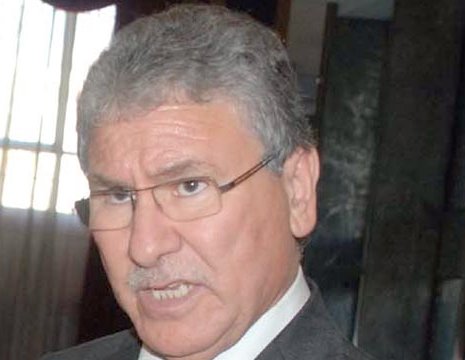
His Majesty King Mohammed VI addressed a message to the participants in the 2013 Transatlantic Leadership Forum, organised by the "State Legislative Leaders Foundation". Here is the full text of this message, which was read by Karim Ghellab, President of the House of Representatives, during the opening session of this conference, Monday in Marrakech: