The local authorities of Larache want to boost the local economy. For them, it is clear that the economic and social development of the city goes through the creation of a solid entrepreneurial fabric. No real economic take-off or wealth creation therefore without a healthy private sector.
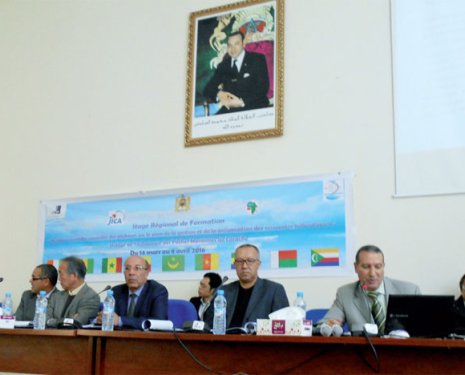
To get there, a meeting was organised on November 19 at the headquarters of the province between local authorities and private and public investors to define priorities and expectations, detect constraints that hinder their investments, and develop a roadmap specifying the expected objectives. "We need a clear partnership framework that defines the commitments of all the actors concerned," indicated Nabil Kharoubi, governor of the city of Larache in his opening speech.
According to him, local authorities must support the public sector, particularly in this context of crisis affecting export markets. A situation that strongly calls on Moroccan investors to diversify their clientele by prospecting other markets such as those of North America or Asia.
However, one question remains: why invest in the region? What are its assets and potential? For local authorities, Larache is an integral part of the Tangier-Tétouan region, considered as a pole of economic growth par excellence, as evidenced by the significant investments made in different sectors. Better still, the city positions itself strongly in terms of agriculture and fishing.
Thus, in terms of agriculture, Larache has a useful agricultural area representing 31.4% of the total area of the region. It also positions itself as the leading producer of strawberries and vegetables at the national level with 80% and 77% respectively.
Indeed, the sector benefits from a strategic position allowing great proximity to local and European markets and an irrigated perimeter (the Loukos) giving a palette of diversified products. Not to mention the competitive advantages of several products.
The sector also benefits from a significant and typical offer of local products and a qualified workforce.
Assets that remain, however, handicapped by certain constraints such as the predominance of micro-ownership, the low rate of registration, the low capacity for investment and recourse to financing, the lack of a marketing platform and organisation of commercial circuits, as well as the low valorisation of local products.
Regarding the maritime fishing sector, Larache recorded a production estimated at 21,200 tonnes in 2011 generating a turnover of 290 MDH. Indeed, the city extends over a coast of 80 km and benefits from its proximity to fish-rich fishing zones and the diversity of types of fishing practiced as well as the presence of processing and valorisation industries.
It remains to be noted that this sector itself does not escape certain constraints relating to the weakness of the industrial fabric and the valorisation of fishing products as well as the irregularity of supplies to industrial units.
News 21 Nov 2012 3 min read
Larache bets on the private sector to ensure its development: Investors called upon to lend a hand