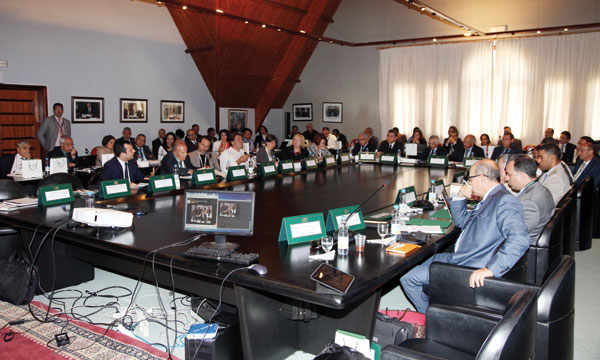
Al Akhawayn University in Ifrane hosted, on 9 and 10 June, the first International Summit of Smart Cities of North Africa. A meeting for exchange and reflection on the best practices to adopt for a better quality of life in cities, at a time when technological innovations influence the governance of cities, this event brought together several decision-makers from the public and private sectors, as well as experts and researchers specialising in the field of smart cities. These speakers and lecturers from all four corners of the world seized this opportunity to share their experiences in the management of smart cities, insisting on the urgent need for the adoption in North African countries of a new and sustainable urban development model in the current context marked by increased urbanisation. For Kenza Kbabra, director of the International Summit of Smart Cities of North Africa, if the recent nature of urbanisation lends itself to debate, the phenomenon is taking on an undeniable and unprecedented scale. "Cities occupy only 2% of the planet's surface, and yet they already house 50% of its population, a percentage that risks rising to 70% by 2050. This growth is even more pronounced in North Africa and Western Asia. All these factors have staggering consequences, to say the least. Cities consume 75% of energy production and are responsible for 80% of carbon emissions globally. Beyond the environmental impact, the massive concentration of citizens in urban pockets makes access to health services, education, sanitation services, transport, water, and electricity even more difficult. This is where the smart city comes into play, by investing in creative and social capital and by incorporating digital data and technologies," she specified.
According to her, the smart city supports economic competitiveness, manages its resources and physical infrastructure efficiently, and integrates citizens into governance issues. It then promotes sustainable and economic urban development while guaranteeing a better quality of life for its citizens. "During the last decade, 'smart' initiatives have helped to reduce crime rates by 20%, improve water consumption by 80%, and decrease energy consumption by half," she indicated. This summit was an opportunity to initiate a reflection on innovative and novel ideas, achievable in urban environments, which could help modernise Morocco while serving as an example to the rest of the North African region. Digital inclusion was among the options studied to develop a secure and robust infrastructure that suits all citizens and ensures a sustainable future in North African cities. Marie-André Doran, director of the Institute for Information Technologies and Societies (ITIS) in Canada, indicated in this sense that digital technology can constitute a revolution for Moroccan cities, by helping them to develop in a harmonious way and by having a very positive impact on the living conditions of citizens. "This smart cities summit allows Morocco to show its leadership in digital matters and to pave the way for other North African countries," she stressed. The other themes that were treated during this meeting concern innovation and economic growth, urban planning and mobility, resource and infrastructure management, education, as well as good governance.
Ambitions for a digital Morocco: Speaking during the Summit, Badr Boubker, Director of the Digital Economy at the Ministry of Industry, Trade, Investment, and the Digital Economy, made it known that Morocco has placed new technologies at the heart of its priorities by launching, in 2009, the "Maroc Numeric 2013" strategy. Articulated around four axes, namely social transformation, user-oriented public services, SME productivity, and the ICT industry, this strategy has allowed, according to him, the implementation of e-gov initiatives, such as the computerisation of civil status, online tax payment, or even the automation of the production of a good number of administrative documents. "These primordial initiatives in the perspective of the implementation of smart cities will be perpetuated and improved by the Ministry of Industry, which is working on a new digital strategy, with the ambition of making ICT one of the pillars of the Moroccan economy," he explained.
News 10 Jun 2014 4 min read
Towards a new urban model