
FrançaisEnglishالعربيةDeutschEspañolNederlandsItaliano中文

Your cart is empty

Adventure awaits!

About Essaouira

Essaouira (/ˌɛsəˈwɪərə/ ESS-ə-WEER-ə; Arabic: الصويرة, romanized: aṣ-Ṣawīra), known until the 1960s as...

News in Essaouira

Follow the latest news, projects, and official announcements from your ville.

News 29 Apr 2014 3 min read

Civil society reflects on the security issue in Essaouira
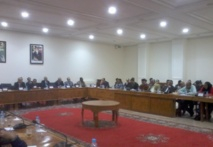
Civil society reflects on the security issue in Essaouira

As part of the national debate initiated by the Ministry of the Interior on the issue of security, the headquarters of the Essaouira province has just hosted a meeting with the associations, friendly societies, and cooperatives of the province under the chairmanship of the governor and in the presence of the security authorities and elected officials of the city. The governor insisted, at the start of the meeting, on the constitutional roles assigned to civil society, considered as the main actor in the development and implementation of public policies. Subsequently, the various associative actors praised the initiative as well as the new strategy initiated by the national security, which wants to open up and be more attentive with a view to establishing a reliable and more efficient security governance system. Furthermore, the associations insisted on the need for a global reading of security indicators, which must be subjected to an analysis including social, cultural, pedagogical, and economic parameters. The issue of security in schools dominated the interventions of several presidents of APTEs who sounded the alarm regarding the spread of several dangerous phenomena in the school environment, notably drug trafficking and the infiltration of foreign elements. Sensitive security zones were also mentioned by several speakers, such as the green belt, the industrial district, the unpaved road connecting Essaouira to Diabat, the bus station, as well as the El Mellah district. Some speakers also praised the efforts made by certain security officials while emphasising the persistence of certain mentalities incapable of absorbing the values of communication and openness. Certainly, the various speakers denied the presence of the "Tcharmil" phenomenon in Essaouira, but they nevertheless raised the problem of the deficit in human and logistical security resources in a province that has more than 400,000 inhabitants. The governor, for his part, welcomed the quality of the diagnosis provided by civil society and announced the organisation of a series of institutional and thematic meetings that meet the expectations and concerns of the city's associative movement. He joined the associations' diagnosis to confirm the deficit that Mogador is experiencing in terms of cultural and sports infrastructure. A diagnosis, he added, which encourages collective and participatory reflection with a view to developing a shared vision. The governor ruled out the hypothesis of the presence of "black security spots" in Essaouira given the efforts made by the security bodies on a daily basis. To this end, he announced the organisation of a meeting regarding the issue of security in schools in the presence of external services and the concerned associations. Regarding the issue of the weakness of the logistical and financial means of the associations, the governor committed to putting in place a plan to resolve this problem while ensuring that the local authorities will put all the necessary means at the service of the programmes and projects of civil society, which he called upon to respect the standards of rigour and commitment.

Listen
Size:

