The debate around parity, positive discrimination, and women's participation largely motivated the various initiatives undertaken by official and social actors in Essaouira on the occasion of International Women's Day.
Admittedly, women agreed on the particularity of the event, but they decided to celebrate it in different ways. Some celebrated it with flowers, parades, and receptions, while others, suffering from exclusion and precariousness, chose to raise their voices and celebrate it by protesting and demanding human and social parity above all else.
The delegations of the Ministry of National Education, National Mutual Aid, schools, as well as several components of civil society, implemented varied programmes (parades, tributes, poetic and artistic evenings, conferences, receptions) in commemoration of this day, reserving a most deserved tribute to the female presence in a pluralistic society.
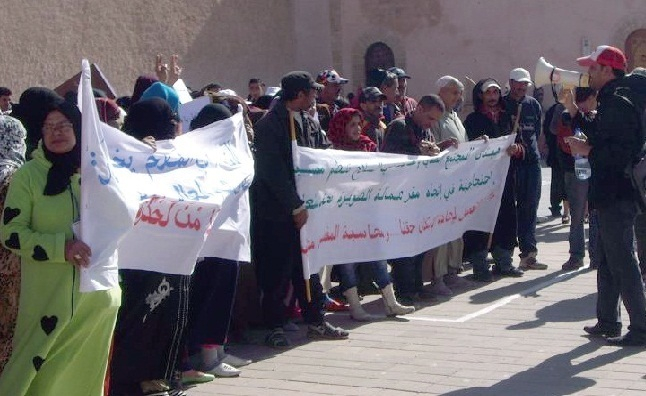
The women of the Mellah neighbourhood in the old Medina as well as those of the Douar Laâreb, a few kilometres from the city centre, took to the streets and raised their voices on this occasion to protest, denounce their precarious situations, and claim their fundamental rights.
On Thursday, 8 March 2012, around 4 p.m., women from the old Medina chanted slogans against "Hogra" (injustice) and marched towards the provincial headquarters where they held a sit-in to demand that their problem be resolved. Forgotten by the relocation programme for the inhabitants of the old Medina, they demanded their right to housing, dignity, and basic services. They also chanted slogans against depravity and corruption and called on those responsible for managing this thorny file, which is tainted with countless irregularities, to account for their errors.
Not far away, in Douar Laâreb, still subject to isolation despite having been part of the urban centre for 20 years already, the women affiliated with the Douar Laâreb Association for Development celebrated this day by issuing a statement to stigmatise the effects of exclusion and precariousness. They are demanding their rights, notably to drinking water, liquid sanitation, transport, education, health services, and security, among others.
A belt of poverty and misery, and an electoral stronghold for certain figures who are anything but politicians, the Douar Laâreb area requires more than ever an urgent upgrading programme and special interest from the local authorities and the municipal council.
News 12 Mar 2012 2 min read
Flowers, parades, and protests