FrançaisEnglishالعربيةDeutschEspañolNederlandsItaliano中文

Your cart is empty

Adventure awaits!

About El-Jadida

El Jadida (الجديدة in Arabic) is a coastal town in Morocco, 96 km from Casablanca. It is the prefecture of the El Jadida...

News in El-Jadida

Follow the latest news, projects, and official announcements from your ville.

Festival 04 Jun 2014 4 min read

Success of the Falconry Festival

Success of the Falconry Festival

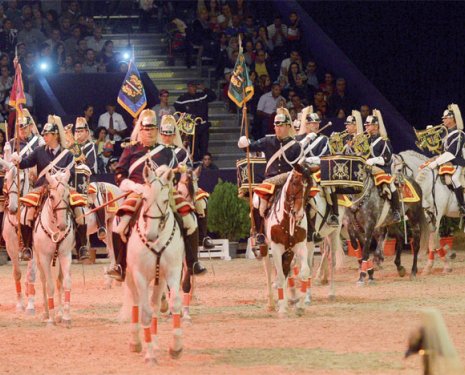
This exceptional cultural event, organised under the theme "Falconry: ancestral tradition and universal heritage" and which coincides with the third anniversary of the classification of falconry on the UNESCO representative list as Living Human Heritage, serves several objectives. It pays tribute to the ancient Lekouassem falconers who knew how to preserve and perpetuate the traces of a centuries-old legacy. It also makes it possible to keep the torch of this tradition, which was considered lost forever, burning. By celebrating the rebirth of falconry in the province of El Jadida, through this second Festival, the organisers also aspired to bring back to the forefront other aspects of this heritage, notably the know-how in terms of hunting instruments, traditional clothing, music, singing, dancing, and culinary art, without forgetting the essential horse that once participated in falconry. Thus, by ensuring the organisation of this second Falconry Festival, the initiators of this event, notably the researcher in Doukkali popular heritage, Driss Lamrabet, the representative of the regional directorate of Culture of Doukkala-Abda, Abderrahmane Aress, and Mohammed El Ghazouani, the president of the Association of Lekouassem Falconers, did not limit themselves to the production of the show. They were indeed involved in the rewriting of an old and beautiful story. The story of a heritage that new generations must understand and be proud of. That of a fabulous episode of our civilisation, of which the Chorfas Lekouassem tribe has been able to preserve the essential despite all the hazards and risks of oblivion.

Although still present in the minds of the Association of Lekouassem Falconers of Ouled Frej, as a major unmissable event, the idea of organising a Falconry Festival to give a new dynamic to this ancestral tradition is signed by Mouâad El Jamaï, Governor of the province of El Jadida. For his part, Driss Lamrabet declared that "falconry constitutes a major part of the cultural heritage of the Chorfas Lekouassem. It is deeply rooted in the tribe and transmitted from generation to generation. The second Falconry Festival is a way to honour the values of loyalty, courage, and perseverance. It is also a capital event, for Lekouassem in particular and for Morocco in general".

As for Mohammed El Ghazouani, he stressed that "falconry in the Doukkala is the foundation of a broader cultural heritage, which includes traditional costumes, food, songs, music, poetry, and dances. For this edition, a large number of falconers from the United Arab Emirates, Saudi Arabia, Kuwait, and Qatar participated in this event, because we wanted this year's festival to be an opportunity to promote dialogue and develop a mutual understanding of the cultures of Arab falconers, thanks to the shared love for falconry. And we will soon conclude, as the Association of Lekouassem Falconers of Ouled Frej, a cooperation partnership with the Qatari Al Gannasse Association and the Emirati Falconers Club". Last bastion of falconry in Morocco: Inscribed on the UNESCO representative list as Living Human Heritage, falconry is one of the oldest relationships between man and bird, dating back more than 4,000 years. The common adventure, rock and prehistoric paintings, Greek vases, and Egyptian cartouches attest to it, dating back to the beginning of ages. However, the practice of falconry finds its origin among the Persian, Pharaonic, Roman, and Arab cultures. The falcon gradually became a noble and sacred bird. Thus, in the Middle Ages, falconry was regulated and considered a noble practice. Infractions against falcons were severely punished, the sentence could go up to the death penalty. Among the Arabs, the falcon benefited from great attention. It also played a primary role in diplomatic relations and agreements between countries, because it represented the most precious gift and was intended to create a climate of relaxation or served to strengthen diplomatic ties between countries. In Morocco, falconry survived thanks above all to the dedication of the Lekouassem falconers of Ouled Frej, for whom the practice of the art of falconry is a baraka, a blessing, a divine gift enjoyed by their ancestor Abou Al Hassan Ali Ben Abou Kassem (Abou Soujda), whose sanctuary is located in Marrakech.

Listen
Size: