It is Monday, 29 February 1960, in Agadir. The city trembles for 15 infernal seconds. The earth growled, a seismic tremor of magnitude 5.7 on the Richter scale, and Agadir is no more. "On 29 February 1960 at 11:40 PM, paradise became hell," testifies Mrs. Kerglonou on the site http://www.agadir1960.com.
"A dull roar (like a giant bombardment) accompanied by violent oscillations brutally woke the inhabitants; fear in my stomach, I grabbed my baby (aged 1 month) from his cradle to head towards the stairs, it was panic!", she adds.
"People were screaming, pushing each other, climbing as best they could, in the darkness accentuated by the dust of the buildings that were collapsing, rubble, blocks of plaster that cluttered the stairs. Finally, we managed to reach a vacant lot, on the edge of the road, near our building," she remembers.
Cries, howls of the wounded, smell of gas, of sulphur, people running in all directions, terrified, panicked not knowing where to go, in nightwear and even completely naked... It was so hot a few hours earlier...
"The Moroccan gendarmerie, men were rushing to try to save their family and before our eyes dilated with horror, the buildings were collapsing slowly, one after the other, like houses of cards, burying those who wanted to enter them, the earth was still trembling and we were having trouble keeping our balance...", recount other survivors.
In total, 15,000 people perished, and 25,000 others were injured, and a city totally razed.
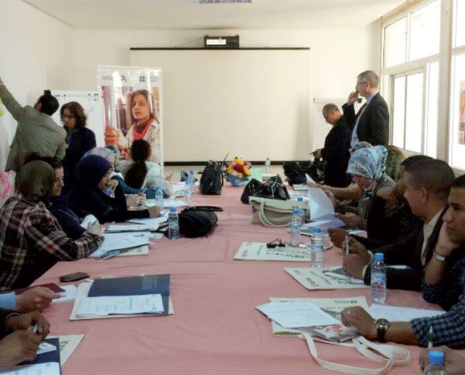
As usual, the Izorane forum commemorates the 53rd anniversary of the destruction of Agadir in February 1960 in the tribute and respect of all the martyrs - without distinction of confessions but also in the hope of contributing to making the assets of the city positive, we learn in a press release.
Thus, to link the past to the present, the theme chosen for this year's celebrations is: "What management of land in Agadir from 1960 to 1973?".
A choice dictated by the originality of the rebirth of a city in a dramatic context and complex constraints by a single operator, which was the HCRA... and that the decision-makers of the city must study meticulously to draw the necessary lessons for an implementation of a rational and optimal management of the current land, which remains "the nerve of war" of any development.
On the other hand, IZORANE insisted that this annual meeting be a public and solemn moment for the valorisation of local skills, that is to say, to pay a tribute of recognition to men and women (of the past or of today) who devoted themselves, generally without media noise, in their professions or in their passions for the benefit of the Gadiris and the influence of their peaceful city. Izorane hopes to make these people an example of a perennial culture among the various generations of our Forum.
Such are the main lines of this commemoration that Izorane n'Agadir is preparing to celebrate on 28 February, 1 and 2 March 2013 with all the lovers of this city, wherever they are and wherever they come from.
It is a renewed invitation to share the actions of the forum and the concerns of the Gadiris.
It should be remembered that the forum was created during the celebration of the fortieth anniversary of the reconstruction of the city of the renaissance in February 2000. Old people of Agadir, of different confessions, communities, and generations, met for 5 days to exchange informally. Everyone agreed: it was imperative to create a framework for meeting and transmitting information between them with the aim of fighting against the disappearance of "memories" which was inevitably going to take place when one and the other would no longer be of this world...
Later, associations were created, especially among Gadiris abroad, in France, Canada, and elsewhere. Archives and documents of the "collective memory" began to circulate, especially on the Web. Individual rapprochements between members of the great family of Gadiris were accomplished, thus contributing to the launch of a dynamic of appropriation of the scraps of the history of this martyr city.
News 28 Feb 2013 4 min read
Izorane n’Agadir commemorates the 53rd anniversary of the earthquake