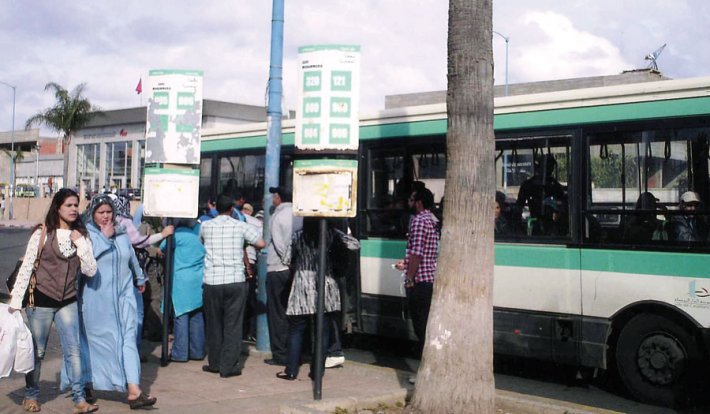
The least we can say and according to numerous testimonies, the problems of public transport are worrying: buses in "bad condition", long waits, overloading, congestion on certain lines, discourteous behaviour of certain controllers and drivers...
How then to put an end to the anarchy that reigns in certain buses and avoid daily inconveniences to citizens who are numerous to take the bus by necessity. According to a student in Mohammedia, "urban transport is a sector undermined by multiple problems because the delegating companies favour gain to the detriment of the comfort and safety of passengers". Indeed, the specifications are not respected. "A reorganisation of the sector is necessary.
Public transport must be efficient and adapted to current requirements. It is advisable to increase the number of buses, serve rural areas and above all be concerned about the quality of services," explains a municipal official. For this regular user of public transport, "urban transport is a vital sector that must be taken care of seriously. Transport policy must meet the needs of the population and must be thought out for better urban and sustainable mobility with a security guarantee. We don't even know if people in overload are covered by insurance in case of accidents".
The other problem is not the least, it is the absence of shelters and mandatory stops, which has repercussions on passengers. In terms of transport policy, it is advisable to combine efforts to remedy the current situation which favours informal public transport, despite the risks incurred. "Controls must extend to compliance with the highway code and problems related to the operation of lines," stresses a municipal official. Indeed, on the granted lines, only a few are operational, the others are abandoned. Operators put the package on profitable lines and desert those deemed loss-making.
For example, lines no. 1 and no. 2 which provide transport over several kilometres are profitable just like lines 905, 906 and 914. On the other hand, the lines that serve the rural communes of Chellalat, Sidi Moussa Ben Ali and Sidi Moussa Al Majdoub are abandoned.
Nevertheless, more than 60,000 inhabitants are not served by buses. Users then fall back on large taxis or "khattafas" (clandestine transport).
Professional opinion
According to transport sector professionals in Mohammedia, the problem of urban transport requires an upgrade that remains dependent on concrete actions capable of filling the dysfunctions. It is about compliance with the specifications and the construction of a bus station adapted to the significant flow of transport means and travellers. It is advisable in the same order of ideas to solve the problems linked to infrastructure. The state of certain roads is defective. All these combined effects demonstrate the complexity of the situation and the need for an adapted mobility plan.
-* Increase the number of buses and lines.
-* Build shelters and provide stops.
-* Carry out rigorous control and crack down on excesses.