
FrançaisEnglishالعربيةDeutschEspañolNederlandsItaliano中文

Your cart is empty

Adventure awaits!

About Ain Bou Ali

Ain Bou Ali is a Moroccan rural commune in the province of Moulay Yaâcoub, in the Fès-Boulemane region.
It has a total...

News in Ain Bou Ali

Follow the latest news, projects, and official announcements from your commune.

Royal activities 20 Nov 2014 2 min read

More than 1.1 billion DH to improve the water quality of the Oued Sebou and the living and health conditions of nearly 5 million inhabitants

His Majesty King Mohammed VI proceeded, on Thursday in the rural commune of Aïn Bouali (Moulay Yaâcoub province), to the inauguration of the wastewater treatment plant for the city of Fès, a pilot project at the national and continental level, strongly revealing the particular attention that the Sovereign accords to the protection of the environment and sustainable development.
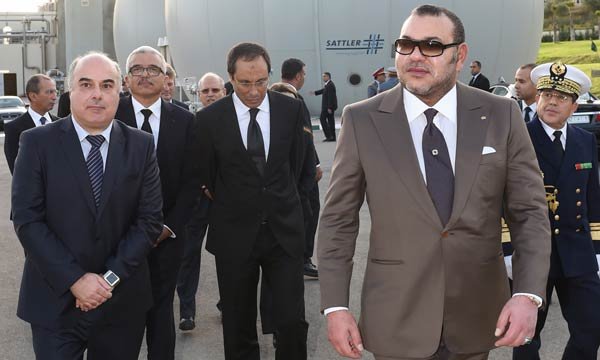
More than 1.1 billion DH to improve the water quality of the Oued Sebou and the living and health conditions of nearly 5 million inhabitants

This project, carried out for an investment of more than 1.1 billion dirhams, will allow for the improvement of the water quality of the Oued Sebou, the prevention of interruptions experienced by the water purification plants of Kariat Ba Mohamed and Mkanssa, the elimination of olfactory nuisances, and the reduction of greenhouse gas emissions. It also aims to promote the living and health conditions of nearly 5 million inhabitants living downstream of the Oued Sebou, notably in the provinces of Moulay Yaâcoub, Taounate, Sidi Kacem, and Kénitra, in addition to the urban and agricultural development of the city of Fès and its region.

A key link in the city's liquid sanitation system, the new station will ensure the purification of all of Fès's wastewater before it is discharged into the Oued Sebou, thus contributing to the resolution of problems related to the integrated management of water resources.

Meeting international standards and using the latest technologies in wastewater treatment, the new Fès purification station (14 ha) adopts a "medium-load activated sludge" purification process, with a treatment capacity of 1.2 million population equivalent and a flow rate of 155,400 m3/day. The purification station, built by the Autonomous Water and Electricity Distribution Authority of Fès (RADEEF), includes two treatment streams: "water and sludge." It is also equipped with an analysis laboratory that measures various indicators related to water quality before, during, and after treatment.

Parallel to this circuit, the station also includes a sludge treatment chain with a "cogeneration" process allowing for the production of 50% of the station's electrical energy needs. For the sake of sustainability, the establishment of this station is accompanied by the implementation of an industrial depollution plan for the city of Fès, which provides for the elimination of organic and toxic materials through the relocation of polluting industries (oil mills, tanneries, coppersmiths, etc.) and their grouping in the Aïn Nokbi industrial zone.

With a strong health, biological, economic, and environmental impact, this major project was financed thanks to a State subsidy within the framework of the National Liquid Sanitation Plan, a loan from a consortium of national banks, and the equity of RADEEF. It reinforces the various actions initiated by the Sovereign throughout the Kingdom intended for the protection of the environment and the preservation of ecosystems.

Source
Listen
Size:

