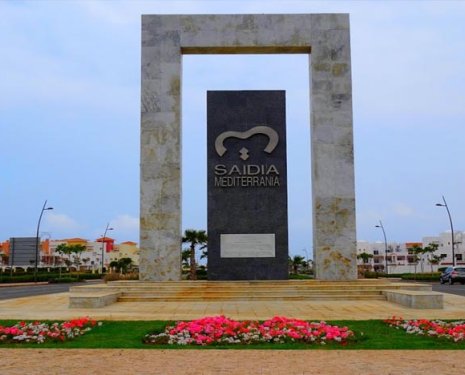
At a time when the tourism sector wishes to take a new direction in order to reduce its impact on the environment, the Forum that has just been held in Saïdia is in line with Vision 2020 by proposing to debate the real issues relating to sustainable tourism in Morocco. How will Morocco be able to implement a concept of tourism centred on people and the environment while hoping to double the size of the tourism sector by 2020? What means will be put in place to support sustainable tourism approaches in the Oriental region? Should we bet on rural tourism and present it as an alternative to mass tourism? Will eco-tourism practices be profitable? Fundamental questions to which the Morocco Sustainable Tourism Forum, organised in collaboration with the Berkane province, the Oriental Agency, the Berkane Provincial Tourism Council, and the National Tourism Federation, has attempted to provide answers.
Workshops and conferences led by tourism experts, particularly in sustainable tourism, spent two days examining this new approach. Determined to reconcile the Saïdia site with nature, the Saïdia Development Company presented its 2013 sustainable development action plan, which should be completed by the end of the year. This plan provides, among other things, for the increase of green spaces and public spaces, the preservation of the beach via the organisation of cleaning operations, the obtaining of the Blue Flag label for the marina, as well as the rehabilitation of wastewater. The Oriental Agency, also present at the Forum, presented an integrated action plan to act on the various axes of tourism. According to Sanaa Moussalim, project manager for tourism development at the Oriental Agency, 'the objective is to propose rural, alternative tourism that complements seaside tourism. There are already accommodation offers in rural areas in the Oriental region as well as in certain provinces in the south of Morocco.
The Oriental Agency's action plan provides for supporting existing projects.'
It is more than necessary to have the main actors of the tourism sector collaborate in order to develop a profitable strategy for the region and its inhabitants (jobs, social services...) that is respectful of the environment and heritage. For Sanaa Moussalim, 'rural tourism is completely different from mass tourism, which operates on the principle of all-inclusive and which benefits foreign tour operators and travel agencies more than the local economy. Rural tourism is much closer to the population; it invites tourists to consume local products.'
The whole difficulty of a sustainable and responsible tourism plan is to manage to preserve the environment without lowering the growth of the tourism sector. Knowing that Morocco intends to double accommodation capacities and tourist arrivals and triple the number of domestic trips by 2020, it will have to find the necessary means to achieve this while respecting the principles of sustainable and responsible tourism. According to Sanaa Moussalim, 'this first edition of the Morocco Sustainable Tourism Forum was a success due to the quality of the scientific content and that of the speakers.'
She confirms the organisers' desire to make it an annual event and specifies how 'it is important that hotels, travel agencies, and all tourism professionals are present and commit themselves alongside those who want to move things forward.'
Vision 2020
Vision 2020, presented on 30 November 2010 before His Majesty King Mohammed VI, is a strategy that aims to highlight each of the regions of Morocco, to improve the quality of tourism infrastructure while being part of a sustainable development process.
The main objective of this strategy is to double the size of the tourism sector and to position Morocco among the top 20 global tourist destinations by 2020.
Through a policy of territorial planning, Vision 2020 intends to enhance the diversity of the Moroccan landscape, that of natural wealth, ecosystems, cultures, and the various influences present within the Kingdom.