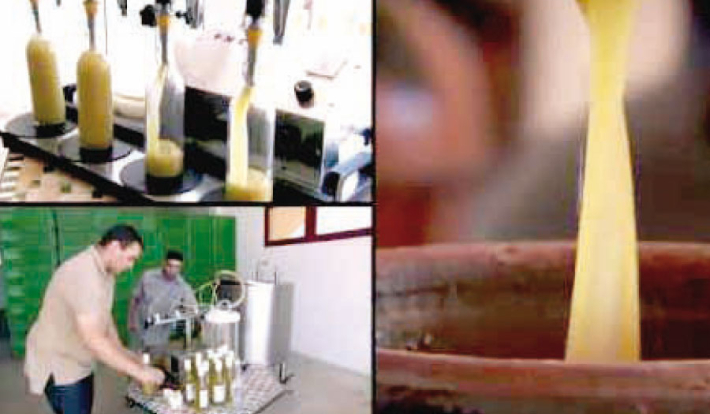
Global demand for olive oil is growing in a market marked by the dominance of Italian and Spanish giants and the strong entry in recent years of new olive producers such as Argentina and New Zealand. To carve out a prime position and improve its standing in this buoyant market, the Mediterranean Network of Olive Oil Cities, representing more than 15 Mediterranean olive-growing countries, took stock during its first meeting on 16 April in Meknes of the best promotion strategies, current olive oil subsidies in major Mediterranean olive-growing countries, support for olive oil promotion, consumer education, tourism/olive oil promotion, etc. And there is good reason to do so.
"The current increase in olive oil production and the strengthening of global interest in olive products have prompted a large number of countries to deploy special efforts to improve production, which has placed the olive sector in a competitive context where only the quality, reputation and distinction of the 'Olive Oil' product prevail," explains Dr Noureddine Ouazzani, member of the network's scientific committee and initiator of Meknes' participation in this network. He specifies, during the Forum organised by the ENA-Meknes Olive Agropole with the support of the city of Meknes, that "the current challenges for a profitable and high-quality olive industry require that the efforts of producers and operators in the olive sector also focus on stimulating demand for olive oil in traditional consumer markets and on creating this demand in emerging and potential markets with an integrated 'Production-Marketing' approach. An approach which is based, according to Dr Ouazzani, on the Mediterranean diet and the health benefits of olive oil proven by significant research since the early fifties. And it is, moreover, based on these principles, continues Dr Ouazzani, that the RECOMED network, created in May 2011 in Imperia, Italy, intends to give more visibility to the promotion of the consumption and culture of quality olive oil, which presents interesting opportunities to be seized at the local and international level, where only 5% of the global population consumes olive oil. For him, opportunities for quality Moroccan olive oil will not be lacking, both on the local and international market, provided that a competitive quality olive oil is produced.
Mohamed Ouhmad Sbitri, former executive director of the International Olive Council, insists for his part on the quality of the product and its traceability to improve positioning on the international market, particularly the American market, which, along with China and Brazil, is among the largest importers of olive oil. "Vigilance must be the order of the day in terms of exports... All exported oils must be systematically analysed in order to verify their compliance with current international standards and thus avoid the crisis that Moroccan olive oil experienced on the American market under pressure from American and Australian producers. Morocco has made a lot of effort in terms of production, but the commercial aspect remains embryonic," he concludes.
Indeed, within the framework of the Green Morocco Plan, production has almost tripled in the space of a few years with the objective of reaching 1.22 million hectares planted and an olive production of 2.5 million tonnes. There is also talk of increasing exports to nearly 120,000 tonnes for olive oil and 150,000 tonnes for table olives, but the national product is not yet perfectly adapted to the requirements of external markets, indicates Hassan Zouhri, from the Ministry of Agriculture, Directorate of Plant Production.
For him, the sector still suffers from a certain number of ills. He cites, among others, the advanced age of a significant portion of the plantations, combined with the low planting density and the predominance of traditional management techniques.
Added to this is the under-exploitation of the potential for expanding areas in favourable zones. Another drawback cited is the complex and inefficient marketing system, characterised by the multiplicity of intermediaries who capture the largest share of the added value to the detriment of the farmer. Worse still, the decline in Moroccan table olive exports risks causing Morocco to lose its position as a leader on the international market, combined with the weak presence of Moroccan olive oils on the international market due to the insufficiency of exportable quantities, the increased demand on the domestic market and the absence of promotional campaigns for the Morocco label on external markets. That being said, significant margins for progress are to be exploited in terms of improving productivity.
It is a question, according to Hassan Zouhri, of the strong increase expected in terms of national olive oil consumption, which currently remains significantly low compared to other producing countries (2 kg/inhab./year), the renewed interest in investment in the sector, given the comparative advantages it offers for the country and the free trade agreements with the EU and the USA.
And it is above all a question, according to many speakers at this meeting, of respecting the compliance of olive oil with the international standards in force today, a sine qua non condition for ensuring its entry into buoyant markets.
According to the latest report from the International Olive Council, olive oil imports during the first four months (October-January) of the 2011/12 olive crop year show an upward trend, particularly in four of the eight importing countries, namely China (20%), the United States (10%), Brazil (8%) and Japan (1%), against a drop in imports from Australia and Canada which recorded a decrease of 10 and 18% respectively. American imports for their part had reached a record in 2010/2011. 88% of imported oils come from EU countries (55% from Portugal, 26% from Spain, 6% from Italy and 1% from Greece), 11% from Argentina and 1% from Chile and Morocco.