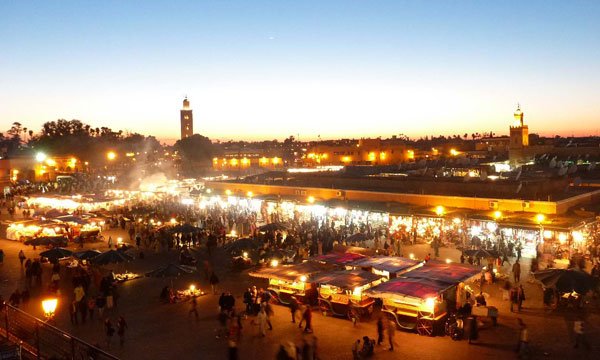
Every year during this month of Ramadan, a month of piety, reflection, sharing, and generosity, solidarity is at the forefront, just like other habits that are disrupted during such a period. Beyond the spiritual, festive, and warm atmosphere, as well as the spirit of mutual aid, Ramadan is also the month where lethargy and anarchy go hand in hand, not only in Marrakech but everywhere in Morocco. The most striking phenomenon during this period is this feeling of mutual aid. Indeed, this phenomenon, which gladdens the heart, continues to gain ground, and a spirit of solidarity, charity, and compassion takes hold. Charity becomes a sacred ritual on such occasions and an "obligation" placed on an equal footing with other acts of faith that guarantee a proper fast. Both in the markets and in front of mosques and bakeries, alms are given generously, and people, in an unparalleled surge of generosity, even rush to engage in the practice. This shows that Moroccans have become more sensitive to the misery of others. But much more than this "hasty" charity, the month of Ramadan is also marked by the tradition of helping the most underprivileged by offering them Iftar meals. Now a commendable tradition, these actions crystallise the principles of solidarity and mutual aid with which the Moroccan people are imbued. In this context, we must pay tribute to these patrons and charitable souls for these acts of kindness intended to distribute hot meals to the needy and the homeless. Like the example of Haj Mohamed, a man in his sixties who has made it a habit for three years now in his café-restaurant in Marrakech to offer the rare opportunity to the underprivileged to break their fast without paying a penny. Every day, starting half an hour before Iftar, people rush to the place where all the amenities and dishes worthy of a family fast-breaking are offered free of charge. "Word of mouth works well. The turnout is growing day by day. The meals are accessible to all and the beneficiaries are served to satiety," explains the sexagenarian. Furthermore, if the evenings are livelier than usual and if television and Ramadan go hand in hand, the impact of this blessed month on productivity is felt from the first days, it being understood that public services always run at a slow pace during this sacred ritual. Less activity and more rest seem to be the watchword for most administrations. Waking up in the morning is very difficult after hours of insomnia spent entirely digesting the fast-breaking meal and, a few short hours later, the dinner. And this is felt in the streets, which are almost deserted around 11 a.m. on a weekday. The sun, like a leaden weight, and the suffocating heat of a month of July reinforce the lethargy of the first fasters who set off without enthusiasm through the city's arteries to reach their workplace or to do their daily shopping before the mercury climbs even higher. Moreover, everything is a pretext for a fight. Polemics, clashes, disputes, and verbal jousts are part of the scenery in our administrations and more particularly in our markets. A distressing and sad spectacle that we unfortunately witness every day of Ramadan.
When prices go wild A tour of some of the city's busy markets allowed us to realise the ordeal that housewives endure.
The latter complain both about the foul language used all day long by some "mramdnine" (fasting-irritable) merchants and about the soaring prices of consumer goods during this holy month, to the extent that they now have to sweat blood and tears to make ends meet.
Indeed, prices, the control of which had been promised by many government officials, are still not stagnating. They keep climbing.
"These crooked merchants are real leeches. They make their own laws and impose their dictates. Fish, chicken, and certain fruits are at the top of the price hit parade, some even bordering on the ridiculous," a housewife, visibly angered by these practices, confided to us.
The same sentiment is echoed by another housewife: "Chicken, the refuge of small budgets, has soared to become elusive at 18 DH/kg.
For some fruits and vegetables, it's even worse.
It's prohibitive, these are insolent prices."
And she added: "Control services rarely intervene to regulate.
This therefore gives rise to a wild market that suits some and makes their fortune in the space of a month."
Apart from all this, from this surge of solidarity and these problems linked to both apathy, anarchy, and the exorbitant prices of basic consumer products, the atmosphere of Ramadan remains special.
It disrupts everything, changes everything, and sets the rhythm for everyone's daily life.
News 10 Jul 2014 4 min read
Ramadan between spiritual atmosphere, surge of solidarity and "tramdine"