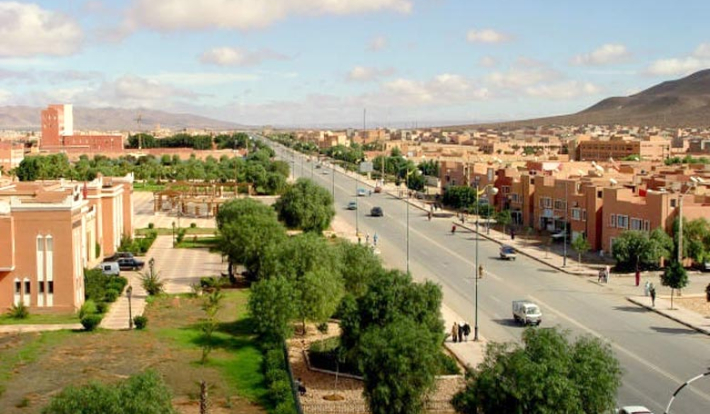
For political elites responsible for the city of Guelmim, capable of raising the level of management of local and regional affairs
Several associative actors in the city of Guelmim have expressed the wish to see the elections of 4 September give birth to responsible political elites capable of raising the level of management of local and regional affairs.
In statements to MAP, they indicated that these new political elites are called upon, especially with the new prerogatives that have strengthened the role of local and regional councils, to work in symbiosis and interaction with the needs of citizens and their demands, while giving added value to the said councils for rational management based on good governance, responsibility, and an administration of proximity desired by all.
For the teacher-researcher and associative actor, Omar Najih, the elected officials who will emerge from the ballot boxes are called upon to fully play their roles as main actors and a force for proposals to lead change and strengthen the transparency of local and regional management, achieve the expectations of citizens, and respond to their aspirations.
And to affirm the need for follow-up by elected officials of the citizen's daily life and the opening of continuous communication channels with the inhabitants while committing to permanent listening and interaction with their concerns.
He also advocated a participatory approach in determining expectations and priorities and a serene action regarding affairs in relation to local and regional matters.
For his part, the associative actor, Ahmed Birouk, stressed that elected officials are called upon, within the framework of their missions, to focus on improving the level of administrative and social services, strengthening basic infrastructure and the performance of equipment, the management of which is the responsibility of local authorities, while improving the quality of services and benefits of the said equipment.
He also pleaded for the creation of favourable conditions for investors and income-generating and job-creating activities with particular attention to the rural world and its development in an integrated and balanced manner.
On this occasion, he listed a number of challenges that elected officials must place at the head of their priorities at the local and regional levels in order to consolidate socio-economic development and improve the level of services offered to citizens in the Guelmim-Oued Noun region, notably the upgrading of local authority infrastructure and the improvement of their performance, the improvement of the investment environment, the facilitation of procedures, the encouragement of private initiatives, the strengthening of cultural and sports infrastructure, the upgrading of roads, the realisation of integrated management of water resources in addition to the protection of the region's provinces from the risks of flooding and the improvement of the accessibility of rural area inhabitants to the road network.
For his part, Abderrahmane Reghay, also an associative actor, affirmed that the elected officials emerging from the ballot boxes during the next elections will be put to a severe test to restore citizens' confidence in political action by putting an end to the old practices that tarnished the credibility of certain councils and by applying the programmes and plans presented during their respective election campaigns.
Interaction with the aspirations of citizens implies a spirit of responsibility and an adherence of elected officials to the implementation of advanced regionalisation, which poses enormous challenges to be met in order to accompany and consolidate the changes that the Kingdom is experiencing in different fields, he noted.
He pleaded for the establishment of monitoring of the action of local authorities and the denunciation of any practice or abuse of power to achieve personal profits, insisting in this sense on the need to monitor and control the management of public funds, especially after the constitutionalisation of the correlation between responsibility and accountability.
The number of candidates for the municipal elections of 4 September 2015 in the Guelmim province reached 1,382 candidates to fill 332 seats, 82 of which are reserved for women.
The number of individual candidates for the municipal elections is estimated at 838 in 217 electoral districts spread over 19 communes, including 18 rural communes, while the number of candidates on a list amounted to 546 spread over 14 lists, including 84 female candidates for 39 seats on the urban council of the city of Guelmim, according to data from the local authorities of the Wilaya.