

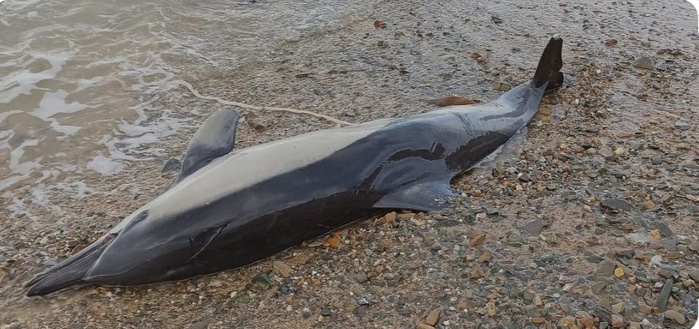
A lifeless dolphin, with elegant forms now motionless, was found stranded near the "Mia" hotel, pushed by the waves onto the golden sand. The scene, almost unreal, did not fail to captivate the first walkers of the day, who, stunned, immortalised this sad spectacle before alerting the competent authorities.
Very quickly, teams composed of local agents and environmental experts went to the scene to carry out an initial analysis. The body of the cetacean, lying on the shore, seemed almost intact, but the questions were numerous. - How did this majestic inhabitant of the seas meet its death? - Is it the result of a natural phenomenon, or should we see it as the consequence of human activities, which are increasingly pressing on marine ecosystems?
The hypotheses are numerous and each raises concerns. Among the possible causes, experts mention natural diseases, linked to age or specific infections. But other, more alarming avenues are also being explored. Climate change, with the warming of the oceans and the modification of marine currents, could have disrupted the dolphin's natural habitat. Pollution, which is omnipresent, is also being pointed at: plastic waste and chemical products dumped at sea constitute a deadly threat to marine species, causing suffocation, poisoning or disease.
Human activities are not left out. Collisions with ships, accidental catches in fishing nets or even underwater noise generated by maritime traffic are all dangers that threaten dolphins and other creatures of the deep. Finally, natural predation, although rare, remains a possibility: a shark or another marine predator could have inflicted fatal wounds on the animal.
This tragedy, far from being isolated, is part of a worrying trend. In recent years, several similar cases have been reported on the Moroccan coast, causing emotion among local populations and environmental defenders. Each dolphin stranding is a warning signal, a poignant reminder of the fragility of marine ecosystems and the devastating impact of man on nature.
For scientists, these events are valuable indicators of the health of the oceans. The death of a dolphin is not just an individual tragedy; it is a symptom, a reflection of the imbalances that threaten all marine biodiversity. It is therefore urgent to strengthen efforts to protect these ecosystems, by fighting against pollution, by regulating human activities and by conducting in-depth research to better understand the causes of these phenomena.
In the meantime, the El Jadida dolphin rests on the sand, a silent symbol of a nature in peril. Its fate challenges us and reminds us of an essential truth: the oceans, cradles of life, deserve our respect and our protection. Before it is too late.
Very quickly, teams composed of local agents and environmental experts went to the scene to carry out an initial analysis. The body of the cetacean, lying on the shore, seemed almost intact, but the questions were numerous. - How did this majestic inhabitant of the seas meet its death? - Is it the result of a natural phenomenon, or should we see it as the consequence of human activities, which are increasingly pressing on marine ecosystems?
The hypotheses are numerous and each raises concerns. Among the possible causes, experts mention natural diseases, linked to age or specific infections. But other, more alarming avenues are also being explored. Climate change, with the warming of the oceans and the modification of marine currents, could have disrupted the dolphin's natural habitat. Pollution, which is omnipresent, is also being pointed at: plastic waste and chemical products dumped at sea constitute a deadly threat to marine species, causing suffocation, poisoning or disease.
Human activities are not left out. Collisions with ships, accidental catches in fishing nets or even underwater noise generated by maritime traffic are all dangers that threaten dolphins and other creatures of the deep. Finally, natural predation, although rare, remains a possibility: a shark or another marine predator could have inflicted fatal wounds on the animal.
This tragedy, far from being isolated, is part of a worrying trend. In recent years, several similar cases have been reported on the Moroccan coast, causing emotion among local populations and environmental defenders. Each dolphin stranding is a warning signal, a poignant reminder of the fragility of marine ecosystems and the devastating impact of man on nature.
For scientists, these events are valuable indicators of the health of the oceans. The death of a dolphin is not just an individual tragedy; it is a symptom, a reflection of the imbalances that threaten all marine biodiversity. It is therefore urgent to strengthen efforts to protect these ecosystems, by fighting against pollution, by regulating human activities and by conducting in-depth research to better understand the causes of these phenomena.
In the meantime, the El Jadida dolphin rests on the sand, a silent symbol of a nature in peril. Its fate challenges us and reminds us of an essential truth: the oceans, cradles of life, deserve our respect and our protection. Before it is too late.
Mohamed LOKHNATI
