

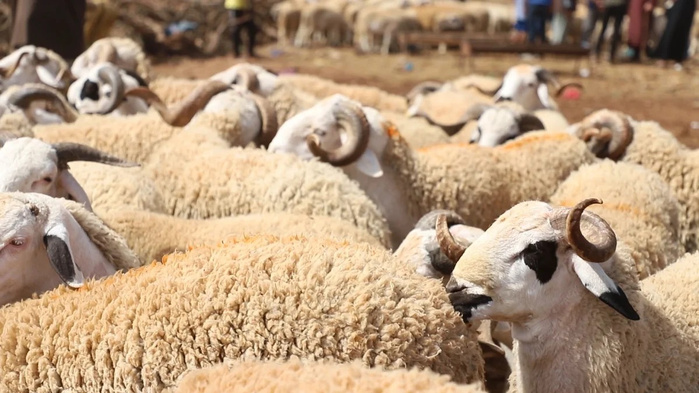
This operation, which continues until the end of December, is part of the general census of the national livestock for the year 2024, launched by the Ministry of Agriculture, Maritime Fisheries, Rural Development, Water and Forests, as well as the National Association of Sheep and Goat Breeders (ANOC), under the theme "Our livestock is the fortune of our country," aiming to provide updated data on the national livestock, its composition and its geographical distribution.
In a statement to MAP, the head of the agricultural statistics service at the Regional Directorate of Agriculture in Casablanca-Settat, Abdelbasset Redouane, indicated that the directorate has mobilized 86 investigators, in addition to 8 regional and provincial supervisors, to ensure the monitoring and support of this operation in the 150 rural communes of the eight provinces of the region.
Mr. Redouane explained that the census operation aims to collect data on the number of heads of livestock according to breed, type, sex and age categories, as well as to update figures and information. The objective is to work towards the renewal of the livestock, its restructuring and the regulation of the red meat sector, with a view to achieving self-sufficiency.
He added that the census operation in the Casablanca-Settat region is taking place under good conditions, marked by the adherence and mobilization of all concerned actors. He also indicated that to date, 110 communes out of the 150 rural communes concerned have been covered.
For his part, field investigator Abdessadek Fathi affirmed, in a similar statement, that the operation is taking place under good conditions and has been welcomed by farmers, particularly breeders, stressing that field investigators have all the necessary logistical and technical resources.
It should be noted that the Ministry of Agriculture, Maritime Fisheries, Rural Development, Water and Forests is conducting this general livestock census operation in the presence of local authorities and in coordination with various partners, notably the ANOC, the provincial directorates of Agriculture, the Regional Office for Agricultural Development of Doukkala, the Chamber of Agriculture of the Casablanca-Settat region, the National Office for Agricultural Advisory and the National Office for Food Safety (ONSSA).
In a statement to MAP, the head of the agricultural statistics service at the Regional Directorate of Agriculture in Casablanca-Settat, Abdelbasset Redouane, indicated that the directorate has mobilized 86 investigators, in addition to 8 regional and provincial supervisors, to ensure the monitoring and support of this operation in the 150 rural communes of the eight provinces of the region.
Mr. Redouane explained that the census operation aims to collect data on the number of heads of livestock according to breed, type, sex and age categories, as well as to update figures and information. The objective is to work towards the renewal of the livestock, its restructuring and the regulation of the red meat sector, with a view to achieving self-sufficiency.
He added that the census operation in the Casablanca-Settat region is taking place under good conditions, marked by the adherence and mobilization of all concerned actors. He also indicated that to date, 110 communes out of the 150 rural communes concerned have been covered.
For his part, field investigator Abdessadek Fathi affirmed, in a similar statement, that the operation is taking place under good conditions and has been welcomed by farmers, particularly breeders, stressing that field investigators have all the necessary logistical and technical resources.
It should be noted that the Ministry of Agriculture, Maritime Fisheries, Rural Development, Water and Forests is conducting this general livestock census operation in the presence of local authorities and in coordination with various partners, notably the ANOC, the provincial directorates of Agriculture, the Regional Office for Agricultural Development of Doukkala, the Chamber of Agriculture of the Casablanca-Settat region, the National Office for Agricultural Advisory and the National Office for Food Safety (ONSSA).
