FrançaisEnglishالعربيةDeutschEspañolNederlandsItaliano中文

Your cart is empty

Adventure awaits!

About Fès-Medina

The city of Fès, known at the beginning as Fès al Bali, was founded by Idris I on the right bank of the Oued Fès. Alongside...

News in Fès-Medina

Follow the latest news, projects, and official announcements from your commune.

News 24 Jun 2014 6 min read

"Ader Fez has become a model and a reference for other cities in the Kingdom"
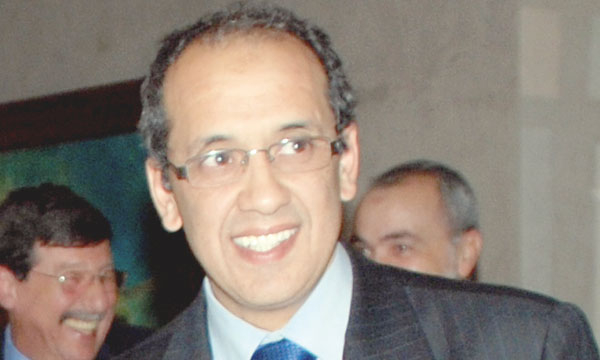
"Ader Fez has become a model and a reference for other cities in the Kingdom"

Le Matin: What is your assessment today of the 25 years since the creation of Ader Fez?

Fouad Serrhini: I personally had the pleasure of joining the delegation for the safeguarding of the city of Fez as an architecture intern, then attending the creation of Ader as an intern as well in 1989, and joining it once my studies were completed in 1990. Ader really began its activities in January 1991 and it has evolved over 25 years with its difficulties, its constraints, but also its achievements and its significant contribution to the safeguarding of the Medina of Fez. I would like to specify that Ader was an institutional adventure. The Moroccan state had never created such a structure and the initiators were courageous and bold, because they did not have real visibility, particularly regarding its evolution and its financing. Ader was created in the legal form of a public limited company (SA) with missions that include the construction of housing estates intended mainly to house part of the population and activities of the Medina, the acquisition of land and buildings for subdivision, development and rehabilitation, and the construction or renovation of buildings intended for the rehousing of inhabitants. But from the beginning, the structure found itself with social problems and faced several financial difficulties, since it did not have sufficient funds.

That said, despite the various technical, legal, socio-economic and financial constraints that have weighed on the preservation of the Medina of Fez, Ader has managed to steer several projects thanks to the perseverance of its engineers, architects and technicians and the support of its board of directors and civil society, which have allowed it to stay alive. Ader has been criticised for its management of the Medina restoration project?

I would like to specify that we are working on an ancient and living fabric. In addition to the lack of financial means, there are many problems that we encounter which are legal, technical and social in nature. Added to this is the very strong demographic pressure which complicates the various strategies and delays projects aimed at rehabilitating and safeguarding the Medina. Today, after several years of existence, Ader has become a structure that is very integrated into the institutional and social fabric of the city of Fez. And it is thanks to the various programmes launched and financed by the government, the Ministry of Habous, the Ministry of Housing or within the framework of foreign cooperation, that Ader Fez has been able to develop significant expertise in terms of intervention on the ancient fabric and work methodology today. What are the programmes carried out within the framework of foreign cooperation that have brought the most added value to Ader Fez?

Ader has steered several programmes registered within the framework of foreign cooperation with, in particular, the World Bank and the Millennium Challenge Account. And through each programme, we have acquired a certain expertise and developed new methods and approaches to intervene on an ancient and living fabric of 12 centuries. I recall that regarding this last programme registered within the framework of the Millennium Challenge Compact on 31 August 2007, signed between the government of the Kingdom of Morocco and the United States of America, acting through the Millennium Challenge Corporation (MCC), Ader Fez acts as the executing entity and delegated project manager for the Fez Medina Handicrafts project. And that is how we steered the launch of various projects registered within the framework of this programme, such as the development project for the historic Lalla Ydouna square. On the occasion of the 25th anniversary of Ader Fez, we made a quantified assessment available to both our partners and the press. Is there a new programme in prospect within the framework of the MCC?

There is a new compact in preparation, but we do not have precise information at Ader Fez level about a possible programme. We hope to have funding for the Medina of Fez within the framework of other programmes than the MCC. The United States Ambassador, who visited Fez last week, was able to inquire about the progress of the projects launched within the framework of the MCC and we hope that this will pave the way for other collaborations. And what about European cooperation?

European cooperation remains somewhat limited in the MED programmes, which are funds dedicated to studies and expertise. Today, Ader Fez is steering two major programmes launched under the aegis of His Majesty the King. Are these programmes on track?

I think that with all the difficulties we have experienced, the agency is experiencing a major turning point today with the two major programmes launched last year by the Sovereign. With an investment of more than 615 million dirhams, the 2013-2017 five-year restoration programme should concern nearly 4,000 buildings threatening to collapse, as well as 27 monuments and historic sites in the Medina of Fez. The restoration programme should also cover tanneries, bridges and madrasas built by the Merinid dynasty between the 13th and 14th centuries. I had the honour of accompanying His Majesty the King on his tour of the Medina of Fez and witnessing his interest in this city and its population, and it is an interest that has materialised through the signing of these two major programmes and which invests Ader with a great responsibility. A mission that we are carrying out with the support of our local partners. Moreover, not a week goes by without the Wali holding a meeting to inquire about the progress made. Today, we have launched 10 restoration sites out of the 27 planned and I think we are on the right track. I would like to specify that Ader Fez has become a model and a reference for other cities in the Kingdom that would like to be inspired by its cutting-edge expertise in the rehabilitation trades developed over 25 years. An expertise that takes into account historical, technical and also human aspects, knowing that there are always efforts to be made to further improve our approach. We have just received representatives from 9 Moroccan cities for three days within the framework of German cooperation and with the support of the Ministry of the Interior and the General Directorate of Local Authorities. We received officials from Rabat who are in the process of setting up an institutional structure similar to Ader Fez. And what about the project to transform Ader into a public establishment, or even a national agency?

There is a reflection on making these 25 years of Ader Fez useful to allow other historic cities in Morocco not to follow the same path, commit the same errors and encounter the same problems, and to capitalise on its experience, particularly at the technical level, interventions, technical alternatives and materials used, as well as at the social level, because we have developed social engineering over the years. There is serious reflection on transforming Ader into a public establishment and there is a project, at the national level, to transform it into a national agency, but this project is not yet finalised and validated.

Listen
Size: