Le Matin: The "Space for Science and Life" association is organising the second edition of the International Conference on Api-phytotherapy in Fès. What characterises it?
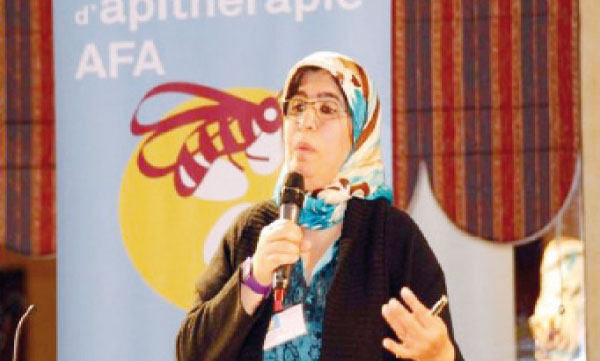
Badiaâ Lyoussi: This second edition of the International Conference on Api-phytotherapy which will take place in Fès from 20 to 22 May 2014 stands out from the previous one by its breakdown into two parts, namely the "Scientific Research" part led by internationally renowned experts and the "Practical" part dedicated to beekeepers. The first part lifts the veil on the novelties of apitherapy, on hive products, bee venom, propolis which is a natural antibiotic, as well as on hive air. It is a question for the participating doctors, researchers, scientists and experts to highlight the results of clinical and scientific studies on honey, bee products and their extraordinary therapeutic virtues in the treatment of several diseases, among others, respiratory pathologies, asthma, certain cancers, diabetes, etc. Research has developed so much that there is even research on chromosomes extracted from royal jelly which are used in the treatment of cancer and cardiovascular pathologies. It is also a question of demonstrating that the traditional apitherapy practised by our ancestors and our beekeepers to treat, among other things, asthma, inflammation and fever, is outdated and that it is important today to move towards modern apitherapy based on studies and scientific results and on bee products such as its venom, propolis and hive air. And others will present their research on royal jelly, propolis and hive air. The conference also aims to open the way for small beekeepers to develop innovative projects and further enhance honey and bee products, but also to the industrial world to make it discover the promising prospects. On the programme, there is also the creation of a consortium that we will christen "Api research", whether at the Maghreb or Mediterranean level for the valorisation of research in the field in partnership with beekeepers. And what about the second part?
On the sidelines of the conference, the "Space for Science and Life" association is dedicating two days to practical workshops for young beekeepers from the Sefrou and Zagora regions. These young people practise traditional beekeeping and the workshops led by international experts will allow them to learn, among other things, how to harvest propolis according to the rules of the art, how to extract bee venom, hive air, produce quality honey to be competitive and be able to put their products at the service of apitherapy. I would like to specify that honey culture is also threatened by pesticides and the market, faced with adulteration and also that it is no longer enough to produce only honey, but that other very promising specialities must be developed such as pollination which is the main source of several nutrients essential to bees and which has an exceptional nutritional richness highly recommended for the elderly. The idea is to make both beekeepers and industrialists discover the amazing medicinal virtues of bee products and the components of each product. In short, the virtues of this medicine of the future. The list of speakers shows participants from Europe, the Arab world and America?
We made the choice to invite the great schools of apitherapy in the world. There are participants from the Francophone Apitherapy Association led by Professor Becker, the Vice-President of the German Apitherapy Society, the Vice-President of the Roman Society and the President of the Portuguese Society as well as the President of the Arab Pharmacology League. The conference is marked by the presence of the President of the American Society and Gilles Ratia, President of Apimondia, the largest international beekeeping NGO. To this are added renowned beekeepers who advocate organic beekeeping and representatives of the FAO. We will take the opportunity of the conference to strengthen partnerships with the Federation of Portuguese Beekeepers represented by its president and experts and project leaders on api-tourism from Slovenia. Where is research on apitherapy in Morocco?
There is ancestral know-how among Moroccan beekeepers, but there is no synergy between them and researchers. They must work together to develop apitherapy, take advantage of advances in the field and put quality bee products at the service of science, medicine and industry and even the pharmaceutical industry which does not appreciate this renewed interest in natural products. There are very timid initiatives and rare university research. At the conference, students from the Fès Faculty will present their posters as well as those from Errachidia who work in this field with Corsica. Bees are disappearing more and more from our countryside. Is Morocco experiencing the same situation as Europe which has lost half of its bees?
I participated in a congress in Brussels which devoted an entire session to the disappearance of bees with notably the presence of researchers, beekeepers and even parliamentarians representing several European countries. And all the participants called for the banning of toxic and dangerous pesticides that attack the nervous system of bees and cause their disappearance. Their use is moreover today banned in Europe and studies are launched to preserve the health of the bee because there is an awareness of its role in the preservation of life on earth. In Morocco, some of our countryside are experiencing this phenomenon of the disappearance of bees also because of pesticides and fortunately, there are still isolated and preserved regions that still allow bees to live. And it is important to support these regions for the development of their local products and for the preservation of organic culture.
News 15 May 2014 5 min read
"The idea is to make beekeepers discover the medicinal virtues of bee products"