

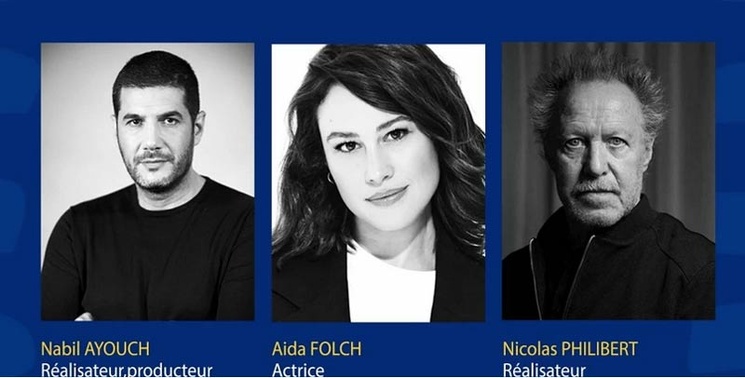
The Tetouan Mediterranean Film Festival will celebrate, during its 30th edition scheduled from 26 April to 3 May, three figures of Mediterranean cinema with exceptional careers: the Moroccan director Nabil Ayouch, the French documentary filmmaker Nicolas Philibert, and the Spanish actress Aida Folch.
"These tributes highlight the importance of a diverse and engaged Mediterranean cinema, where perspectives and stories intersect to better tell the story of our societies," states a press release from the festival management.
An essential figure in Moroccan cinema, Nabil Ayouch has constantly explored the aspirations of a society in transition. From Ali Zaoua (2000, Berlinale Generation 14plus selection) to Much Loved (2015, Directors' Fortnight at Cannes), via Horses of God (2012, Un Certain Regard selection at Cannes) and Razzia (2017, Toronto), his incisive gaze and impactful direction have brought to light realities long silenced, enriching debates far beyond the screens, the same source notes.
In 2021, his film “Haut et Fort” (Casablanca Beats) caused a sensation in the official competition at Cannes, a first for Morocco, the statement adds, noting that in 2024, he unveiled Everybody Loves Touda. Selected for the Cannes Film Festival and the Marrakech International Film Festival (FIFM), Nabil Ayouch's tenth feature film was chosen to represent Morocco at the Oscars (Best International Feature Film), and also became the first Moroccan film to qualify for the major Oscar categories and to be eligible in all categories of the 2025 César Awards.
Ayouch continues to play a key role in promoting Moroccan cinema on the international stage, with a strong commitment to stories that give a voice to the invisible.
Ayouch's commitment goes far beyond his films, the statement further notes, explaining that through the Ali Zaoua Foundation, he has been working for over fifteen years to provide young people with access to art and culture, multiplying initiatives to democratise artistic expression.
Nicolas Philibert, director and master of cinema of the real, has for his part marked the history of documentary filmmaking with a demanding, subtle, and deeply human body of work, the Festival management indicates, stressing that his gaze, attentive and imbued with delicacy, has always focused on places and faces often left in the shadows, revealing the richness of those who populate our daily lives.
After the global success of Etre et avoir (2002), a portrait of a unique class in a mountain village, he continued his exploration of the margins with films such as Le Pays des sourds (1993) or La Moindre des choses (1997), which question the boundaries between silence and speech, between normality and otherness.
In 2023, his film On the Adamant, dedicated to a day centre welcoming adults suffering from mental disorders, won the Golden Bear at the Berlinale. With rare sensitivity, Philibert manages to film the pain, suffering, and moments of hope of his characters, while capturing moments of beauty in places often misunderstood or ignored.
According to the statement, his filmography, which includes titles such as Retour en Normandie (2007), Nénette (2010), or La Maison de la radio (2013), continues to promote a cinema that combines poetry, commitment, and a constant search for shared humanity.
In 2024, he continues his exploration of psychiatry with two new films: Averroès & Rosa Parks and La Machine à écrire et autres sources de tracas, which complete a triptych where he rehabilitates the speech of patients and explores institutions struggling against dehumanisation, the same source notes, adding that from film to film, Nicolas Philibert builds a timeless and universal body of work, where each encounter is an invitation to question our human condition.
As for Aida Folch, a Spanish actress originally from Tarragona, she has established herself as one of the great figures of contemporary Spanish cinema. Her first big opportunity came in 2000, when she was chosen from 3,000 girls from all over Spain to play a role in the Spanish production The Shanghai Spell (2002), by the Oscar-winning Spanish director Fernando Trueba. She was fourteen at the time.
Shortly after, Fernando León de Aranoa chose her for the award-winning film Mondays in the Sun (2003), which won the award for best film at the San Sebastián Festival, the statement continues, noting that she has since appeared in Spanish productions such as Aquitania (2006), La mirada violeta (2009), Fin de curso (2007), Salvador (2006), Las vidas de Celia (2008), and 25 kilates (2008), among others. Aida also works in television films such as Inocentes (2006), No estás sola (2007), Sara (2008), Morir en 3 actes (2008), or Volveremos (2009).
In 2008, she was noticed in the character of Françoise in the legendary Spanish television series Cuéntame cómo pasó, broadcast on La1, which traces Spanish life during the 1970s, before and after the democratic transition.
She has worked abroad in the historical blockbuster Henri 4 (2010) by Jo Baier, and in Mi universo en minúsculas (2012), a Mexican production by director Leticia Tonos Paniagua, the festival management notes.
In 2012, in The Artist and the Model by Fernando Trueba, Aida Folch played the role of Mercè, a young Spanish woman fleeing the civil war, the statement notes, recalling that in this film shot in French, she worked alongside Jean Rochefort and Claudia Cardinale.
"These tributes highlight the importance of a diverse and engaged Mediterranean cinema, where perspectives and stories intersect to better tell the story of our societies," states a press release from the festival management.
An essential figure in Moroccan cinema, Nabil Ayouch has constantly explored the aspirations of a society in transition. From Ali Zaoua (2000, Berlinale Generation 14plus selection) to Much Loved (2015, Directors' Fortnight at Cannes), via Horses of God (2012, Un Certain Regard selection at Cannes) and Razzia (2017, Toronto), his incisive gaze and impactful direction have brought to light realities long silenced, enriching debates far beyond the screens, the same source notes.
In 2021, his film “Haut et Fort” (Casablanca Beats) caused a sensation in the official competition at Cannes, a first for Morocco, the statement adds, noting that in 2024, he unveiled Everybody Loves Touda. Selected for the Cannes Film Festival and the Marrakech International Film Festival (FIFM), Nabil Ayouch's tenth feature film was chosen to represent Morocco at the Oscars (Best International Feature Film), and also became the first Moroccan film to qualify for the major Oscar categories and to be eligible in all categories of the 2025 César Awards.
Ayouch continues to play a key role in promoting Moroccan cinema on the international stage, with a strong commitment to stories that give a voice to the invisible.
Ayouch's commitment goes far beyond his films, the statement further notes, explaining that through the Ali Zaoua Foundation, he has been working for over fifteen years to provide young people with access to art and culture, multiplying initiatives to democratise artistic expression.
Nicolas Philibert, director and master of cinema of the real, has for his part marked the history of documentary filmmaking with a demanding, subtle, and deeply human body of work, the Festival management indicates, stressing that his gaze, attentive and imbued with delicacy, has always focused on places and faces often left in the shadows, revealing the richness of those who populate our daily lives.
After the global success of Etre et avoir (2002), a portrait of a unique class in a mountain village, he continued his exploration of the margins with films such as Le Pays des sourds (1993) or La Moindre des choses (1997), which question the boundaries between silence and speech, between normality and otherness.
In 2023, his film On the Adamant, dedicated to a day centre welcoming adults suffering from mental disorders, won the Golden Bear at the Berlinale. With rare sensitivity, Philibert manages to film the pain, suffering, and moments of hope of his characters, while capturing moments of beauty in places often misunderstood or ignored.
According to the statement, his filmography, which includes titles such as Retour en Normandie (2007), Nénette (2010), or La Maison de la radio (2013), continues to promote a cinema that combines poetry, commitment, and a constant search for shared humanity.
In 2024, he continues his exploration of psychiatry with two new films: Averroès & Rosa Parks and La Machine à écrire et autres sources de tracas, which complete a triptych where he rehabilitates the speech of patients and explores institutions struggling against dehumanisation, the same source notes, adding that from film to film, Nicolas Philibert builds a timeless and universal body of work, where each encounter is an invitation to question our human condition.
As for Aida Folch, a Spanish actress originally from Tarragona, she has established herself as one of the great figures of contemporary Spanish cinema. Her first big opportunity came in 2000, when she was chosen from 3,000 girls from all over Spain to play a role in the Spanish production The Shanghai Spell (2002), by the Oscar-winning Spanish director Fernando Trueba. She was fourteen at the time.
Shortly after, Fernando León de Aranoa chose her for the award-winning film Mondays in the Sun (2003), which won the award for best film at the San Sebastián Festival, the statement continues, noting that she has since appeared in Spanish productions such as Aquitania (2006), La mirada violeta (2009), Fin de curso (2007), Salvador (2006), Las vidas de Celia (2008), and 25 kilates (2008), among others. Aida also works in television films such as Inocentes (2006), No estás sola (2007), Sara (2008), Morir en 3 actes (2008), or Volveremos (2009).
In 2008, she was noticed in the character of Françoise in the legendary Spanish television series Cuéntame cómo pasó, broadcast on La1, which traces Spanish life during the 1970s, before and after the democratic transition.
She has worked abroad in the historical blockbuster Henri 4 (2010) by Jo Baier, and in Mi universo en minúsculas (2012), a Mexican production by director Leticia Tonos Paniagua, the festival management notes.
In 2012, in The Artist and the Model by Fernando Trueba, Aida Folch played the role of Mercè, a young Spanish woman fleeing the civil war, the statement notes, recalling that in this film shot in French, she worked alongside Jean Rochefort and Claudia Cardinale.
