
FrançaisEnglishالعربيةDeutschEspañolNederlandsItaliano中文

Your cart is empty

Adventure awaits!

About Sidi Ifni

Sidi Ifni (in Arabic: سيدي إفني) is a Moroccan town in the Souss-Massa-Draâ region, located on the edge of the Atlantic...

News in Sidi Ifni

Follow the latest news, projects, and official announcements from your ville.

News 30 Jun 2013 5 min read

National tribute to resistance fighters

The recovery of Sidi Ifni, a flagship episode in the process of completing the territorial integrity of the Kingdom
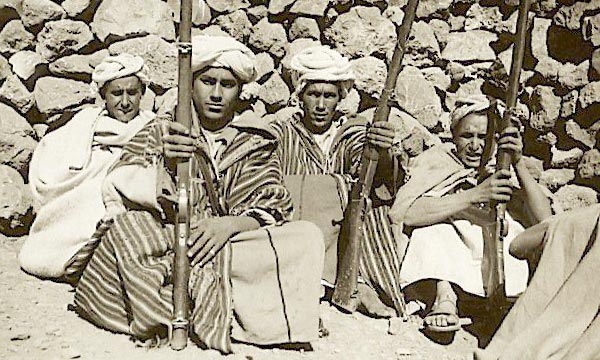
National tribute to resistance fighters

The Moroccan people join the family of the resistance and the Liberation Army to celebrate the 43rd anniversary of the recovery of Sidi Ifni, a glorious event that marked the process of completing the territorial integrity of the Kingdom. This memorable day, which saw the national colours hoisted on June 30, 1969, in the sky of Sidi Ifni, is commemorated every year in joy and pride by all Moroccans, who hold, by the same token, to pay a vibrant tribute to the valiant patriots, men and women, who made enormous sacrifices in the service of the national cause, led by the liberator of the nation, the late H.M. Mohammed V, and his companion in struggle, the late H.M. Hassan II, may God have their souls in His holy mercy. In the same patriotic momentum that animated the different regions of Morocco aspiring to free themselves from the colonialist yoke, the Aït Baâmrane tribes showed perseverance, courage, and heroism to thwart the plans of the Spanish colonial authorities, who were fomenting in the shadows a plot aimed at attaching the region "definitively" to Spain. Due to its strategic situation and its resources, the city of Sidi Ifni was, moreover, since the beginning of the colonialist adventure, coveted by Spain, which occupied it in 1934 and then declared it "capital of the government of Spanish North Africa". This proclamation offended the dignity of the nationalists who were quick to defy the colonialist fait accompli. Thus, the tribes of the region never ceased to claim their legitimate rights to integrate Morocco, the motherland to which they have, moreover, never ceased to belong, despite the arbitrary plans conceived by the colonial powers to dismember the Kingdom and cut it into several zones of occupation, with the design of preventing its resurgence as an influential Nation. This will of the population of the region was materialised by the heroic actions of the men of the resistance who punctuated this crucial period of Morocco's history with their high deeds, despite the modesty of their means. The uprising, in 1957, of the Aït Baâmrane tribes, supported in this by the Moroccan people and the family of the resistance in particular, under the leadership of the Alaouite Throne, in this sense, sounded the death knell of the coloniser's covetousness. Doubled by diplomatic action at the highest level, this popular movement contributed to creating the conditions capable of making the recovery of Sidi Ifni inevitable. Indeed, in 1963, the late H.M. Hassan II had seized the opportunity of a stopover in Madrid to remind the head of the Spanish state of the time that Morocco intended, in all legitimacy, to reintegrate Sidi Ifni under its sovereignty. Intense negotiations engaged under the aegis of the United Nations committee for decolonisation, the Kingdom managed to assert its natural and legitimate right to the recovery of this integral part of its territory. The national colours were hoisted on June 30, 1969, in the sky of Sidi Ifni, to the great joy of all the Moroccan people. The process of retrocession of the despoiled parts of the Kingdom was, from then on, strongly boosted, thanks to the diplomatic campaign led by Morocco, which managed to raise the cause of national sovereignty to the rank of priorities in the international agenda, thus thwarting all manoeuvres aimed at undermining the integrity of Morocco and its territorial unity. The recovery of Sidi Ifni was, thus, only a starting point on the path of the struggle for the completion of territorial integrity, which was crowned, on November 6, 1975, by the glorious Green March, a peaceful work and memorable epic that attests to the judicious path chosen by the Kingdom to assert its rights and the unwavering will of the Moroccan people to spare nothing to make the national cause triumph. On this happy occasion, the High Commission for Former Resistance Fighters and Former Members of the Liberation Army announced the organisation, Monday, in coordination with the prefecture of the Sidi Ifni province, at the square located next to the educational and cultural space dedicated to the Resistance and the Liberation Army, a meeting during which will be revisited, interventions and testimonies in support, the profound lessons of this national epic. The programme of this event provides for a tribute to former resistance fighters and former members of the Liberation Army, in recognition of the enormous services they rendered to the national cause. It will also proceed to the delivery of financial and social allocations granted to the families of former resistance fighters and former members of the liberation army. Two partnership and cooperation agreements will also be signed by the HCAR with, on the one hand, the rural commune of Sbouya, and, on the other hand, the Laboratory for Research in Sahrawi Societies at the Faculty of Letters and Human Sciences of the Ibn Zohr University of Agadir. Furthermore, the educational and cultural space of the resistance and the liberation army of Tiznit will be inaugurated and financial and social aid will be allocated to needy families.

Listen
Size:

