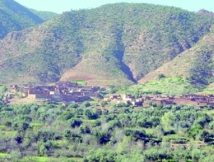
It had to be done one day. To seriously debate the country's water tower. The Moroccan mountain areas deserved this major focus, at all levels. This concerns 21% of the national territory, 20% of the Moroccan population, 31 provinces, and 650 rural communes. This is neither fortuitous nor trivial. And with all that this implies in terms of opening up, development, infrastructure, education, health facilities... the matter is serious. The participation of the National Human Rights Council (CNDH) is significant. An approach was necessary, if not indispensable. The Association of Populations of the Mountains of the World (APMM), Morocco section, did well to organise a national meeting on the Moroccan mountain under the theme: "Together for new perspectives of progress and preservation of the Moroccan mountain".
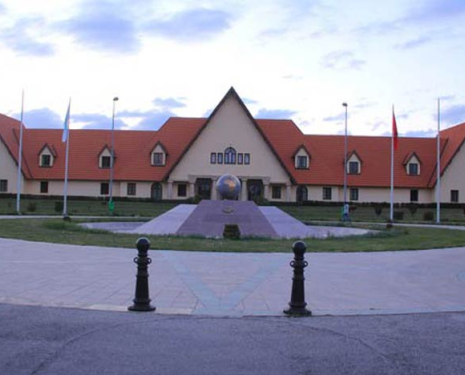
This scientific event, which took place in Ifrane on 25 and 26 May 2012, was therefore timely. We also had to keep international experiences in mind to benefit from them greatly. The meeting thus saw the participation of a delegation from the International APMM, including Gérard Logié, Jean Bourliaud, vice-president of the said Association, and Mr MELISE Jean, Mayor and Vice-President of the Aveyron Department, as well as several associations and sections of the APMM-Morocco covering the various mountain ranges of Morocco (the Rif, the High, Middle, and Anti-Atlas), researchers, and stakeholders concerned with mountain development.
Initiated in collaboration with the National Institute of Agricultural Research, the National School of Agriculture of Meknes, and the Faculties of Sciences and Letters of the Moulay Ismail University of Meknes, with the support of the Skills Enhancement Centre, this meeting examined the natural resources of this area, which constitute the engine of the agro-sylvo-pastoral sector, not to mention the multiple industrial activities. The Moroccan mountain is also characterised by the strong presence of socio-institutional organisations and ingenious practices for managing natural resources and social affairs.
"Today, with new concerted management approaches, the Moroccan mountain must revive within itself territories that, under the terms of modernity, invent a new vision of exchange in which territory, culture, and product are inseparable," says Hrou Abou Charif, vice-president of the APMM, Morocco section, adding that "it is in this sense that several development alternatives, generally introduced in an improvised manner by different actors, must be subjected to a concerted analysis with a view to building on accumulated successes and avoiding the endless repetition of past errors.
The menu was rich and varied. Three main themes were at the heart of the debate: the management and use of natural and heritage resources, human and sustainable development in mountain areas, and Law, Institutions, culture, and language. It was also necessary to scrutinise pilot experiences in terms of local development and the results of studies conducted in the mountains.
And it was the workshops that would deepen the debate, but also provide what is practical, adequate, and suitable for the Moroccan Mountain. We thus examined the needs of the mountains and development opportunities, the prospects for a mountain bill in Morocco, and in this context, it was decided to create a multidisciplinary monitoring committee and to organise workshops at the scale of each mountain range, in which all actors concerned with the mountain will participate, with a view to drafting, over a year of work, a mountain bill to be proposed to the Moroccan Government. A recommendation to be followed very closely, as it would be able to push the development approach on all possible tracks.
News 06 Jun 2012 3 min read
National meeting on mountains