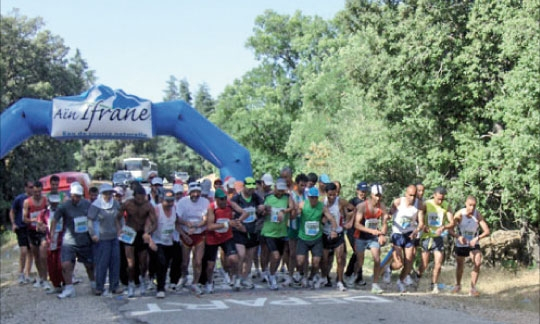
Having become an annual event for lovers of sport and nature, the International Cedar Marathon "Trail", the 4th edition of which will take place from 21 to 24 June, will again offer participants unique moments of competition and sharing this year.
Initiated by the Ifrane Sport and Nature Association in partnership with the Province of Ifrane, the CRT of Meknès/Tafilalet, and the communes of Oued Ifrane, Ain Leuh, and Ifrane, this nature sports event will see, according to the organisers, the participation of a large number of renowned national and international athletes, but also amateurs, passionate about nature and running.
Participants will have to cover a distance of 88 km this year, during a race that will take place in four stages of 22, 20, 30.5, and 15.5 km at an altitude varying between 1,600 and 2,100 m. Driven by the love of competition and challenge, they will try to surpass themselves and improve their endurance in a pleasant competitive setting while discovering the various tourist assets that Ifrane and its region abound with, whether it be its nature, its landscape, or its culture.
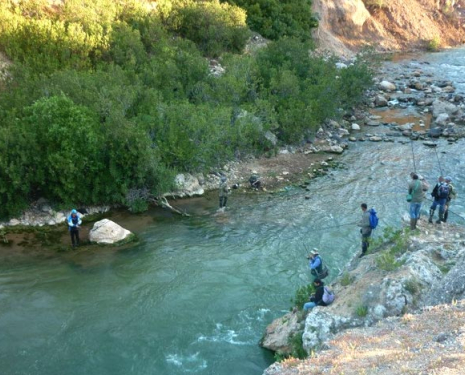
As for the course of this edition, it is characterised by a variety and richness of landscapes. While being well-marked, it crosses cedar woods, mountains, tracks, and paved roads, thus constituting a real niche for the promotion of sport and ecological tourism in the region.
Chaired by Abdelkader Mouaziz, champion of the London (1999, 2001), New York (2000), and Marrakech (1996/97/99) marathons, this sporting and human event has as its objectives, in particular, the economic and tourist promotion of the Ifrane region through sport, the promotion in particular of mountain tourism and the popularisation of mountain sports, as well as the development and sustainability of the Marathon, so that this event is in the future one of the greatest sporting events in the world of "trails".
Like the various provinces of the Middle Atlas, Ifrane constitutes a niche with enormous potential for ecological tourism focused on rural specificities, with a search for quality and diversity, capable of changing the face of the region and improving the living conditions of local populations. The development of ecological tourism in the Middle Atlas region would make it possible to fix local populations in their natural environments and, consequently, to fight against rural exodus by creating income-generating activities and trades specific to this tourist activity.