
FrançaisEnglishالعربيةDeutschEspañolNederlandsItaliano中文

Your cart is empty

Adventure awaits!

About Essaouira

Essaouira (/ˌɛsəˈwɪərə/ ESS-ə-WEER-ə; Arabic: الصويرة, romanized: aṣ-Ṣawīra), known until the 1960s as...

News in Essaouira

Follow the latest news, projects, and official announcements from your ville.

News 30 Apr 2014 4 min read

Gnaoui heritage in a box set
Gnaoui heritage in a box set

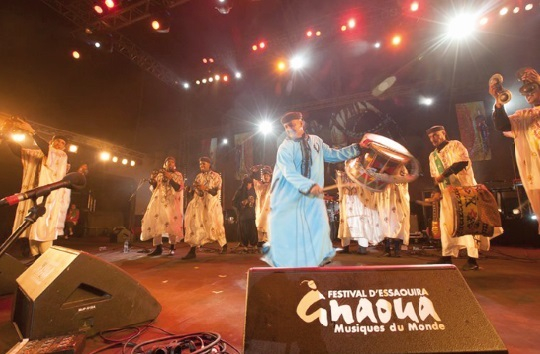
Authenticity, integrity of the lila (ritual night), and consideration of certain significant variations. These are the criteria that prevailed in the creation of "The Anthology of Gnaoua Music," which will be presented on the sidelines of the 17th Gnaoua and World Music Festival scheduled from 12 to 15 June in Essaouira. This collection is the result of extensive work carried out by the Yerma Gnaoua Association with the aim of preserving a particularly rich heritage and highlighting the rhythmic, melodic, lyrical, and stylistic richness of an ancestral art that is the pride and renown of Moroccan culture. This anthology "also aims to instil a dynamic of creativity, by allowing musician-composers and researchers to have access to an important resource base for all Moroccan music," rejoices the association, created in 2009 with the goal of safeguarding and promoting the intangible heritage of the Gnaoua brotherhood. "Significant iconography and layout work has been carried out, and numerous measures have been taken to make this anthology an event that pays tribute to our living human treasures and the magnificent intangible heritage they represent," the association's officials specify. To date, this anthology offers a sound exploration of more than 14 hours compiled on 9 CDs, a book composed of texts providing a triple perspective (historical, anthropological, and musicological), and a travel diary retracing the first prospecting mission. In addition to appreciating all the nuances and references of the Gnaoui repertoire (the introductions, the percussion playing, the playful phases, as well as the complete progression of the mlouks and colours), lovers of Gnaoua music will also find the biographies of the maâlems, whose selection does not establish any ranking, the association specifies. And for good reason: "It goes without saying that all the masters are equal, but our only criterion was to assign to each the repertoire they master best; the objective being to cover the entire palette of the repertoire," it is explained. It should be noted that all the sung texts have been transcribed in Arabic and translated into French. It must, however, be emphasised that the creation of this magnificent jewel, which required years of research and collection of sung texts, was not easy. "The nature of oral tradition being mobile and changing, maâlems of different generations have made a habit of omitting pieces and adding others. Faced with this difficulty of recording an immutable repertoire, this anthology establishes a normal progression of the different phases while disregarding differences that do not affect the coherence of the general corpus," warns the Yerma Gnaoua Association, whose action aims to make Gnaoui culture known in Morocco and throughout the world and to ensure the perpetuation of its traditions. It was first necessary to "exclude numerous pieces resulting from both recent contact with popular urban song and exchanges with certain religious brotherhoods. Then, we kept the conventional progression of the lila in 3 parts (al âda, oulad Bambara, and the mlouks). Finally, we integrated certain regional variants, notably the performance of isamgane (Amazigh Gnaouas), the northern version, the sebtiyyine (Jewish Gnaouas), and the pre-Saharan gangas," it is explained. Thanks to this anthology, the Yerma Gnaoua Association intends to make an important resource base for all Moroccan music available to musician-composers and researchers. And at the same time, to instil a dynamic of creativity. Knowing that this heritage interests many musicians around the world, the association hopes that they will find an opportunity to serve it within the wide space of world music. "The publication of the anthology of Gnaoui music is one more stone in our edifice, and we hope that it will open new perspectives for this ancestral art and this brotherhood," Neila Tazi Abdi, producer and director of the Gnaoua Festival, recently indicated.

Listen
Size:

