FrançaisEnglishالعربيةDeutschEspañolNederlandsItaliano中文

Your cart is empty

Adventure awaits!

About Essaouira

Essaouira (/ˌɛsəˈwɪərə/ ESS-ə-WEER-ə; Arabic: الصويرة, romanized: aṣ-Ṣawīra), known until the 1960s as...

News in Essaouira

Follow the latest news, projects, and official announcements from your ville.

News 27 Jun 2013 4 min read

Five artists exhibit for the children of “Darna” in Essaouira
Five artists exhibit for the children of “Darna” in Essaouira

Five Moroccan painters: Mehdi Qotbi, Mahi Binebine, Abderrahim Yamou, Najia Mehadji, and Hassan Bourika, as well as the Lebanese Nadine Fahd Akwanna, Miss Arab 2012, all responded to the call launched by the Darna Association, which takes care of abandoned children in Essaouira. The event was truly significant: a collective exhibition of the five Moroccan painters as a sign of support for the children of Darna, organised in close collaboration between the delegation of the Ministry of Culture and the Essaouira-Mogador Association at the Bastion Bab Marrakech gallery from 21 June to 21 July 2013 and opened as part of the programme of the 16th edition of the Gnaoua and World Music Festival.

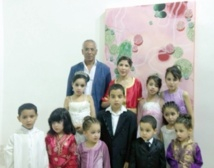
Beautiful and happy as can be, the children of Essaouira Darna were the stars of the opening, enhanced by the presence of André Azoulay, Advisor to HM the King, Mohammed Sbihi, Minister of Culture, Abdelwahab El Jabri, Governor of Essaouira, and Driss El Yazami, President of the National Human Rights Council.

Khaled Benkhada, President of the Essaouira Darna Association, was keen to congratulate all the patrons who allowed the realisation of this project, which was only a dream shared with Mahi Binebine two years earlier. The initiative of the five artists who will put their paintings and ten copies of their monographs on sale for the benefit of the children of Darna strongly marks the relationship between the pictorial and the social, he added. An action of the heart that puts the Moroccan artist at the service and listening to social causes and can thus only boost the actions and projects of Darna, which takes care of 58 abandoned children. Benkhada announced to “Libé” the launch of the extension works of the Darna centre in order to increase its reception capacity to receive 100 children in October 2013. The choice of the name Darna, he was keen to specify, allows for offering warmth, conviviality, and a family atmosphere to children who most need to feel at home.

Nadine Fahd Akwanna, Miss Arab 2012 and ambassador for the orphaned child, was also present to support this action as part of a tour initiated by her foundation through eight Moroccan cities and thirteen charitable institutions. A Doctor of Pharmacy, recently welcomed by the Short Film Festival in Morocco, which paid tribute to her for her action of the heart, she received the title of ambassador of good intentions for the city of Essaouira. For Miss Arab 2012, artistic language is universal and can for this purpose serve human causes without divergences or misunderstandings, because it will be assimilated and appropriated by all.

For his part, Hassan Bourika, a Moroccan painter, is exhibiting for the third time in Essaouira. He remembers his first participation as part of the first edition of the Gnaoua Festival. For him, this exhibition illustrates the human mission of the artist. A commitment concretised through ten exhibitions whose sales were dedicated to Moroccan children with cancer, heart disease, or who were abandoned.

Abderrahim Yamou, a painter, for his part, emphasised the mutual and regular cooperation between artists and associations that have always solicited the support of the former. Such initiatives, he specified, sound the alarm and invite the components of society to reflect and put their means in synergy at the service of human causes.

For Abderrahim Bartia, regional delegate of the Ministry of Culture in the MTH region, the Bab Marrakech bastion has become an unavoidable place for Moroccan painters. A place of memory symbolising a long history of sharing and openness, Essaouira currently represents a model of development focused on cultural and heritage potential. A model taken up by the Ministry of Culture, which aims to integrate the cultural component into development projects and programmes at the regional and local level.

Listen
Size: