

Interview with the Regional Director of the HCP, Mohammed Cheikh Maa El Ainayne
Dossier produced by NES in Dakhla, Karim Ben Amar
The Dakhla Oued-Eddahab region is experiencing a real boom. All sectors are seeing constant development, and the figures prove it. To get more information on this region that is on the rise, the Al Bayane team spoke at the regional headquarters of the HCP with the regional director, Cheikh Mohammed Maa Al Ainayne. The holder of a doctorate in economics focusing on the theory of social justice and redistributive effects gives us the smallest details on the region's boom and the reasons for this constant development.
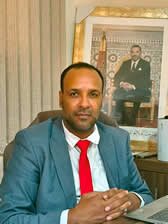
Al Bayane: How can a territory so far from the Kingdom's capital experience such great growth and development?
This region of the country was neglected throughout the Spanish colonization. Today, all indicators show that we are below the national average. In 20 years, this region has made a great leap in terms of development, like Casablanca, Rabat, and Laayoune. In 20 years, we have made up for the delay, because this territory was neglected for more than 60 years by Spain, the colonizing country. What marked the enthronement of His Majesty King Mohammed VI was the choice to place Dakhla among his first visits; this is an indicator of His Majesty's benevolence towards his Southern provinces. The Sovereign even held a council of ministers in Dakhla, with the leitmotif of democratizing the kingdom and also encouraging investment. Just after this council of ministers, there was the launch of the construction of the Dakhla port, the development of agriculture, and an industrial zone. Thanks to this, industrialists and investors decided to invest in this distant region. Between 2002 and 2012, the effort was doubled, since the region experienced a real metamorphosis in terms of the economy. This metamorphosis was achieved in the fishing sector, but also in the field of agriculture and tourism, since surfers from all over the world set their sights on the "Dakhla" destination. Once this metamorphosis took place, it gave a clear indication of what this region could become in the near future for the Kingdom, namely not a distant region, but a gateway to a horizon as promising as what we experienced in the era of the late Sultan Sidi Mohamed Ben Abdullah (Mohammed III 1757-1790). And then in 2012, the new development model arrived. There was a real consultation on the involvement of young people, women, and vulnerable people, and this, through their economic integration. This model therefore marked the history of Morocco, even the way in which these consultations were conducted. In 2015, this new development model became operational. This development model was a real momentum that materialized in 2023 with the visit of His Majesty to the United Arab Emirates. This strategy has the particularity of not being specific to Morocco, but to the whole globe. Its goal is indeed opening up to the Atlantic, opening up to African countries. It is no secret to anyone, the future of development, the future of economic growth, is Africa.
What about the added value of investment in the Dakhla-Oued Eddahab region?
Investment has truly accompanied the development of the region. This has contributed to the region's attractiveness in demographic terms, accessibility to services, the emergence of training centers, etc. In other words, we have been entitled to a rehabilitation of human capital. The emergence of local entrepreneurship and also the attractiveness of national entrepreneurship has contributed to the development of the region. We must pay tribute to people who have invested, who have created value, and who have paved the way for the region to have a significant growth rate compared to the national average, i.e., three times the average in terms of GDP per capita and between 2.5 and 3% of the national growth rate. In the Dakhla Oued-Eddahab region, we have a double-digit growth rate. For example, between 2014 and 2017, we were at 16%, then 7%, then back up to 11%, and reaching 9%. In economics, this is a real feat. During Covid-19, the two regions that marked a positive rate globally were Dakhla and Laayoune. Who benefited from wind power to maintain their rate. As for Dakhla, if it was able to maintain its rate, it is thanks to the resilience of the region even though the major structural projects are still underway, I am referring to the Dakhla Atlantic port, the logistics zone, etc., not to mention the borders that were closed. This testifies to the performance and resilience of the region. We marked an unemployment rate of 6.4% on the eve of Covid-19, and in 2023 we reached the same figure. All this to tell you that even in the event of a crisis, we recover quickly and there is an economic recovery. It is a region that adapts very easily. We have paved the way for a region to be resilient, attractive in terms of demographics and investment. The demographic growth of the region reaches 3.7%, while the city of Dakhla reaches 6%, while the closest job provider is Agadir (1000KM). People settle there, work, and start families. The unemployment rate (6.7%) is equivalent to half the national average in 2023.
What about the vision of the High Commission for Planning regarding the challenges and prospects of the region in the coming years?
Most often, we do not realize the globality of development. There are five essential components: the fulfillment of all beings, social cohesion, the preservation of resources, economic development, responsible production and consumption, and the fight against climate change and the preservation of biodiversity.
At the HCP, we are in a logic of cohesion. It is a rosette that must be coherent and permanent. Today, we place the preservation of the bay and aquatic environments and the sustainability of growth as real challenges. Thus, we can ensure the preservation of our resources. It is for this reason that aquaculture is very present. The goal is to sustain fishery resources. We have invested a lot in oyster and clam farming as well as hatcheries, and this is more profitable than a trawler. On one hand, we save time (1 month compared to the world average), because we benefit from sunshine and thermal amplitude. Note also that there is an expanse of 600 or 700 km of coastline, with two bays (Oued Eddahab and Cintra) that can accommodate a very large number of hatcheries with optimal sanitary conditions; it is a real valorization of our resources. We are talking here only about capture and not industrialization. Subsequently, there will be all categories of industrialization, namely energy. When a region is equipped with wind farms and green hydrogen production, there can be foundries, cement plants, and all kinds of energy-consuming industries (batteries). This type of industry is mentioned in the national development model and in the development model of the Southern provinces. In other words, no industry can just set up in this region, especially since it will soon be open to the world, notably thanks to the Dakhla Atlantic port and the 1,000-hectare industrial zone. There is also the Guergarat logistics zone, and the opening of Dakhla Gateways Africa. For a project to be accepted, it must be profitable and comply with the specifications.
The article "Investment has accompanied the development of the region" appeared first on ALBAYANE.
