FrançaisEnglishالعربيةDeutschEspañolNederlandsItaliano中文

Your cart is empty

Adventure awaits!

News

7 provinces. One prefecture.

About Oriental region

Oriental (Berber: Tagmuḍant, ⵜⴰⴳⵎⵓⴹⴰⵏⵜ; Arabic: الشرق, Ash-Sharq) is one of the twelve regions of Morocco, located in the eastern part of the country. It covers an area of...

News in Oriental

Follow the latest news, projects, and official announcements from your region.

News 05 Mar 2016 5 min read

Between discouragement and hope in the Moroccan Oriental region
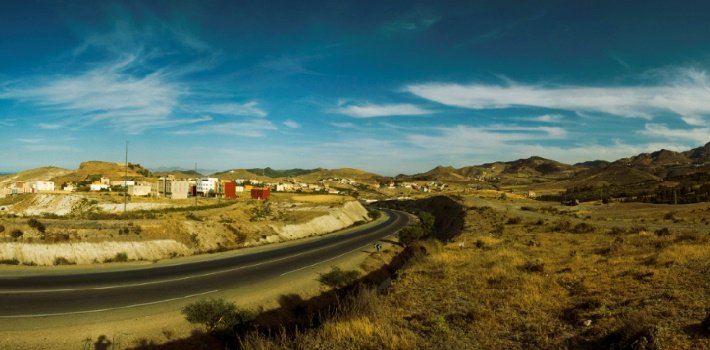
Between discouragement and hope in the Moroccan Oriental region

On the periphery of the Sahara desert, bordered by the rocky coast of the North of the Maghreb where it meets the blue of the Mediterranean, lies the Oriental region of Morocco. Nestled in a region that is often green, essentially mountainous, Oujda is the largest city in the North of the Kingdom and the administrative capital of the region, with a population of approximately 550,000 inhabitants.

Oujda has known prosperity under various rulers throughout the centuries thanks to its strategic location at the crossroads of a complex network of trans-Saharan caravan routes, near the border with Algeria, and at the junction of the Algerian and Moroccan railway networks. This has given the city a cosmopolitan, progressive and adaptable character.

It remains a lively metropolis despite the difficulties, the Rif being in fact the most economically disadvantaged region of Morocco and the closure of the Algerian-Moroccan border in 1994 having had a particular impact. Since 2003, there has been official encouragement to revitalise the region; with the increase in tourism on the North coast of the kingdom, promising mining deposits and agricultural prospects towards the South, as well as the improvement of the regional road infrastructure, there is clear potential for Oujda's economy to prosper. Forests constitute one of the many local economic and natural resources, with the Rif region being the rainiest in Morocco. Yet, the ecology is threatened due to large-scale deforestation, due to overgrazing, forest fires and clearing for agriculture, in particular for the creation of illegal, but very lucrative, cannabis plantations. The process is part of a vicious circle of soil degradation and stripping of topsoil which not only threatens a unique region of the Kingdom, but also has wider ramifications.

Similarly, the minors of the Oujda Child Protection Centre (CPEO) represent a microcosm of the potential for growth and opportunity but also the opposite, unfortunately, not only in the Rif and in Morocco, but well beyond. The Middle East and North Africa region is home to the highest youth unemployment rate in the world, but for the eighty minors, aged 12 to 18, who are at the CPEO, a new partnership with the High Atlas Foundation means that growth and opportunity could be on the horizon.

These minors find themselves at the CSEO for a multitude of reasons, but have two things in common. "The presence of minors in the protection centre is ordered by the court, because they have committed an offence punishable by law", explains the director of the CSEO, Mr. Ali Baidou. "However, they all have the desire to be reintegrated into society and to access the job market to help themselves as well as their families." To ensure that the young people in the centre do not adopt harmful behaviour upon their release, they need opportunities to make their stay at the CSEO a more positive and productive experience.

Activities related to the land, such as gardening, have long been appreciated for their therapeutic effects and integrated into care programmes. Similar progressive regimes exist in prison settings, with preliminary research indicating a clear correlation between participation in the programme and a low rate of recidivism. In the cultivation of plants, activities can include the preparation and consumption of fruits and vegetables (which improves the prison diet) or a form of social justice to distribute them to destitute local families, who often have similar backgrounds to those of the detainees.

The transformative power of seeds is something that the High Atlas Foundation (HAF) knows well. Founded in 2000, it aims to be a catalyst for grassroots development in vulnerable communes in Morocco, by leading participatory development projects, one of the most commonly mentioned of which is the cultivation of fruit trees. Since its creation, the HAF has planted more than 1.3 million native organic fruit trees and medicinal plants in 13 Moroccan provinces. In 2014, it launched its campaign for one billion trees which includes the Sami project, an educational initiative for the first cycle. As a whole, the programme aims to support the Kingdom in its attempt to end subsistence farming, which is at the root of rural poverty, as well as to offset serious environmental challenges, including erosion and deforestation.

In accordance with the HAF's common practice, the young people at the CSEO were fully involved from the start, by participating in community meetings under the aegis of facilitators trained by the HAF, and by making decisions regarding a project that included vocational training to acquire skills in agriculture. Thanks to the creation of a fruit tree nursery producing a total of 400,000 almond, fig, olive and pomegranate trees, the young people at the CSEO will learn the intricacies of arboriculture throughout the entire chain, from seeding to sale. They will thus have an immediate outlet and will have a real sense of accomplishment, as well as a professional skill in the long term.

When the president of the HAF, Dr. Yossef Ben Meir, was asked, "Why trees?", the answer reflects a unique passion, born from the conviction of experience. "Morocco needs to plant a billion trees and plants and empower its troubled youth. We can do both at the same time", he explains at the HAF headquarters in Marrakech. "Establishing nurseries in child protection centres and equipping minors with the skills necessary to participate in the entire agricultural chain is their best chance for a successful future and meets the essential needs of rural people."

For the eighty minors at the CSEO, an organic tree cultivation project cannot solve all the problems, but it is a very promising start. Furthermore, if this pilot project implemented successfully were to be replicated on a national scale, it would have the capacity to bring vital benefits to the economy and ecology of the region and at the same time stimulate unprecedented changes in young Moroccans, putting an end to their overwhelm while giving them hope for a better future.

Information Officer at the High Atlas Foundation.

Listen
Size: