

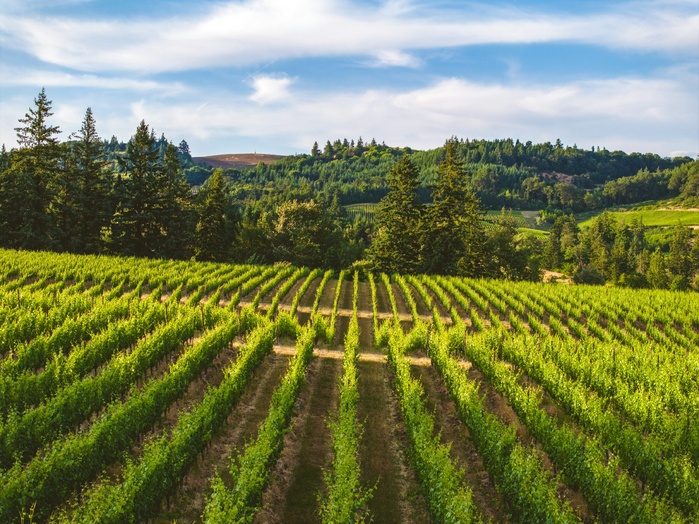
We are in the rural commune of Ahlaf, about thirty kilometres south of Benslimane. Under a July sun that is still temperate, the fields are taking on a golden hue, announcing more generous harvests than in previous years. Here, as in other surrounding Douars, the abundant rains of last March have changed the course of the agricultural season. After several campaigns marked by drought and disappointing yields, this meteorological rebound has been welcomed as a blessing.
Abdelkader, in his sixties, a farmer since his adolescence, examines his barley plots with a mixture of satisfaction and lucidity. "It's the first time since 2020 that I've seen my fields greening like this. In March, we received more than 200 mm in a few days. It saved the late sowings, especially the cereals and broad beans. We didn't believe in it anymore," he confides, casting a glance towards his son, who remained at the tractor. Abdelkader explains that these rains not only allowed for proper crop growth, but also revived the pastures: "Before, I spent up to 800 dirhams a month to buy straw. This year, my ewes are finding enough to graze in the nearby hills," he asserts.
A little further on, in a small farm shared with his two brothers, Ismail, 27, still a novice in the trade, confirms: "For us, young farmers, this season has restored our confidence. We thought about abandoning the land because of the costs and the drought, but now, we will at least be able to recover our investment."
This young man recently joined a training programme funded by the National Initiative for Human Development (INDH) and the Ministry of Agriculture, oriented towards sustainable agriculture and water resource management. "They explained to us how to optimise irrigation, diversify crops, and above all how to monitor soil health. It's motivating, we feel less alone," he details.
Structurally, the provincial authorities have not remained inactive. The Ministry of Equipment and Water has accelerated the dredging work of the seguias (traditional small irrigation canals), and several hill reservoir projects have been relaunched to better capture rainwater. The El Gara dam, downstream from the area, has seen its level rise slightly, from 22% to 29%, according to the latest figures. It is a modest but welcome development. In parallel, the regional directorates of agriculture have distributed drought-adapted seeds and deployed a direct seeding programme on more than 5,000 hectares in the region, notably in the communes of Oulad Yahya Louta and Charrat.
Despite everything, caution remains the order of the day. The elders, like Abdelkader, remind us that the situation remains fragile: "One season does not make a spring. If the autumn is dry, we will return to zero." But for now, the lands are breathing, the silos are filling up, and hope, too, has germinated.
Houda BELABD
Towards a greener future
The current season could well mark the beginning of a deeper agricultural and human renewal for the region. Carried by the latest life-saving rains, Ahlaf, in this instance, and the Casablanca-Settat region, in general, have the opportunity to rethink and build a resilient rural model. The momentum observed in these greening fields, the reassured faces and the commitment of young farmers, testifies to a very real potential that only a concerted and structured vision can consolidate. The future, who knows, could well be written around regenerative agriculture, connected to climatic and economic realities, but also a rural world that is better equipped, better trained and better valued.
