

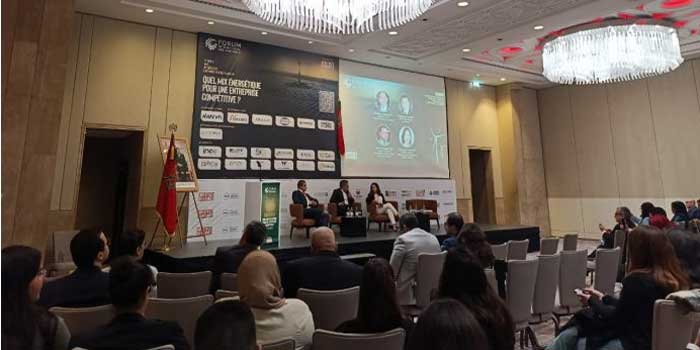
The importance of strengthening energy resilience in the face of global challenges and the key role of public-private partnerships in succeeding in the sustainable energy transition were at the centre of the debates on Wednesday in Casablanca.
Speaking during a panel under the theme "Energy resilience and strategic partnerships", as part of the International Energy Forum, the speakers emphasised the need to strengthen the Kingdom's energy independence, not only to guarantee energy security, but also to consolidate Morocco's position on the international stage.
The objective, according to the panellists, is to ensure an energy transition that meets growth needs, while aligning with global climate goals, reports the MAP.
In this sense, the Executive Director of the Moroccan Agency for Sustainable Energy (MASEN), Nawfal El Fadil, mentioned energy sovereignty as an essential pillar of national independence.
"Morocco, through projects like the Noor solar complex, demonstrates that investing in renewable energies is essential not only for energy security, but also for strategic autonomy", indicated Mr. El Fadil, stressing that the goal is to make the country less dependent on fluctuations in global energy markets.
For his part, the Country Director at Charlot Limited, Pierre Raillard, insisted on the need for solid strategies to face global energy crises, affirming that energy resilience requires innovation and proactive resource management.
The diversity of energy sources, the modernisation of infrastructure and the integration of new technologies are crucial elements for responding to current challenges, he specified.
He also highlighted the importance of natural gas in Morocco's energy transition, despite its fossil nature, noting that gas will play a major role in the coming years, in particular in supporting the shift to a more renewable energy mix, including energies such as green hydrogen.
For his part, the Executive Director of Narava, Reda Hamedoun, highlighted the importance of public-private partnerships for achieving a sustainable energy transition.
"Partnerships with the private sector allow for the acceleration of innovation and the mobilisation of the resources necessary to deploy large-scale projects, while guaranteeing their long-term viability", he explained.
He also considered that international collaborations are essential to address the global challenges of the energy sector, noting that green hydrogen represents a major turning point for the country, because not only can it store energy produced intermittently, but it is also a competitive resource that Morocco can produce at a low cost.
The speakers converged on the idea that the energy transition is not limited to reducing dependence on fossil fuels, but also requires a revision of economic and political models to support sustainable growth.
This panel is part of broader discussions on global energy challenges, highlighting the innovative strategies that countries, and Morocco in particular, are adopting to guarantee sustainable energy independence and strengthen their resilience in the face of global crises.
Organised by Industrie du Maroc Magazine, this forum brought together more than 600 participants, including experts and decision-makers, to discuss opportunities related to renewable energies, green hydrogen and natural gas within the framework of the Kingdom's ambitious energy strategy.
Speaking during a panel under the theme "Energy resilience and strategic partnerships", as part of the International Energy Forum, the speakers emphasised the need to strengthen the Kingdom's energy independence, not only to guarantee energy security, but also to consolidate Morocco's position on the international stage.
The objective, according to the panellists, is to ensure an energy transition that meets growth needs, while aligning with global climate goals, reports the MAP.
In this sense, the Executive Director of the Moroccan Agency for Sustainable Energy (MASEN), Nawfal El Fadil, mentioned energy sovereignty as an essential pillar of national independence.
"Morocco, through projects like the Noor solar complex, demonstrates that investing in renewable energies is essential not only for energy security, but also for strategic autonomy", indicated Mr. El Fadil, stressing that the goal is to make the country less dependent on fluctuations in global energy markets.
For his part, the Country Director at Charlot Limited, Pierre Raillard, insisted on the need for solid strategies to face global energy crises, affirming that energy resilience requires innovation and proactive resource management.
The diversity of energy sources, the modernisation of infrastructure and the integration of new technologies are crucial elements for responding to current challenges, he specified.
He also highlighted the importance of natural gas in Morocco's energy transition, despite its fossil nature, noting that gas will play a major role in the coming years, in particular in supporting the shift to a more renewable energy mix, including energies such as green hydrogen.
For his part, the Executive Director of Narava, Reda Hamedoun, highlighted the importance of public-private partnerships for achieving a sustainable energy transition.
"Partnerships with the private sector allow for the acceleration of innovation and the mobilisation of the resources necessary to deploy large-scale projects, while guaranteeing their long-term viability", he explained.
He also considered that international collaborations are essential to address the global challenges of the energy sector, noting that green hydrogen represents a major turning point for the country, because not only can it store energy produced intermittently, but it is also a competitive resource that Morocco can produce at a low cost.
The speakers converged on the idea that the energy transition is not limited to reducing dependence on fossil fuels, but also requires a revision of economic and political models to support sustainable growth.
This panel is part of broader discussions on global energy challenges, highlighting the innovative strategies that countries, and Morocco in particular, are adopting to guarantee sustainable energy independence and strengthen their resilience in the face of global crises.
Organised by Industrie du Maroc Magazine, this forum brought together more than 600 participants, including experts and decision-makers, to discuss opportunities related to renewable energies, green hydrogen and natural gas within the framework of the Kingdom's ambitious energy strategy.
