From May 23 to 27, the Almouggar Foundation and UNESCO are organising the 11th Tan-Tan Moussem, classified in 2005 as a Masterpiece of the Intangible Heritage of Humanity. Centuries old, this annual meeting of nomadic tribes, institutionalised in 2004, is an event that illustrates the collective memory associating the various aspects of life in the desert.
At a time when in some countries archaeological remains thousands of years old are being destroyed, destructions favoured by the rise of intolerance, the Tan-Tan Moussem is being held in Morocco, declared in 2005 a Masterpiece of the Intangible Heritage of Humanity. "Fortunately, intangible heritage cannot be destroyed with a pickaxe. Heritage is not limited to sites or objects, but it is also what we have inherited from our ancestors as knowledge, know-how, and rituals. The objectives of this moussem join those of UNESCO," stressed, Friday, May 23 in Tan-Tan, Michael Millward, representative of the UN agency in charge of education and culture.
Tunisia, guest of honour of this edition, experienced on March 18 last events to which the representative of UNESCO alluded, the attack on the Bardo Museum. The Tunisian Minister of Culture, Latifa Lakhdar, "took aim" at terrorists of all stripes: "Culture is our civilisational weapon against barbarism". Speaking to the press, Fadel Benaïych, president of the Almouggar foundation, organiser of the moussem and ambassador of Morocco to Spain, said: "We have put all our heart into making this moussem a unique event in the world.
This year, the tribes of Antifa, Lakhssas, Aït Ahmed, Aït Nosse, and many others have pitched their tents as their ancestors did in the days when only the nonchalant but steady pace of the dromedary allowed meetings between nomads. These gatherings were then the occasion for these tribes to exchange, to trade, to seal alliances, and to feast. And the tradition has been perpetuated over the centuries, until international consecration.
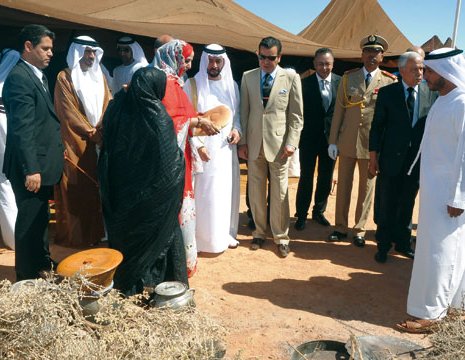
This universal character, underlined by UNESCO, explains the presence at this 11th edition of other countries that share the desert. At the stand of the Emirati Khalifa Bin Zayed Al Nahyan Foundation, samples of handicrafts are exhibited, about which an exhibitor explained to "Le Matin": "The Foundation buys these works created by women and redistributes them free of charge during occasions like Ramadan or holidays. It is a way for the Foundation to allow these women to have income-generating activities. The Foundation is essentially humanitarian and provides its assistance during natural disasters or armed conflicts".
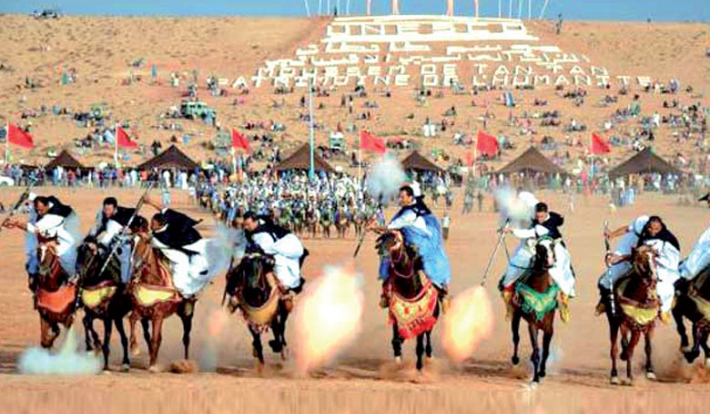
On the menu of this nomadic culture event, a camel milk milking contest, recitation of poems in Hassani, a camel race, tborida shows, and parades of meharists. The desert is indeed the land of extremes. In a nature that can seem hostile, brilliant civilisations have blossomed. The Tan-Tan Moussem is the material illustration of this.